
You Probably Skipped This Headline—And That’s the Problem
You’re not in the EV business. You don’t have a fleet of electric vans. Your customers aren’t driving Teslas to your shop—yet. So why should a blog post about a charging station in Warren, Michigan, matter to you in Kuala Lumpur?
Here’s why: because a 350-kW charger with a pull-through lane is not actually about electricity. It’s about noticing the stupid little frustrations your customers deal with every day—and then doing something about them. The company that designed that station looked at a real problem (towing a trailer means you can’t easily use most charging spots) and built a genuinely practical fix. That kind of thinking is exactly what your SME needs, no matter what you sell.
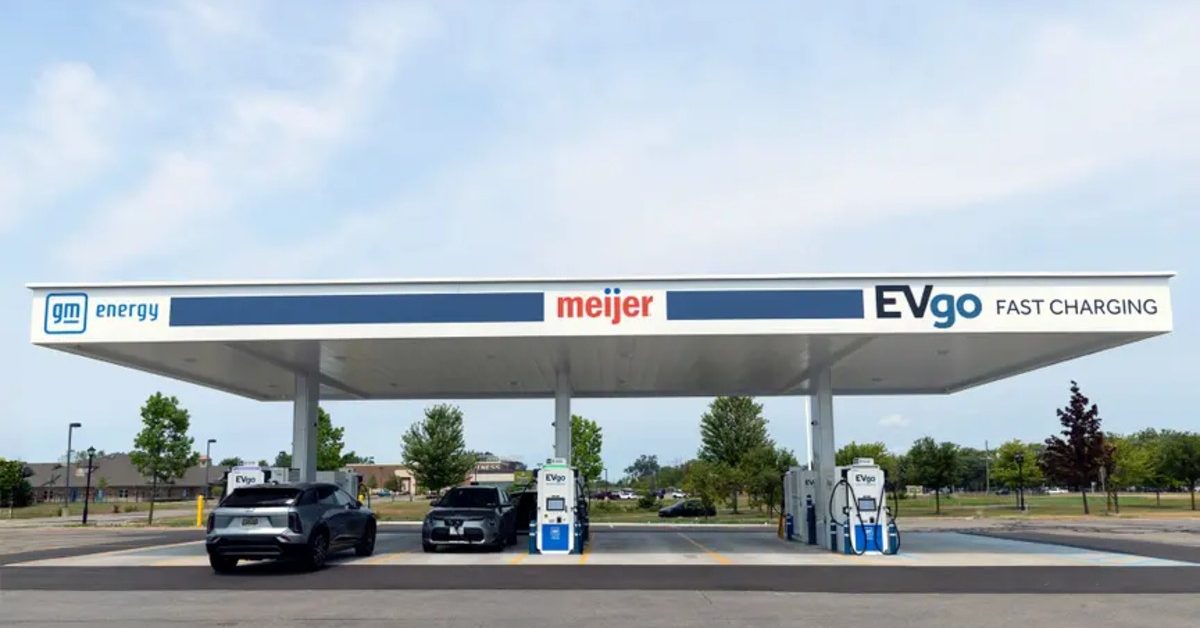
Last week, EVgo and GM opened a flagship DC fast-charging station near Detroit. It has 12 high-power stalls, both CCS and NACS connectors, and a pull-through layout that lets drivers with trailers plug in without unhitching. It’s at a Meijer grocery store, under a canopy, with better lighting and more space than typical chargers (source).
TL;DR
The new EVgo/GM charging hub is a masterclass in customer-centric design. The lessons for Malaysian SMEs: remove your customers’ biggest friction, place yourself where they already wait, and build partnerships that make your offer stronger—years before the trend hits your market.
What “Flagship Charging” Actually Means
Let’s decode the news in plain language. A “flagship” charging station is not just a charger in a parking lot. It’s a deliberate, high-attention location with fast equipment, lots of stalls, and amenities nearby. The Warren station charges at 350 kW—enough to give a compatible EV a full charge in as little as 15 minutes, depending on the vehicle and battery state (source).
The most telling detail is the pull-through design. Most public chargers are arranged like parking bays, which means if you’re towing anything—a trailer, a boat, a caravan—you have to disconnect it just to plug in. This new station eliminates that hassle entirely (source). Add a canopy overhead, and you have a station that treats its users like humans, not obstacles.
EVgo and GM announced this partnership back in 2024, planning 400 stalls in major US metro areas (source). This Warren site is part of a broader rollout: EVgo now has more than 40 flagship stalls operating in the US, and expects over 100 by the end of 2026, with sites in California, Florida, Georgia, Illinois, Michigan, and Texas (source).
How This Applies to Malaysian SMEs
If you run a café, restaurant, or retail shop on the ground floor in KL, Petaling Jaya, or Johor Bahru, think about the pull-through design again. Your customers have their own “trailers”—a child in a stroller, a bulky online order, a delivery rider with a huge insulated box. When you design your entrance, your queue, or your cashier flow, do you actually consider their real-world baggage? A Malaysian SME that redesigns its layout to remove one major point of friction—instead of just adding more staff—will win repeat business for years.
Now consider the placement of the station: directly across from GM’s Global Technical Center and at a grocery store. That’s not random. EVgo puts flagship stations near shopping, dining, and groceries because charging takes time, and time is a cost to the driver. For your business, ask yourself: where are your customers already waiting? If you run a service business like a hair salon or a car workshop, are you giving customers something useful to do during the waiting period? If you run an F&B shop near a popular delivery-pickup hub, are you visible to those riders while they wait? The EVgo team didn’t build a charger in the middle of a field; they built it where people already gather. Malaysian SMEs can do the same with their physical or even digital “storefront” placement.
Third, note the partnership. EVgo and GM announced this program in 2024 and have been methodically executing it since (source). EVgo has installed nearly 2,400 stalls across 32 states with GM’s support, and separately, EVgo, GM, and Pilot Company have passed 1,300 fast-charging stalls at 300 Pilot and Flying J locations across 40 states (source). One charger company, one car maker, and one truck stop chain—each brings its own strength. For a Malaysian SME, that’s a reminder that you don’t have to build everything alone. If you’re a small logistics operator, partner with a workshop chain. If you’re a retail brand, partner with a co-working space or a clinic. The collaboration matters more than the size of any single player.
Finally, watch the signal in Michigan’s EV growth. EVgo, citing Experian data, says the number of EVs operating in Michigan increased sixfold between 2021 and 2025 (source). That’s not a niche trend—it’s a hockey stick. Malaysian EV registrations are also climbing, and the government is pushing for more charging infrastructure. When that growth curve arrives at your door, will your business be ready? You don’t need to open a charging station tomorrow. But you should be tracking how many of your customers or delivery partners will be in low-emission vehicles within the next few years.
“When you design around the most annoying part of your customer’s journey, you earn loyalty no price cut can match.”
Practical Takeaways
Here’s a simple checklist you can act on this week:
- Map your customer’s friction points. Write down every step they take to buy from you, then identify the single most annoying step. Steal the pull-through mindset and solve that one step radically.
- Look where your customers already wait. If they’re waiting for a delivery order, a doctor’s appointment, or a school pickup, find a way to be useful in that exact moment.
- Start a small partnership. Pick one non-competitor with a complementary customer base and propose a tiny collaboration—a joint counter, a shared app, a cross-promotion. The EVgo-GM model shows what two organizations can do when they align.
- Track EV adoption in your area. Get a basic view of your local charging station map. If you own a property with parking, ask your landlord about adding a charging point—not as an expense, but as a future magnet for customers.
- Upgrade your physical environment. Canopy, lighting, layout: those are the things EVgo spent effort on. Walk into your own shop or office. Would a first-time customer feel comfortable, safe, and impressed? If not, fix the cheapest improvements first.
The Numbers Behind the Trend
To give you a concrete sense of the scale, here’s what the EVgo-GM program looks like in numbers (source):
| Metric | Detail |
|---|---|
| Charging speed at Warren station | 350 kW (source) |
| Stalls at the new site | 12 (source) |
| Full charge time at 350 kW | As little as 15 minutes (source) |
| Operating flagship stalls in the US | 40+ (source) |
| Planned flagship stalls by end of 2026 | 100+ (source) |
| Total stalls installed with GM support | Nearly 2,400 across 32 states (source) |
| Pilot/Flying J fast-charging stalls | 1,300+ at 300 locations (source) |
The Bigger Picture
This isn’t only about electric vehicles. It’s about what happens when an industry stops treating infrastructure as an afterthought and starts treating it as a customer-experience product. The pull-through lane, the canopy, the grocery store location—these are decisions made by people who watched drivers struggle and then built something better. Malaysian SMEs can adopt that same mindset without touching a single cable.
Within the next few years, expect EV charging to spread in Malaysia much faster than most business owners expect. When it does, your customers will compare their experience with you against their experience with every other place they visit in the same month—including a well-lit, well-laid-out charging station in the US that they saw on social media. They won’t consciously say “I want my mechanic to be like that charger.” But they’ll feel the difference.
You have a choice: wait until your industry gets disrupted, or start removing friction from your business today—starting with the one annoyance your customers complain about most. The charger in Detroit is just a reminder that good design travels. It starts with someone deciding that “this is how it’s always been done” is not a good enough reason.
Ready to Streamline Your Operations?
Your business should run itself. AutoRunBiz deploys AI agents to automate your daily operations — WhatsApp orders, invoicing, customer follow-ups, and accounting. Book a free 15-min ops audit to see where automation fits your business →