
Why an Autonomous-Driving Debate Matters to Your Business
Waymo’s latest criticism of Tesla’s self-driving strategy may seem far removed from your business in Malaysia. You may run a café in Johor, a logistics company in Shah Alam, a clinic in Penang, or a small trading firm in Kuching—not a robotaxi fleet. Yet the disagreement reveals an important lesson about adopting artificial intelligence: improving an existing system step by step does not automatically make it ready for high-stakes, unsupervised work.
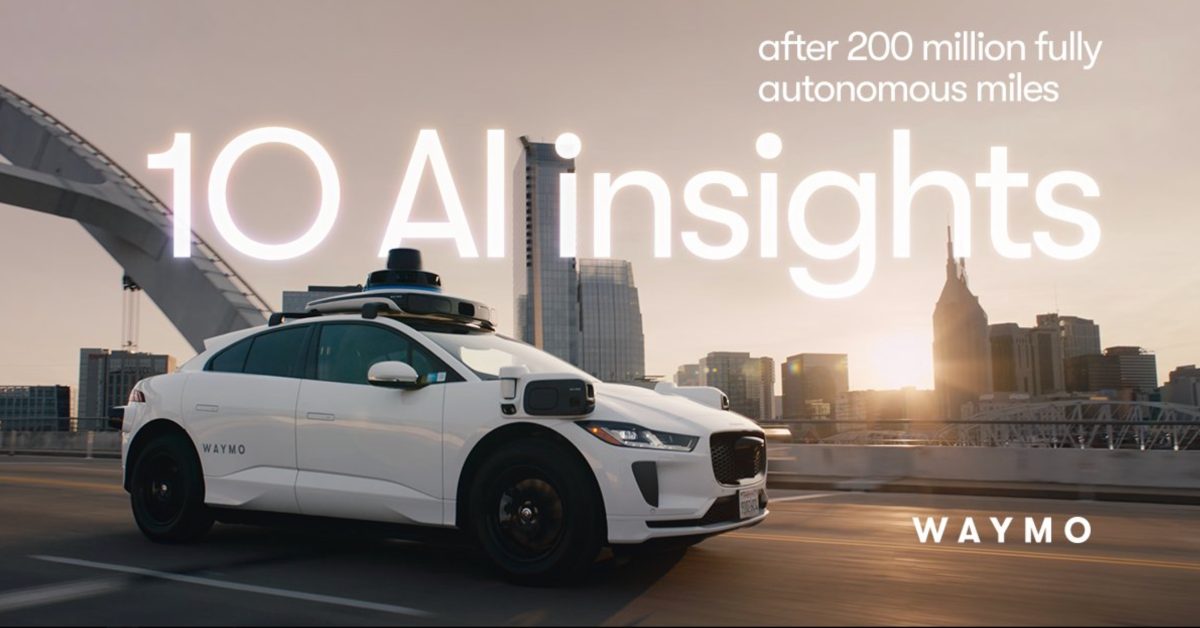
In a post describing lessons from more than 200 million fully autonomous miles, Waymo argued that converting a driver-assistance system into full autonomy can create a “false summit”—a point that appears close to the goal but is not sufficient for safe operation without human backup. The source article reports that Waymo is providing more than 500,000 paid, fully driverless rides each week across its United States markets. Source: Electrek
For you, the equivalent question is not whether your vehicle can drive itself. It is whether an AI tool that helps draft messages, summarise documents, or answer customer questions is genuinely ready to make decisions without review. The difference between assistance and autonomy matters whenever an error can affect customer trust, compliance, delivery schedules, or your team’s daily operations.
What Happened
Waymo’s head of AI foundations published “10 AI lessons” based on the company’s experience operating fully autonomous vehicles. The sharpest lesson stated that simply improving a Level 2 driver-assistance system is a “false summit” on the way to Level 4 autonomy. Waymo’s position is that a system designed specifically for autonomous operation must be validated in controlled environments and tested through real-world driving without a human ready to take over. Source: Electrek
Although Tesla was not named, the criticism closely matches Tesla’s approach to Full Self-Driving. Tesla gathers data from customer vehicles while drivers remain responsible for the car. The article reports that Tesla had confirmed 380,000 unsupervised miles, while Waymo’s reported operational volume was substantially higher. Tesla’s robotaxi service in Austin also used human safety monitors, according to the report. Source: Electrek
Waymo also challenged two other ideas associated with Tesla’s system. First, it said cameras alone are not enough for safe, full-scale autonomy and described its use of cameras, lidar, and radar for redundancy. Second, it warned against a “black box” approach in which a neural network turns raw visual input directly into steering decisions without enough transparency to build trust. Source: Electrek
Why This Matters for Malaysian SMEs
Many Malaysian SMEs are now experimenting with AI for sales, administration, customer service, recruitment, and operations. An AI assistant may begin as a useful support tool: it drafts a quotation, suggests a reply to a WhatsApp enquiry, extracts information from an invoice, or summarises a meeting. Because these tasks are helpful, you may be tempted to let the system send messages, approve records, or trigger workflows automatically.
That is where the “false summit” idea becomes practical. A system can perform well in common situations but still fail when the request is unusual. A customer may use Manglish, Malay, Mandarin, or an unclear voice note. A supplier invoice may contain a changed bank account number. A delivery address may include a new township or an incomplete unit number. A staff member may ask an AI tool to interpret a policy that has exceptions. These are the operational edge cases where human review remains valuable.
Consider a Malaysian retailer using AI to answer customer enquiries. It may correctly handle questions about opening hours and product availability. However, it could provide an incorrect answer about warranty coverage, delivery to Sabah or Sarawak, halal-related product information, or a return involving a damaged item. The solution is not to reject AI. The solution is to define which requests AI can handle independently and which must be escalated.
A small logistics or service business faces a similar issue. AI can classify incoming jobs, group locations, and suggest schedules. But it should not quietly alter a delivery commitment or accept a high-risk instruction without a clear approval step. Traffic conditions, access restrictions, customer urgency, and special handling requirements may not appear in the historical data used by the system.
Before you automate a decision, ask whether the system has been tested without relying on your staff to catch every mistake. If your team is still the safety net, you are using AI assistance—not full autonomy.
| AI adoption question | Practical SME action |
|---|---|
| Is the task repetitive? | Start with drafting, sorting, summarising, or extracting information. |
| Can an error affect a customer or supplier? | Require human approval before sending or committing anything. |
| Does the task involve personal data? | Limit access, remove unnecessary information, and check your internal data-handling rules. |
| Are unusual cases common? | Create escalation rules and keep a human involved. |
| Can you explain why the AI made the decision? | Keep logs, use clear prompts, and avoid opaque automation for critical decisions. |
The Bigger Picture
The Waymo-Tesla debate reflects two different approaches to scaling AI. One approach starts with a system that assists humans and attempts to improve it until it can work independently. Another builds a system for autonomous operation from the beginning, with dedicated sensing, testing, monitoring, and safeguards. The source article presents Waymo’s argument that fully autonomous performance requires more than collecting large quantities of supervised data. Source: Electrek
For your business, this does not mean every AI project needs a complex technology stack. It means you should match the level of control to the level of risk. An AI tool preparing an internal meeting summary can operate with light checking. An AI system recommending which customer receives a refund, changing supplier details, or generating a document with legal implications needs stronger controls.
Use a staged model. Begin with human-in-the-loop assistance, where AI prepares work and your employee approves it. Move to limited automation only after you have measured accuracy across normal and unusual cases. Keep a record of corrections so you can identify repeated failures. Review the workflow whenever your products, policies, languages, customer groups, or regulations change.
You should also be cautious about “black box” claims. If your team cannot explain what information an AI tool used, what rules it followed, or how to correct an error, it may not be suitable for an important business decision. Transparency does not require technical expertise from every employee. It requires clear ownership, documented procedures, access controls, and a reliable way to reverse mistakes.
What You Can Do This Month
- Choose one low-risk workflow, such as enquiry classification or internal document summaries.
- Define the exact tasks AI may perform and the tasks that require staff approval.
- Test the workflow using real Malaysian business scenarios, including mixed languages, incomplete details, and unusual customer requests.
- Record errors, corrections, and escalations instead of judging the system only by successful examples.
- Keep sensitive customer and employee information out of tools that are not approved for business use.
- Set a review date so the workflow does not become “automatic” simply because nobody revisits it.
Waymo’s “false summit” warning is useful beyond autonomous vehicles. In a small business, the most dangerous AI mistake is often not an obvious failure. It is a system that works well enough to earn trust, then quietly fails when circumstances change. You can gain the benefits of automation by treating AI as an operational system that needs boundaries, testing, and accountability—not as a shortcut that removes responsibility.
Ready to Streamline Your Operations?
Technology moves fast. Your operations should keep up. AutoRunBiz builds AI systems that run your daily workflows — from WhatsApp order capture to accounting. Book a free 15-min ops audit →