
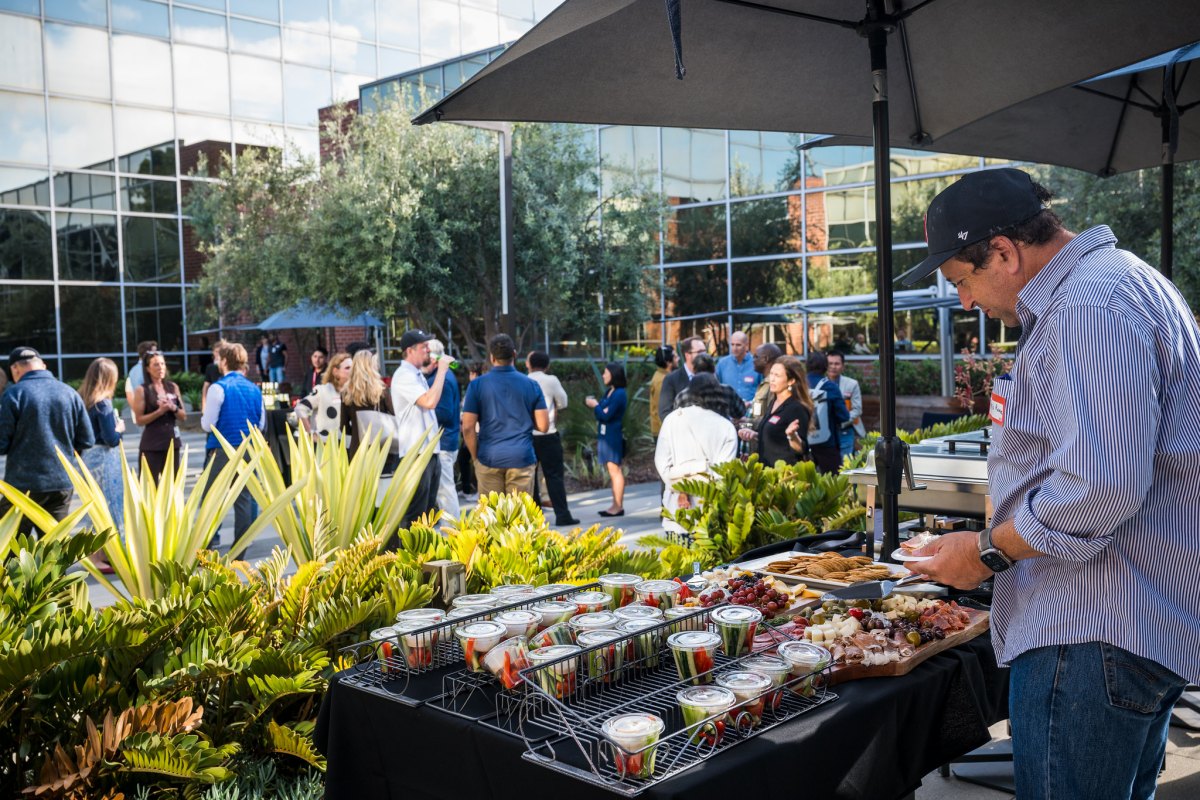
Why Event Opportunities Matter When Your Team Is Small
As a Malaysian SME owner, you may see major technology events as something designed for venture-backed startups, large corporations, or overseas companies. That assumption can cause you to miss useful opportunities. The real value of an event is not only the main conference. Smaller gatherings around it can create focused conversations with potential partners, customers, suppliers, and people who understand your industry.
You do not need a large booth or a complicated campaign to benefit. A well-designed workshop, roundtable, private briefing, or community session can help you explain what your business does in a more natural setting. It can also give you a reason to follow up with people who would otherwise ignore a general sales message.
TechCrunch has announced that its Disrupt Side Events programme will accept applications for events held from October 10 to 16, 2026, around its San Francisco conference. The main event is scheduled for October 13 to 15, 2026, with more than 10,000 attendees expected, according to TechCrunch.
TL;DR
Side events show how a smaller business can create focused conversations instead of relying only on a large conference presence.
For a Malaysian SME, the same approach can work through local workshops, customer roundtables, partner briefings, and online sessions supported by simple automation.
What This Means
A side event is a smaller gathering held alongside a major conference. It may be a roundtable, workshop, office-hours session, dinner, or networking event. In TechCrunch’s programme, approved organisers receive promotion through the official side-event calendar and related marketing channels, while events must be open to conference attendees and the wider public, according to TechCrunch.
The important idea is owned context. At a large conference, you compete with hundreds of messages. At a smaller event, you choose the topic, invite the right people, guide the discussion, and collect questions that reveal what your audience actually needs.
For example, a software company could host a session on reducing manual quotation follow-ups. An accounting firm could run a practical discussion about preparing records for a growing business. A logistics provider could organise a workshop on improving delivery updates for customers. The event becomes useful before it becomes promotional.
Key insight: The best small-business event is not the one with the biggest crowd; it is the one that creates the clearest next conversation.
How This Applies to Malaysian SMEs
First, you can use a local roundtable to bring together people facing the same operational problem. A Klang Valley distributor, for instance, might invite several retailers to discuss stock visibility and order updates. A manufacturer in Penang could gather suppliers and customers to discuss production scheduling. Keep the group focused, prepare three questions, and record the common issues. Those answers can guide your next service improvement or marketing message.
Second, you can turn a practical workshop into a steady source of qualified enquiries. Instead of presenting every feature of your product, teach one useful process. A cleaning company could demonstrate a standard site-inspection checklist. A recruitment agency could explain how SMEs can organise candidate screening. A business automation provider could show how enquiries move from WhatsApp or a website into a central follow-up process. Participants who ask detailed questions are often more relevant than a large list of passive contacts.
Third, events can strengthen partner relationships. Malaysian SMEs often depend on accountants, agencies, resellers, consultants, software providers, logistics firms, and industry associations. A joint session gives each partner a clear role and helps you reach an audience you may not normally access. For example, an accounting practice and a payroll consultancy could host a briefing for growing employers. Your event registration form can ask what the attendee is trying to improve, allowing you to route follow-up enquiries to the right person.
Fourth, you can apply the same model online if an in-person event is impractical. A 45-minute webinar, customer clinic, or live demonstration can attract participants from Johor, Selangor, Sabah, Sarawak, and beyond. The format should still be specific. “How to organise customer follow-ups after a trade fair” is more useful than “Business technology trends.” Record the session, send the replay automatically, and give attendees one clear next step.
Finally, you can use automation to make a small event manageable for a small team. A simple registration form can capture names, companies, roles, phone numbers, interests, and consent for follow-up. Automated confirmations can provide the venue or meeting link. After the event, attendees can receive a summary and a relevant resource. Your team then spends more time having useful conversations and less time copying details between spreadsheets, email, and messaging apps.
A Simple Event Model for Your Business
| Stage | What to prepare | Useful measure |
|---|---|---|
| Choose | One audience and one business problem | Number of suitable invitees |
| Invite | Short message, registration form, reminder sequence | Registrations and attendance |
| Host | Three discussion questions and one practical demonstration | Questions, participation, and feedback |
| Follow up | Personal reply, useful resource, and next action | Follow-up conversations booked |
| Improve | Review responses and repeated objections | Changes made before the next event |
This table is an operating framework rather than an industry benchmark. The point is to measure movement from invitation to useful conversation, not to chase attendance alone.
Practical Takeaways
- Pick a narrow topic: Address one problem that your target customers recognise immediately.
- Invite for relevance: A smaller group of suitable attendees is easier to serve than a large, unfocused audience.
- Prepare a useful agenda: Use a short presentation, guided discussion, and time for questions.
- Make the session interactive: Ask participants to share their current process and biggest obstacle.
- Use a structured registration form: Capture the information needed for attendance, segmentation, and follow-up.
- Assign ownership: One person should manage registrations, one should host, and one should handle follow-up where possible.
- Follow up quickly: Send a relevant summary while the discussion is still fresh.
- Connect your tools: Move event data into your customer database or workflow instead of leaving it in a personal inbox.
- Review outcomes: Track attendance, questions, follow-up requests, and process improvements.
How to Prepare Without Overcomplicating It
Start with a one-page event brief. Write down your target audience, problem statement, event format, three discussion questions, speaker responsibilities, registration fields, and follow-up action. This prevents the event from becoming a vague networking exercise.
Next, create a basic workflow. When someone registers, they should receive confirmation. A reminder should be sent before the event. After attendance is recorded, each person should be labelled according to interest or readiness. A participant who requests a demonstration should not receive the same follow-up as someone who only wants the discussion notes.
Be careful with personal data. Tell participants why you are collecting their information, limit access to staff who need it, and give them a clear way to manage future communications. Good administration builds trust, particularly when you are asking business contacts to share operational details.
The Bigger Picture
The TechCrunch example reflects a broader shift in how business relationships are built around major events. Large conferences create attention, but smaller gatherings create context. For an SME, context is often more valuable because it lets you show practical knowledge and understand the customer’s situation.
This also changes how you think about marketing. You do not have to depend entirely on advertisements, mass messages, or a single annual trade fair. You can build a repeatable calendar of focused sessions: a quarterly customer clinic, a monthly partner briefing, or a short online workshop tied to a common question.
Technology helps you repeat the process without adding unnecessary administration. Registration, reminders, attendance tracking, feedback collection, and follow-up can be connected into one workflow. Your judgement remains the important part: choosing the right topic, asking thoughtful questions, and acting on what people tell you.
Whether you attend a major overseas conference or organise a small gathering in your own town, the lesson is practical. Bring the right people together around a real problem, make the conversation useful, and create a clear next step. That is how an event becomes part of your business process rather than a one-off activity.
Ready to Streamline Your Operations?
Your business should run itself. AutoRunBiz deploys AI agents to automate your daily operations — WhatsApp orders, invoicing, customer follow-ups, and accounting. Book a free 15-min ops audit to see where automation fits your business →