
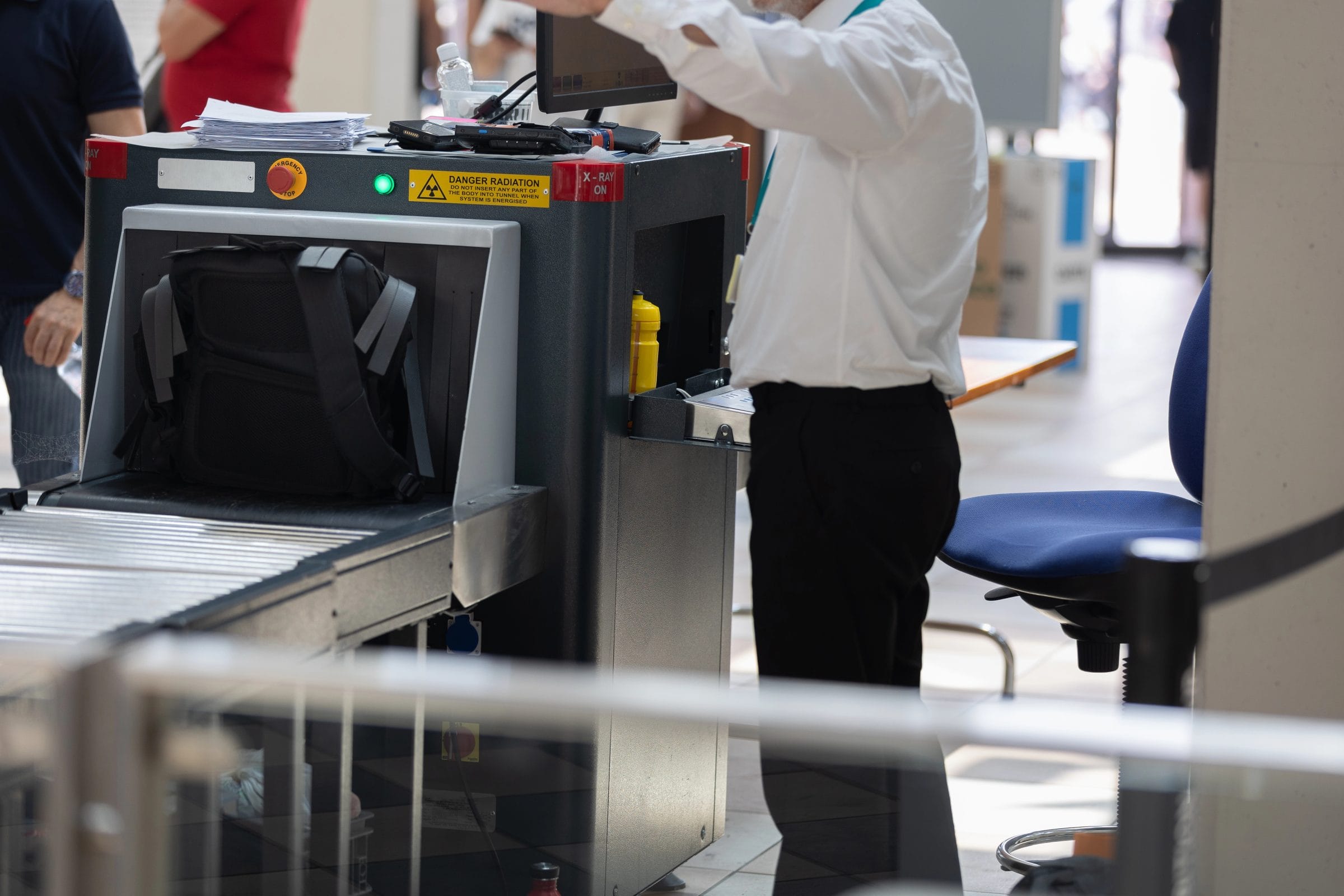
Your next business trip just got more complicated
You’ve got a client meeting in Jakarta on Thursday and a supplier visit in Penang on Friday. Your whole week depends on two flights, a hotel booking, and a long chain of people you’ve never met doing their jobs correctly — including the person flying the plane. So when you read that a Malaysia Airlines pilot was arrested in Jakarta for allegedly trying to smuggle 14 packages of ecstasy pills weighing 25.19kg plus methamphetamine, your first reaction isn’t about the drugs. It’s: Is my next trip going to be affected? What does this mean for getting my people and goods where they need to be?
Those are fair questions. The government has already responded with plans to strengthen security screening for pilots, cabin crew and airline staff at airports nationwide. That means changes to how airports operate — and a useful reminder for you about how trust works inside your own company.
Let’s talk about what actually changes for SME owners like you, what stays the same, and the quieter lesson buried in this story.
TL;DR: Expect slower airport processing and more flight delays as crew screening tightens. Add buffer time to travel plans and talk to your freight forwarder about air cargo lead times. And the deeper lesson: the people you trust most with access to your business deserve verification, too. Trust is not a security strategy.
What This Means (In Plain Language)
After the arrest, the Malaysian Border Control and Protection Agency (AKPS) said it would enhance existing procedures, with pilots, crew members and airline staff expected to undergo more comprehensive checks. The Transport Ministry secretary-general, the Royal Malaysia Police and Malaysia Aviation Group all sat in on the discussion. Authorities are also reportedly waiting for details from police on how the drugs were concealed and evaded airport scanners — which tells you the response will go beyond just adding a few extra questions at security.
The agency’s director-general pushed back against claims that flight crews get lighter screening, insisting pilots and cabin crew are subject to the same security procedures as other passengers. Whether or not that has been true historically, the optics have clearly shifted. When an authority says “no stone will be left unturned” regarding its own personnel, you can expect the same treatment to roll out to everyone working airside.
What does “more comprehensive checks” look like in practice? Based on how security upgrades typically unfold: additional screening layers for airport staff, more frequent random baggage inspections, slower movement through restricted areas, and longer vetting processes for aviation-sector hires. None of these are dramatic on their own. Together, they slow the clock on everything that moves through the airport.
The most dangerous gap in any operation isn’t the stranger at the door — it’s the insider whose access you stopped questioning.
How This Applies to Malaysian SMEs
1. Your business travel just got a new variable. If you’re an SME owner who flies monthly — sales trips to Singapore, sourcing visits to China, trade shows anywhere — you now travel on schedules that may shift because crew need to arrive earlier for enhanced pre-flight screening. A 20-minute delay on the ground compounds into missed connections and a client meeting that starts with you apologising instead of presenting. If you’re the kind of person who books the first flight out and the last flight back, change that habit. Build in a 90-minute minimum layover window and avoid scheduling client meetings on the same day you fly internationally. Yes, it burns a day. It beats explaining to a buyer why you’re an hour late for a contract discussion.
2. Insider risk is your risk, not just the airline’s. Consider what this case is really about from a management perspective. The suspect was a 39-year-old pilot, arrested at Soekarno-Hatta International Airport on July 28 after customs officers noticed something off about his suitcase. He had a uniform, a badge, and a schedule everyone depended on. He operated Malaysia Airlines flight MH727 from Kuala Lumpur to Jakarta carrying at least 170 passengers — a position of enormous trust. And authorities allege he used that trust to bypass scrutiny.
Now map that onto your own operations. Who in your company has the keys to the store? Who holds the password to the accounting system? Who’s the one person who knows how your SOPs actually work? In a team of five or ten, you assume trust because everyone knows everyone. But the same principle that’s driving AKPS to tighten checks should drive you to tighten yours. Run reference checks on new hires. Separate duties — the person who raises a payment shouldn’t be the person who approves it. Review who still has access to systems after employees leave. These are boring, unglamorous tasks, and they matter far more than most business owners realise.
3. Air freight and import-export timelines will shift. If your SME ships goods by air — samples, spare parts, fashion, perishables — you are at the mercy of airport throughput. When customs teams are retrained to look for concealment methods, they look harder at everything crossing the tarmac, not just people. As Indonesian investigators piece together the smuggling method, expect scanner recalibration and more physical inspections. The practical move: add buffer lead time to your supply chain assumptions. Your freight forwarder’s “two days door-to-door” estimate may quietly become three. Re-forecast your inventory buffer now, before a delay turns into a missed production run.
4. If you work with airlines, new compliance is coming your way. The meeting involving AKPS, the Royal Malaysia Police and Malaysia Aviation Group shows that airlines and their contractors will carry the implementation burden. If you supply anything to the aviation sector — catering, transport, ground handling, software — expect new background check requirements for your staff who work airside. Don’t wait for the contract amendment. Start documenting your staff vetting process now, and automate it if you have more than a handful of people to track. The paperwork is coming; having it ready is a competitive advantage.
The Numbers Behind The Headline
| Fact | Detail |
|---|---|
| Date of arrest | July 28, Soekarno-Hatta Airport Terminal 3, Jakarta |
| Contraband found | 70,114 ecstasy pills (25.19kg) plus a package of methamphetamine |
| Flight operated | MH727, Kuala Lumpur–Jakarta, carrying at least 170 passengers |
| Suspect profile | 39-year-old Malaysian pilot, identified only as MSBO |
| Legal exposure | Charges under Indonesian narcotics laws; severe penalties including possible death penalty |
| Government response | Enhanced screening announced for pilots, crew and airline staff nationwide |
All details sourced from BusinessToday’s report.
Practical Takeaways
- Add buffer time to every flight booking: minimum 90 minutes between connections; avoid same-day international arrival and client meetings where possible.
- Check flight status the morning of departure: delays from enhanced crew screening will appear without warning.
- Run basic background checks on every new hire: reference calls, ID verification, and a quick public records search — and keep a file for each employee.
- Split critical access: no single person should both request and approve a payment, shipment, or data export.
- Review system and key access quarterly: remove access for ex-employees immediately. It’s the simplest gap to close and the easiest to forget.
- Talk to your freight forwarder this week: ask what transit time assumptions they use, then build a buffer into your inventory forecasts.
- If you’re aviation-adjacent, document your staff vetting process now: the new checks will eventually flow down the contract chain.
The Bigger Picture
Step back from the drugs and the airport security headline. What you’re watching is the continuation of a long trend: trust is being replaced by verification. Governments, banks, border agencies — every institution is moving from “we know these people” to “we check everyone, every time.” For an airport, that means more screening. For a small business, it’s a principle worth stealing before you’re forced to adopt it.
Think about how many of your daily operations run on unspoken trust. The employee who’s been with you since day one. The supplier you’ve never audited. The password that’s never been rotated. The “I’ll send it tomorrow” you’ve never chased. None of those are problems — until one of them is.
The aviation sector will absorb these new checks, and flights will keep flying. Your suppliers will adjust, your trips will go ahead, your cargo will eventually arrive. The longer-term question is simpler: what systems have you built into your own company so that you don’t need to assume trust? When verification is built into your operations — automated, quiet, routine — it doesn’t slow you down. It just protects what you’ve built, the way airport checks are meant to protect everyone who flies. The pilot’s arrest is a reminder written in someone else’s failure. You’d be wise to read it as your own warning.
Ready to Streamline Your Operations?
Your business should run itself. AutoRunBiz deploys AI agents to automate your daily operations — WhatsApp orders, invoicing, customer follow-ups, and accounting. Book a free 15-min ops audit to see where automation fits your business →