
Why a Nationwide Tech Summit Actually Concerns Your SME
You run a business. You’ve got payroll to meet, customers to serve, and a never-ending to-do list. The news that the KL20 Summit is expanding to Penang and Johor might have skimmed past your attention — another government event, another acronym, another press conference.
But here’s the thing: when the federal government reorganises a flagship tech initiative around eight priority sectors and pushes it into Penang and Johor, it’s not just startup news. It’s a signal about where investment, talent, and support are heading over the next few years. And that affects how you should plan your operations, your tech stack, and your partnerships.
This isn’t about attending a summit. It’s about understanding the direction Malaysia’s business environment is moving — so you’re not catching up later.
TL;DR
- KL20 Summit 2026 is now a three-city series: Penang (Sept 24), Johor (Sept 29), Kuala Lumpur (Nov 5).
- Coverage expands from four to eight sectors, including manufacturing, automation, green tech, and the digital economy.
- This year’s edition is invitation-only and focused on business matchmaking — organisers want deals, not crowds.
What This Means
KL20 started in 2024 as a Kuala Lumpur-centric summit aimed at positioning Malaysia as a serious startup hub. The 2026 edition is different in three ways. First, it’s going regional — Penang for semiconductors and electronics, Johor for creative industries and digital gaming. Second, it’s doubling down on sectors: from four to eight, now covering green technology, agritech, manufacturing and automation, Islamic finance, creative economy, and digital economy. Third, it’s invitation-only, which signals a shift from publicity to deal-making.
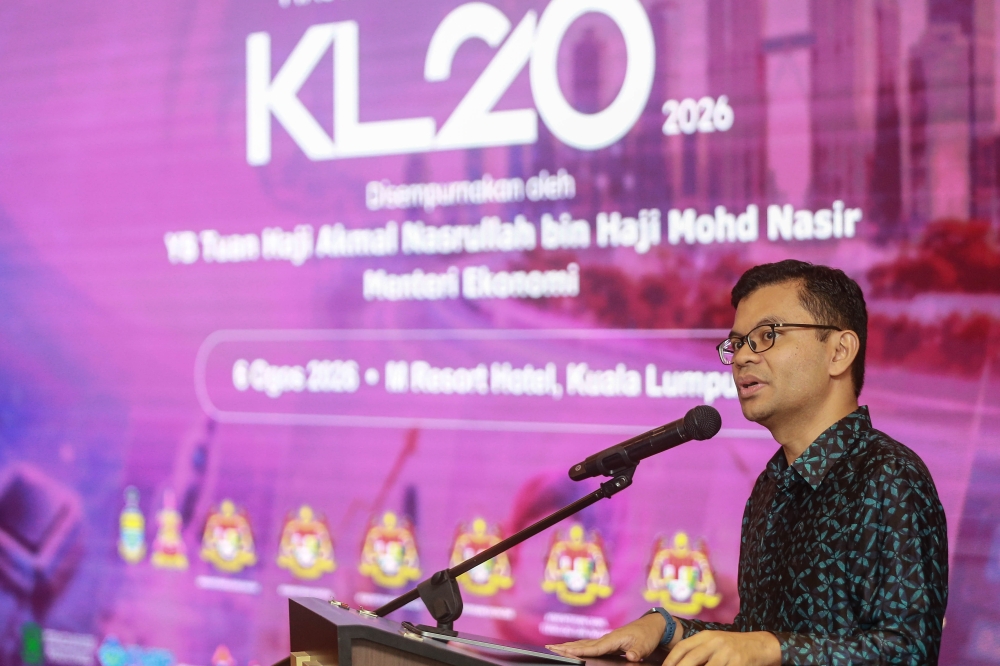
Economy Minister Akmal Nasrullah Mohd Nasir put it plainly in the Malay Mail report:
“We do not want Malaysia to be merely a market where technology is sold. We want Malaysia to be a country where technology is built, financed, tested and scaled.” — Economy Minister Akmal Nasrullah Mohd Nasir
Translated for a small business owner: the government is betting on locally developed technology and high-value industry. That means more support for companies that make things, automate things, and build digital products — and more pressure on businesses that remain stuck in manual, low-value processes.
How This Applies to Malaysian SMEs
Let’s be honest: most SMEs won’t get an invitation to KL20. The summit ecosystem — investors, venture capital funds, high-growth startups — isn’t your daily reality. But the ripple effects are already reaching you.
First, manufacturing and automation SMEs should pay close attention to Penang. The “Silicon Surge” theme isn’t just about chip design. It’s about the entire ecosystem around semiconductors — precision machining, testing equipment, packaging, logistics, and increasingly, automation software. If your business supplies or services the electronics sector, or if you’re looking to automate your production floor, the government’s focus on Penang’s industrial strengths means more incentives, more talent pipelines, and more demand for automation solutions. State-level partners like InvestPenang and CREST are the channels through which that support flows.
Second, the Johor edition is a direct nod to the Johor-Singapore Special Economic Zone. If you’re in creative services, digital content, or any kind of tech-enabled service in the south, the “Creative Reimagined” focus on animation, visual effects, and digital gaming signals where government-backed acceleration programs will point. But the broader point stands: the JS-SEZ is not just about big factories. It’s about a services economy that serves both sides of the causeway. SMEs in Johor that digitise their operations now will be better positioned when larger players come looking for local partners.
Third — and this is the one that matters most — the minister’s “built, tested and scaled” line is an invitation to SMEs. Where does new Malaysian technology get tested? In real businesses. Whether it’s an agritech startup wanting to pilot with a plantation SME, or a manufacturing automation company looking for a factory floor to prove its system, SMEs are the testing ground. That puts you in a stronger negotiating position. The KL20 organisers, backed by Khazanah, KWAP, and agencies including MRANTI, MDEC, and Cradle, are actively building links between state innovation ecosystems. Those links translate into programs, accelerators, and pilot projects — many of which need SME participants, not just startups.
The shift from four to eight focus sectors also matters. Manufacturing and automation were already there. Now the digital economy and creative economy have joined. If you run a business that has anything to do with digital services — from e-commerce to software to content production — your industry is now officially a federal priority. That changes how you should think about grant applications, partnerships, and long-term planning.
Practical Takeaways
- Know your sector. Check if your business falls into one of the eight KL20 sectors: green tech, agritech, manufacturing and automation, Islamic finance, creative economy, digital economy, or digital gaming. If yes, start tracking programs from MDEC, Cradle, and MRANTI.
- Watch your state. If you’re in Penang or Johor, monitor state-level initiatives from InvestPenang, CREST, or SIDEC — regional expansion means more local support is coming.
- Review your automation roadmap. The push for high-value manufacturing means labour-reliant processes will become harder to staff and relatively more expensive to run. Automation isn’t a luxury anymore.
- Say yes to pilots — on your terms. If a tech startup approaches you to test their product in your business, negotiate a reduced-fee trial in exchange for being a reference customer. That’s a legitimate value exchange.
- Track KL20’s four success metrics. The government says it will measure success by investment commitments, talent attraction, ecosystem links, and startups’ access to funding and markets. What gets funded tells you what to build towards.
KL20 2026 At a Glance
| City | Date | Theme | Focus |
|---|---|---|---|
| Penang | Sept 24 | Silicon Surge | Semiconductors, electronics, chip design |
| Johor | Sept 29 | Creative Reimagined | Animation, VFX, gaming, digital content |
| Kuala Lumpur | Nov 5 | Activating Malaysia’s Tech Arsenal | All eight priority sectors |
Source: Malay Mail, August 6, 2026
The Bigger Picture
There’s a long-term ambition behind all this: positioning Kuala Lumpur among the world’s top 20 startup ecosystems by 2030. Rankings are one thing, but the minister was careful to say success will be measured by tangible outcomes, not positions on a list.
For your SME, the bigger picture is simpler. Malaysia is trying to move up the value chain. That means the operating environment — incentives, talent availability, infrastructure, even the expectations of large corporate customers — will gradually reshape around high-value, technology-enabled businesses. The owners who treat this as an opportunity to automate, digitise, and position themselves as partners to the tech economy will find more doors open. Those who wait will find the ground shifting beneath them.
You don’t need an invitation to KL20 to benefit from its direction. You just need to read the signal and act on it.
Ready to Streamline Your Operations?
Your business should run itself. AutoRunBiz deploys AI agents to automate your daily operations — WhatsApp orders, invoicing, customer follow-ups, and accounting. Book a free 15-min ops audit to see where automation fits your business →