
When “Almost Always Right” Is Still a Business Risk
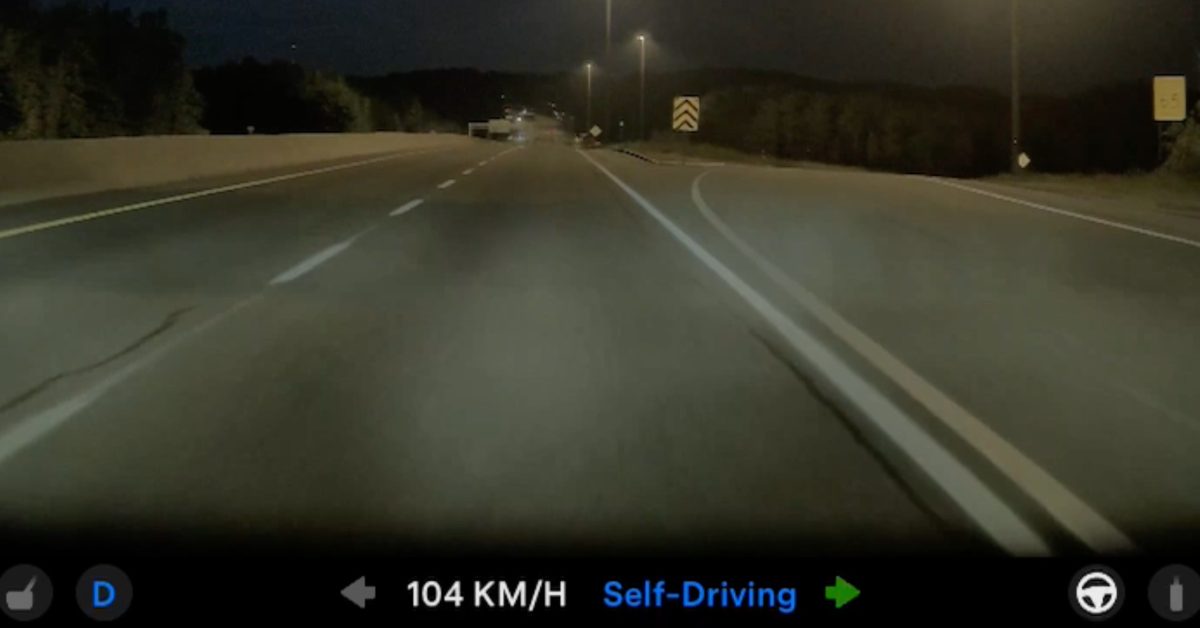
A Tesla driver in Quebec recently reported that Full Self-Driving (FSD) v14.3.6 suddenly attempted to take a highway exit after the vehicle had already passed it. The car was travelling at 110 km/h, and the driver intervened before it moved towards a ditch, according to Electrek’s report.
For a Malaysian SME owner, this is not only a story about electric cars or Tesla. It is a practical warning about automation: a system can perform impressively for a long time, then make one unexpected decision in a situation that appears simple. That same pattern can affect automated quotations, customer-service chatbots, inventory recommendations, payroll workflows, document processing and AI-assisted approvals.
The important question is not whether automation is useful. It is. The question is whether you have designed your business so that one incorrect automated decision can be detected and stopped before it creates a serious problem.
What Happened
The incident occurred on Autoroute 55 in Quebec’s Mauricie region while Tesla FSD v14.3.6 was active. The vehicle was travelling at 110 km/h on a dry, divided highway at night, with clear lane markings, reflective signs and no traffic in either direction. These conditions appeared relatively straightforward for a driving-assistance system, as described in the source report.
After the car passed beneath the sign for exit 217, the right turn signal activated and the vehicle began moving towards the shoulder. The exit ramp was already behind the car, meaning the attempted manoeuvre could have led towards a ditch. The driver took control, and the “Self-Driving” display reportedly disappeared when the vehicle had slowed to 102 km/h, according to Electrek’s account.
The report also notes that Tesla’s release notes described improvements to reinforcement-learning training, an MLIR-based compiler rewrite intended to deliver a 20% faster reaction time, and better responses to system degradation, based on the published coverage. Yet faster reactions and fewer disengagements do not automatically prove that an automated system is safe for unsupervised use.
“A system that works almost perfectly creates a trap — drivers trust it just enough to stop paying attention, but it still fails unpredictably and sometimes critically.” — Fred Lambert, quoted in Electrek’s report.
Why This Matters for Malaysian SMEs
Most Malaysian SMEs are not operating autonomous vehicles, but many are beginning to use systems that make decisions with limited human review. A restaurant may use software to predict ingredient demand. A distributor may automate reorder suggestions. A service company may allow an AI assistant to answer customer questions. A small accounting team may use document automation to extract figures from invoices or receipts.
These tools can be highly effective under normal conditions. The risk appears when an unusual input causes the system to act confidently but incorrectly. A chatbot may misunderstand a customer’s request and promise an unavailable service. An inventory system may interpret a duplicated purchase order as genuine demand. An AI document tool may read a handwritten amount incorrectly. A workflow may send a quotation to the wrong recipient because two customer records look similar.
In Malaysia, the operating environment adds practical complexity. Businesses may handle Bahasa Malaysia, English, Mandarin, Tamil, local abbreviations, WhatsApp messages, scanned documents, inconsistent addresses and changing delivery instructions. A system tested mainly on clean, standardised data may behave differently when it encounters the mixed formats common in day-to-day SME operations.
The Tesla incident highlights a human-factor problem as well. When automation succeeds repeatedly, you may stop checking its output. This is called over-reliance, and it can be more dangerous than obvious system failure because the warning signs become less visible. If your staff believe an automated recommendation is usually correct, they may approve it without asking whether it makes sense in the current situation.
Practical Controls for Your Business
| Automation area | Possible failure | Useful control |
|---|---|---|
| Customer-service chatbot | Gives an incorrect promise or policy answer | Escalate complaints, refunds and unusual requests to a human |
| Quotation workflow | Uses the wrong item, customer or quantity | Require approval before sending high-impact quotations |
| Inventory automation | Recommends unnecessary or incorrect replenishment | Set stock thresholds and review unusual order spikes |
| Invoice extraction | Misreads amount, tax or bank details | Match extracted data against the original document |
| Staff scheduling | Creates an impractical shift plan | Check labour rules, leave records and manager constraints |
The safest approach is not to reject automation. It is to define where automation may act independently and where it must pause for approval. For example, an AI tool can categorise incoming leads, but a salesperson should confirm the customer’s needs before a quotation is issued. An automated system can flag overdue invoices, but a staff member should review the message before it is sent to a long-term customer.
The Bigger Picture
The FSD story shows the difference between capability and accountability. A system may navigate many situations successfully, but the business using it still needs a clear responsibility structure. Who reviews the output? Who can stop the workflow? What happens when the system is uncertain? Can you trace the decision later?
These questions matter as AI becomes more embedded in everyday business software. Industry reports and public discussions about autonomous driving continue to debate safety, supervision and the limits of camera-based systems, including commentary referenced in the Electrek article. For SMEs, the equivalent debate is about whether an AI assistant should merely recommend an action or be allowed to complete it.
A useful rule is to connect the level of human review to the potential impact of the decision. A typo in an internal summary is inconvenient. Sending confidential information to the wrong person, changing a customer’s order, submitting an incorrect statutory document or approving an unsuitable supplier action is much more serious.
You should also monitor near-misses, not only completed failures. If an employee catches an incorrect AI-generated quotation before it reaches a customer, record the incident. If a chatbot repeatedly misunderstands one type of request, update its instructions or route that category to a person. These small events reveal where your process is fragile.
A Safer Automation Checklist
- Define which actions AI may recommend and which actions require approval.
- Set clear limits for unusual amounts, duplicate records and high-risk transactions.
- Keep an audit trail showing the input, system output and final human decision.
- Give staff a simple way to pause, reject or override an automated action.
- Review outputs in the languages and document formats your customers actually use.
- Test the workflow using incorrect, incomplete and contradictory information.
- Train employees to question confident-looking results instead of treating them as facts.
- Review automation performance after software updates or process changes.
For a Malaysian SME, automation should reduce repetitive work without removing judgement from situations that affect customers, compliance or business reputation. The lesson from Tesla’s reported near-miss is straightforward: impressive performance can encourage complacency, while a single unexpected decision can expose the weakness in an otherwise successful system.
Use AI to help your team move faster, but design every important workflow with a human checkpoint, an override and a record of what happened. That is how you gain the productivity benefits of automation while keeping control of your business.
Ready to Streamline Your Operations?
Technology moves fast. Your operations should keep up. AutoRunBiz builds AI systems that run your daily workflows — from WhatsApp order capture to accounting. Book a free 15-min ops audit →