
Your Business Just Got a New Operating System Update
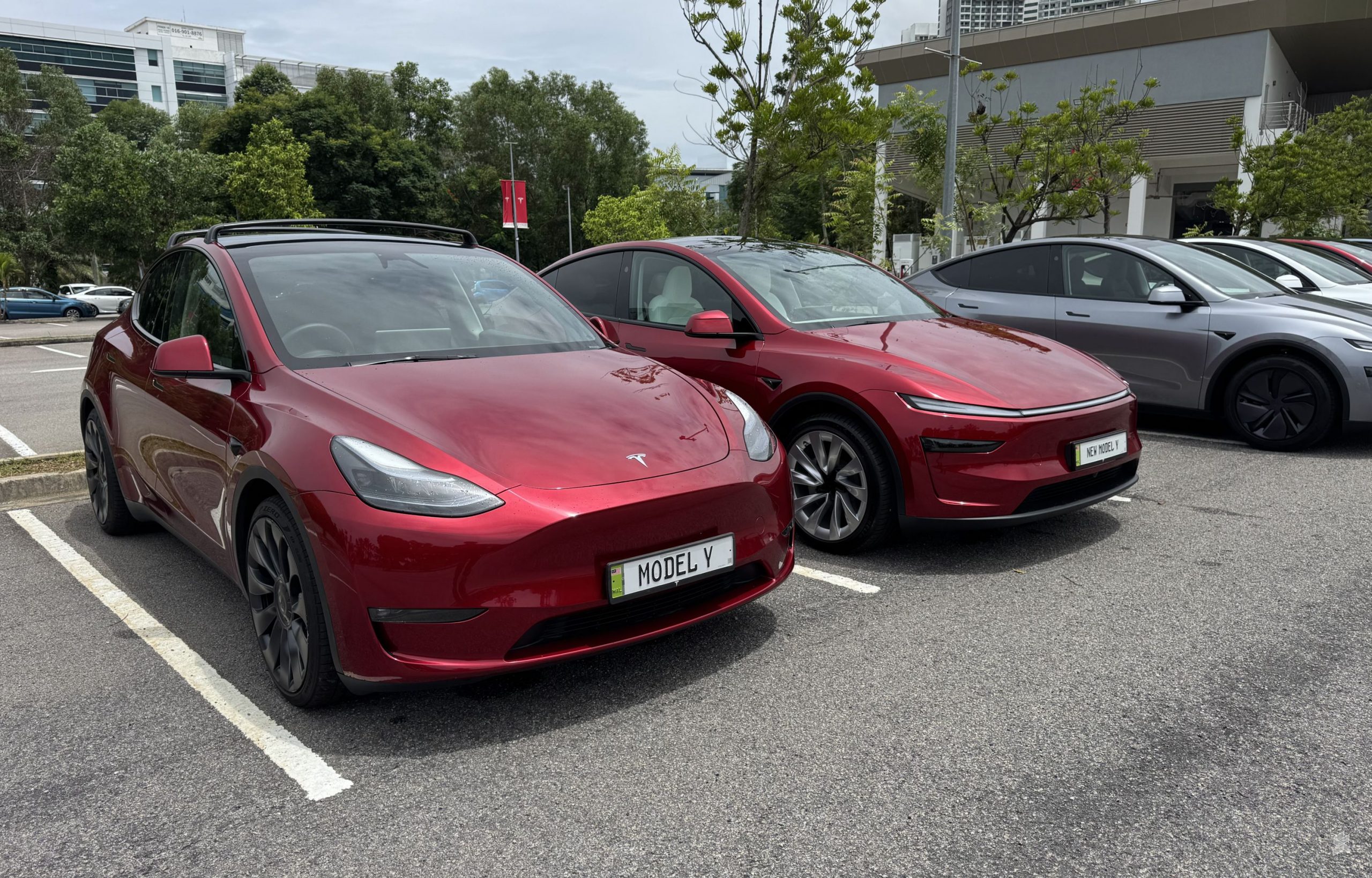
Imagine your best salesperson is stuck in traffic. Now imagine the car automatically tells your CRM to reschedule the next meeting. It adjusts the route, notifies the client, and books a charging slot at the destination. This level of automated choreography is not science fiction. It is the standard set by the 16,000 Teslas now operating on Malaysian roads. The news from Soyacincau reporting this milestone is a direct signal for your SME to audit its own automation readiness. The infrastructure is evolving, and your business workflows need to keep pace.
What Happened: The Infrastructure Hardens
The report confirms over 16,000 Teslas are registered in Malaysia, with the Supercharger network expanding aggressively. This isn’t just a stat for car enthusiasts. It represents a mass deployment of high-bandwidth, data-generating assets across the country. Every Supercharger station is a node of high-energy consumption, perfectly integrated with a digital payment and scheduling ecosystem. For an SME, this maturity is critical. It means the network is stable enough to build a business workflow around. If you manage a fleet or rely on mobile staff, the excuse of “experimental infrastructure” is no longer valid.
Look at the requirement baked into this expansion: real-time uptime monitoring, dynamic load balancing, and seamless payment integration. Tesla has automated this for a physical asset that travels at highway speeds. The equivalent requirement for your business is a CRM that updates in real-time, a communication stack that never drops a lead, and a process that moves as fast as your customer’s expectations.
Why This Matters for Malaysian SMEs
1. The Dispatch Logic Evolution: If your SME operates even a single service vehicle—plumbing, catering, courier, mobile repair—you are in the logistics business. The 16,000 Teslas prove the shift to electric is real and the charging grid is dense. Your dispatch logic must evolve. Can your scheduling software account for a 30-minute charging stop at a specific Supercharger location? Can your CRM alert the customer that the technician is charging nearby and will be slightly delayed? This is not about the vehicle type; it is about the level of data integration required to run a modern service business where every variable is tracked and optimized in real-time.
2. The Customer Expectation Acceleration: The average Tesla owner expects app-driven, frictionless service. They are used to over-the-air updates and proactive notifications. If your SME targets premium consumers or B2B clients, your automation stack must match this standard. Your booking system must be as smooth as a plug-and-charge experience. Your follow-up sequence must be as automated as a software update. Sixteen thousand drivers are now conditioned to this level of service. They are your customers or your key talent. Can your business meet them there?
“An infrastructure shift of this magnitude—16,000 high-tech assets syncing with a central grid—demands that every adjacent business digitizes its operations. The era of manual booking and paper logs is ending as fast as a Supercharger session.”
3. The Data Dividend: Every Tesla on the road contributes petabytes of telemetry data. Traffic patterns, peak usage times, route efficiency. Your business generates data too. The SMEs winning tomorrow are the ones treating their operational data as seriously as Tesla treats its fleet data. Are you using automated dashboards to spot operational bottlenecks? Is your inventory system predicting demand based on real-time sales velocity? The gap between the “haves” (digitally integrated businesses) and the “have-nots” (manual operators) is widening. The 16,000 Teslas are a visible reminder that data is the new fuel for your business engine.
The Bigger Picture: Electrification and Digitization Converge
This milestone is a perfect metaphor for the convergence of energy and information. The Malaysian grid is learning to handle variable, high-powered loads from a distributed fleet. This is exactly the same technical challenge your SME faces with cloud computing, seasonal traffic spikes, or remote workforce management. If the national infrastructure can adapt to the load of 16,000 supercharged vehicles, your business can adapt to a fully integrated, end-to-end automated workflow without a hitch.
We are past the point of “if” for automation. We are at the point of “how fast”. The Supercharger network is the physical manifestation of a frictionless experience. Your business automation should be the digital manifestation of that same principle. The question isn’t whether you should automate. The question is whether your workflows are as smoothly integrated as the infrastructure that just welcomed its 16,000th high-tech asset.
From Petrol Ledgers to Electric Dashboards
| Legacy Workflow (Petrol Mindset) | Automated Workflow (EV Mindset) |
|---|---|
| Manual dispatch routing with printed maps | CRM integration with real-time traffic and charger data |
| Reactive customer call management | Automated SMS/App notifications for service updates |
| Separate invoicing and logistics systems | Unified platform handling order, route, and payment |
| Monthly inventory checks | Automated re-ordering based on demand velocity |
| Business decisions based on annual reports | Real-time dashboards mirroring fleet telemetry |
The 16,000 Teslas on the ground are not just a milestone for a car company. They are a moving benchmark for efficiency, data integration, and customer experience. The road ahead is electric, silent, and ruthlessly efficient. Are your business processes ready for the drive?
Ready to Streamline Your Operations?
Technology moves fast. Your operations should keep up. AutoRunBiz builds AI systems that run your daily workflows — from WhatsApp order capture to accounting. Book a free 15-min ops audit →