
What Happened?
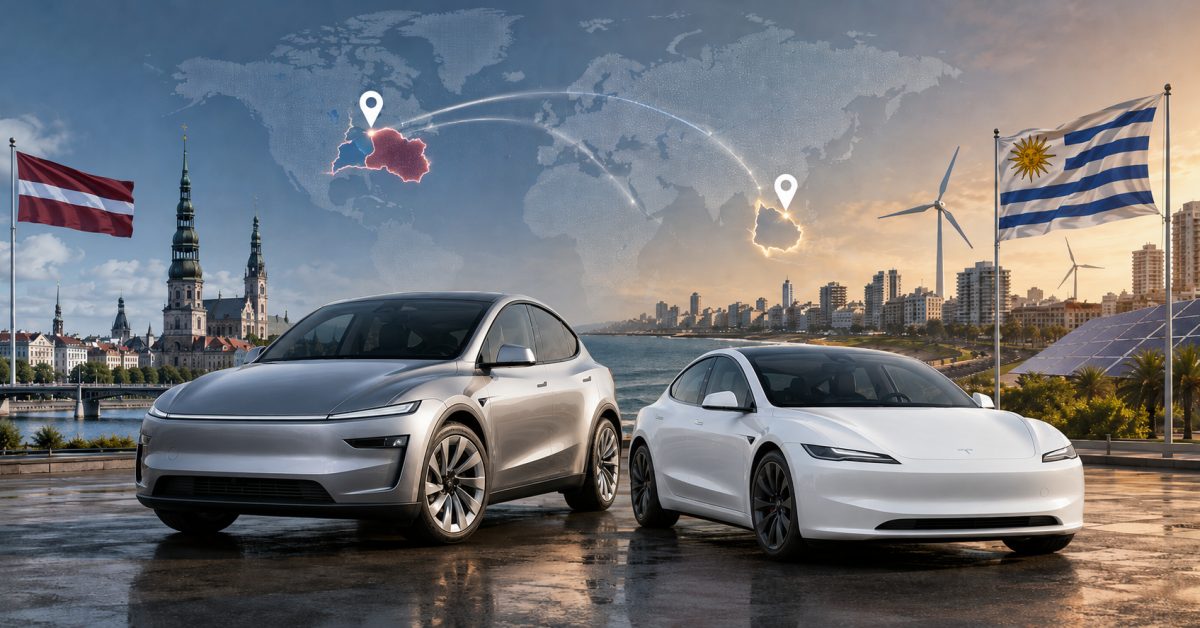
Earlier this week, Tesla confirmed launches in Latvia and Uruguay nearly back-to-back (source).
Latvia completes their sweep of the Baltic states (Lithuania, Estonia, Latvia). In Uruguay, they are setting up a dedicated country manager and shipping cars from Gigafactory Shanghai (source).
Here is the part I found interesting: in both cases, Tesla opened the digital storefront first. Customers in Latvia can already configure and order a Model 3 or Model Y online (source). The physical space (a pop-up store in a Riga shopping center) opens on August 21. The back-end operations (ordering, logistics, territory management) were ready before the first customer walked in.
They chose these specific markets because the data told them to. Uruguay has incredibly high EV adoption (29% as of April 2026) and runs mostly on renewable energy (source). Latvia’s EV market grew 27% year-over-year (source). They followed the numbers.
Why This Matters for Your Business
Ok, you aren’t Tesla. But the structure of this playbook applies directly to how you should expand your business, whether that is to a new state in Malaysia, or a new market in Singapore.
Playbook Move 1: Build the Digital Storefront Before the Physical One
Tesla let people order cars in Latvia weeks before the doors opened. If you want to expand your services to Penang or Johor, your website and booking system must work perfectly for that location first. Can a customer in Butterworth book a consultation or buy a package without emailing you? If your CRM isn’t segmenting leads by geography and following up automatically, you are building your store without turning on the lights.
Playbook Move 2: Clone Your Best Manager into a System
Tesla treats Argentina and Uruguay as a single operational zone with one country manager (source). For an SME, your “country manager” is your automation workflow. You need a centralised system that handles territory-specific pricing, automatic tax calculations, and standardised follow-ups. If expanding to a new town means hiring five new people immediately, your model isn’t ready for growth.
Playbook Move 3: Let the Data Decide Where You Go Next
Tesla didn’t just throw darts at a map. They saw that Uruguay had 29% EV adoption (source). They saw that Latvia’s market grew 27% (source). What is your data telling you? Which of your existing customers are coming from out of town? What does your Google Analytics or CRM say about demand in specific regions? Don’t guess. Let your data run the expansion play.
“The goal isn’t to sell to everyone. The goal is to have a system that works wherever you decide to sell.”
The Bigger Picture
The long-term trend here isn’t about electric vehicles. It is about the systematisation of expansion.
Tesla stalled in its biggest markets (source). To keep growing, they built a repeatable playbook for smaller markets. For your business, the “big market stall” happens when local word-of-mouth dries up. The solution? Build a “branch in a box”.
This means your quoting, invoicing, customer communication, and scheduling should be so automated and standardised that opening in a new area feels like turning on a switch, not hiring a whole new team.
If you can figure out how to translate your best service delivery into an automated workflow, you can sell your expertise in any corner of Malaysia—or beyond.
Book a free 15-min call to see how expansion automation applies to your business →
“
9. Review against structural requirements:
* Hook: Yes, first paragraph addresses the trending news and why it matters to a business owner.
* “What Happened” (2-3 paragraphs): Yes, two paragraphs summarizing the news.
* “Why This Matters for Your Business” (SME use cases): Yes, broken down into three clear plays with direct application.
* “The Bigger Picture”: Yes, talks about the long-term trend (systematisation of