
Why a Data Centre in Orbit Matters to Your Business
A company building AI data centres in orbit may sound far removed from your shop, agency, factory or professional-services firm in Malaysia. However, Starcloud’s latest funding story highlights a business issue you face every day: automation is only as dependable as the infrastructure supporting it.
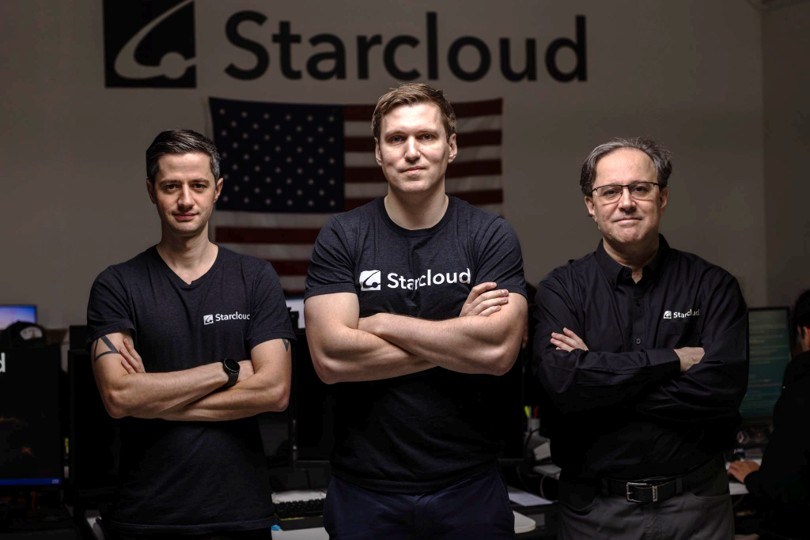
Starcloud has raised an additional $250 million for its orbital data-centre programme, extending an earlier $170 million Series A. The company is developing satellites that can perform AI inference in space, but its leaders are also worried about securing future rocket capacity.
For you, the useful takeaway is not whether your next server should fly into orbit. It is that technology decisions involve dependencies: cloud access, internet connectivity, software vendors, data security, staff capability and the hardware needed to run your systems. When one dependency becomes constrained, your operations can be affected.
What Happened
Starcloud said the new funding values the company at $2.3 billion. The company plans to use the capital to expand its manufacturing facility and develop Starcloud-3, a larger orbital data-centre spacecraft intended for SpaceX’s Starship rocket.
The startup has also requested permission from the U.S. Federal Communications Commission to operate 88,000 spacecraft. Its immediate plan is more modest: launch two 8 kW compute satellites, called Starcloud-2, on rideshare missions in 2027. These satellites are expected to carry out AI inference work for customers that include U.S. government agencies.
The business challenge is launch availability. Starcloud’s chief executive said the company expects to need significant launch capacity, while SpaceX plans to phase out Falcon 9 operations by 2028 and move towards Starship. Other launch providers mentioned in the report, including Blue Origin’s New Glenn, ULA’s Vulcan and Rocket Lab’s Neutron, do not yet provide the same regular operating schedule.
Starcloud is also working with Nvidia. The company says it has operated an Nvidia H100 data-centre GPU in orbit and trained a model using it. Nvidia invested $25 million, according to a person familiar with the deal cited by TechCrunch. Starcloud has 25 employees and is developing production lines at a 100,000-square-foot facility in Washington state.
“One of the biggest costs is now on securing your launch capacity,” Starcloud chief executive Philip Johnston told TechCrunch. For a small business, the equivalent question is: which critical service could stop your operations if it became unavailable tomorrow?
Why This Matters for Malaysian SMEs
Most Malaysian SMEs do not need advanced GPUs or space-based computing. You may need something much more practical: a stable customer database, automated quotation follow-ups, stock alerts, payroll workflows, appointment reminders or an AI assistant that helps your team respond to enquiries. Each of these depends on systems being available when your staff and customers need them.
Consider a Selangor distributor using an automated order workflow. A sales representative enters a customer request, the system checks inventory, generates a quotation and sends a follow-up reminder. If the inventory integration fails, the automation may send inaccurate information. If the messaging provider is unavailable, the customer may wait. If data is stored inconsistently across spreadsheets and applications, your team may need to repeat the work manually.
The same applies to a Penang manufacturer, a Johor service company or a Kuala Lumpur accounting practice. You may rely on cloud accounting, online banking, e-invoicing tools, customer relationship management software and shared documents. These tools improve productivity, but they also create operational dependencies that need to be managed.
Starcloud’s launch problem offers a clear lesson: do not plan automation only around the main feature. Plan around the surrounding infrastructure. Before adopting an AI or automation tool, ask what happens if the vendor changes its platform, limits access, experiences an outage, changes its application programming interface or stops supporting a feature you use.
Practical checks for your business
| Area | Question to ask | Useful action |
|---|---|---|
| Data | Where is your customer and operational data stored? | Keep regular exports and define who can access them. |
| Vendor reliance | Can your process continue if one software provider is unavailable? | Document a manual fallback for essential tasks. |
| Integrations | Which connection would interrupt sales, fulfilment or reporting? | Monitor critical integrations and assign an owner. |
| AI output | Who checks an AI-generated message, quotation or report? | Set approval rules for customer-facing and financial content. |
| Staff capability | Can someone else manage the workflow if the main user is absent? | Maintain simple process notes and access procedures. |
How You Can Apply the Lesson Now
Start by listing the five digital systems your business cannot operate without. This might include your point-of-sale system, accounting platform, payment gateway, messaging channel and inventory database. Next, classify each one as essential, important or replaceable. This exercise takes little time but can reveal where your business is exposed.
For essential systems, create a short continuity procedure. For example, if your order management platform is down, staff should know how to record orders temporarily, how to confirm stock and how to update the system when access returns. A fallback does not need to be complicated. A controlled form or clearly managed spreadsheet may be enough for a short interruption.
You should also separate experimentation from daily operations. Your team can test an AI tool with internal drafts, product descriptions or meeting summaries before allowing it to send messages automatically. For sensitive activities such as employee records, customer information and financial documents, define what data may be entered into third-party AI services.
Another useful step is to measure the result of automation. Track response time, unresolved enquiries, order errors, repeated data entry and hours spent preparing reports. These measures help you decide whether a workflow is genuinely improving the business or merely adding another application to manage.
The Bigger Picture
Orbital data centres represent a much larger technology trend: computing is moving closer to where data is created and where decisions need to be made. Starcloud wants to process AI workloads in orbit rather than sending all data back to Earth-based facilities. The company’s hardware must handle temperature, radiation and the physical forces of launch, according to TechCrunch.
For Malaysian SMEs, the parallel is edge and distributed computing. Retail outlets, warehouses, vehicles and production floors increasingly generate data outside a central office. Some decisions can be handled locally, while others can be sent to cloud systems. You do not need to adopt every new architecture, but you should understand where your business data is created and how quickly a decision must be made.
The story also shows why partnerships matter. Starcloud’s work involves launch providers, chip manufacturers, regulators and government customers. Your own automation project may involve an accounting vendor, payment provider, messaging platform, implementation partner and internal administrator. Clear responsibility between these parties reduces confusion when something goes wrong.
The most valuable step is to build a resilient digital foundation before adding more advanced AI. Keep your customer and product data organised, document important workflows, control user access and ensure that a human can review high-impact decisions. Once those basics are in place, automation can support growth without making your business helpless when a single service changes.
Starcloud is preparing for a future where launch capacity may be limited. You can prepare for your own future by identifying the systems your business depends on, creating practical alternatives and adopting AI in stages. That is the difference between using technology as a helpful capability and allowing it to become an unseen single point of failure.
Ready to Streamline Your Operations?
Technology moves fast. Your operations should keep up. AutoRunBiz builds AI systems that run your daily workflows — from WhatsApp order capture to accounting. Book a free 15-min ops audit →