
Why Practical Green Technology Matters to Your Business
If you run a café, workshop, nursery, small warehouse, property-maintenance team or service business, you probably do not need more gadgets. You need fewer disruptions, less repetitive work and equipment that helps your team finish jobs reliably.
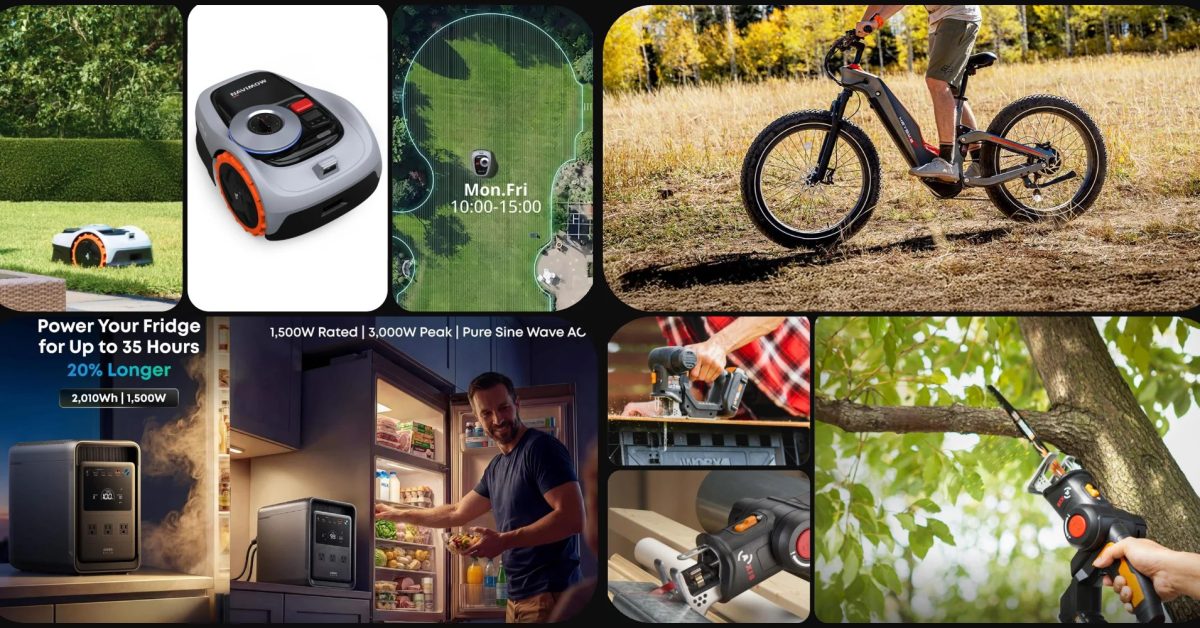
That is why the latest group of portable power, robotic maintenance and cordless tools deserves attention. The products highlighted by Electrek include the Anker SOLIX S2000 portable power station, Segway Navimow i105N robot lawn mower and WORX 2-in-1 reciprocating saw. They are consumer products, but their functions map closely to common SME problems: temporary power interruptions, routine outdoor maintenance and work that normally requires several separate tools.
The important lesson is not to copy a shopping list. It is to look at where your business loses time when staff wait, repeat manual tasks or work without a dependable power source.
TL;DR
Portable power stations, robotic maintenance equipment and cordless multi-purpose tools can support Malaysian SMEs with backup operations and more efficient field work.
Before buying, check local electrical compatibility, weather conditions, battery support, service availability and whether the equipment fits your actual workflow.
What This Means
The source article describes several product deals, including the Anker SOLIX S2000 portable power station listed at US$599.99, the Segway Navimow i105N robot lawn mower at US$669 and the WORX 2-in-1 reciprocating saw at US$72.96. Each figure is reported by Electrek, and availability may differ in Malaysia.
A portable power station is essentially a large rechargeable battery with multiple outlets and charging ports. Unlike a small power bank, it is designed to run selected appliances or equipment for longer periods. For a business, that could mean keeping a router, point-of-sale device, laptop, lighting or communications equipment running during a short interruption. It does not automatically replace a generator, and you must confirm its output, capacity and Malaysian plug requirements before relying on it.
A robot lawn mower uses sensors, positioning technology and software to maintain grass with less direct labour. The Navimow i105N is described as having centimetre-level positioning, support for narrow corridors and a setup that does not require traditional boundary wires, according to Electrek. For a property-based business, the value is not novelty. It is the possibility of moving a recurring maintenance task away from busy staff.
A cordless reciprocating saw is a cutting tool suitable for materials such as wood and metal, depending on the blade and model specification. The WORX product mentioned in the article combines reciprocating-saw and jigsaw functions and includes a battery in the listed bundle, as reported by Electrek. A multi-purpose tool can reduce the need to carry several tools, but safe operation, correct blades and proper training remain essential.
How This Applies to Malaysian SMEs
1. Retailers, cafés and small offices can prepare for short power interruptions. A temporary outage can interrupt card terminals, Wi-Fi routers, online ordering tablets, CCTV systems and staff communication. A properly sized portable power station may keep selected low-power devices running while you resolve the issue. You should list the equipment that truly needs continuity, check each device’s wattage and test the setup under supervision. Do not connect equipment simply because the socket fits.
For Malaysian businesses, heat and humidity also matter. Store the unit in a dry, ventilated location away from direct sunlight and areas prone to water exposure. Keep a written charging and inspection routine. If your premises already have a generator or building backup system, treat the portable station as a targeted supplementary option rather than assuming it can power every appliance.
2. Nurseries, event venues, homestays and property managers can reduce routine grounds work. If your business maintains a lawn, the recurring task may be cutting grass, moving equipment and checking the site afterwards. A robot mower could suit a relatively defined, open lawn with reliable charging access. It is less suitable if the area has many steps, loose objects, heavy foot traffic, steep slopes or frequent landscaping changes.
You would also need a process for wet weather, security and obstacles. Malaysia’s rain can change ground conditions quickly, so your staff should know when to pause the machine and inspect the area. A robot does not remove responsibility; it changes the job from constant manual mowing to setup, monitoring, cleaning and periodic maintenance.
3. Contractors, maintenance teams and renovation businesses can simplify field work. A cordless saw may be useful when your team needs to cut timber, plastic, branches or approved metal materials at different locations. Because it is battery-powered, workers do not need to find a nearby socket for every small task. The practical benefit is greatest when the team already uses compatible batteries and can follow a clear charging and inventory system.
However, a versatile saw is not automatically the right tool for every material. Match the blade to the job, wear eye and hearing protection where appropriate, secure the workpiece and inspect the battery before use. A short toolbox briefing can prevent a supposedly efficient tool from creating avoidable downtime or injury risk.
What to Check Before You Buy
| Business need | Useful equipment type | Checks before adoption |
|---|---|---|
| Keep essential digital equipment operating during a short interruption | Portable power station | Output rating, battery capacity, charging method, plug compatibility and safety certifications |
| Reduce repetitive lawn maintenance | Robot lawn mower | Property layout, slopes, rain exposure, security, obstacles and service support |
| Handle varied cutting work at customer sites | Cordless multi-purpose saw | Blade availability, battery ecosystem, staff training, storage and personal protective equipment |
The product specifications and listed deal figures above come from Electrek. Treat them as reference points, not Malaysian purchasing guidance. Check the manufacturer’s official documentation and local seller terms before making a decision.
Practical Takeaways
- Write down three repetitive tasks that consume staff time each week.
- Measure the equipment load before choosing a power station.
- Separate essential devices from equipment that can wait during an outage.
- Inspect your lawn for slopes, drains, furniture, cables and restricted areas before considering a robot mower.
- Confirm whether replacement blades, batteries and repairs are available locally.
- Create a charging, cleaning and storage checklist for every battery-powered device.
- Train staff on safe use instead of assuming cordless equipment is risk-free.
- Run a small trial in one work area before changing the wider workflow.
- Track time saved, interruptions avoided and maintenance issues for several weeks.
- Keep a manual backup process in case software, sensors, batteries or connectivity fail.
The best technology purchase is not the device with the most features. It is the one that removes a repeated business problem without adding a harder maintenance problem.
How to Introduce These Tools Without Disrupting Work
Start with a simple workflow review. Record who performs the task, how often it happens, what causes delays and what happens when the equipment is unavailable. For example, if two staff members spend a regular morning maintaining a property, identify the complete process rather than focusing only on mowing. Collection, charging, cleaning, obstacle removal and final inspection all belong in the calculation.
Next, assign ownership. One person should be responsible for charging and inspection, while another confirms that the equipment is used correctly. For shared tools, label batteries and keep a basic log. This prevents the common problem where equipment exists but cannot be used because the battery is missing, uncharged or stored incorrectly.
Finally, review the result with your team. Ask whether the equipment actually reduced effort or merely moved the work elsewhere. A robot mower that needs constant rescue may not help. A power station that cannot support your critical devices may create false confidence. A cordless saw that lacks suitable blades may end up unused.
The Bigger Picture
This trend points towards a more practical form of business automation. You do not need to automate every process. You need to identify small, repeated activities where a device can provide dependable support while your staff focus on customers, quality checks and skilled work.
For Malaysian SMEs, the long-term advantage may come from combining these physical tools with simple digital routines. A maintenance checklist can be stored in your team’s shared workspace. Equipment inspections can be assigned automatically. Battery status, service dates and repair notes can be recorded in one place. That creates visibility without requiring a complex technical project.
Portable power, robotic equipment and cordless tools also encourage better resilience planning. You begin asking which operations must continue, which can pause and what backup process is realistic. That thinking is useful whether the disruption comes from a power issue, heavy rain, a supplier delay or an absent staff member.
Before you follow any product deal, focus on the business problem first. Define the task, test the equipment in Malaysian conditions, train the user and measure the result. If the tool saves attention as well as time, it may deserve a permanent place in your operating system.
Ready to Streamline Your Operations?
Your business should run itself. AutoRunBiz deploys AI agents to automate your daily operations — WhatsApp orders, invoicing, customer follow-ups, and accounting. Book a free 15-min ops audit to see where automation fits your business →