
Is Your Business Communication Losing Something in Translation?
Every business owner knows that sinking feeling. You send an email in English or Chinese to a client, thinking it’s perfectly clear. But the reply feels terse, maybe even cold. It’s not the words—it’s the tone. TL;DR: Sakana Translate is a free web-based tool that focuses on preserving tone and context, not just translating words. It offers three modes—Translate, Proofread, and Ask—across Japanese, English, and Chinese. For Malaysian SMEs, this signals a shift toward translation that feels human.
“General translation tools often miss what makes a language distinctive—like honorifics, cultural nuances, or slang.” — Based on Sakana AI’s description source.
What Is Sakana Translate and Why Should Malaysian SMEs Care?
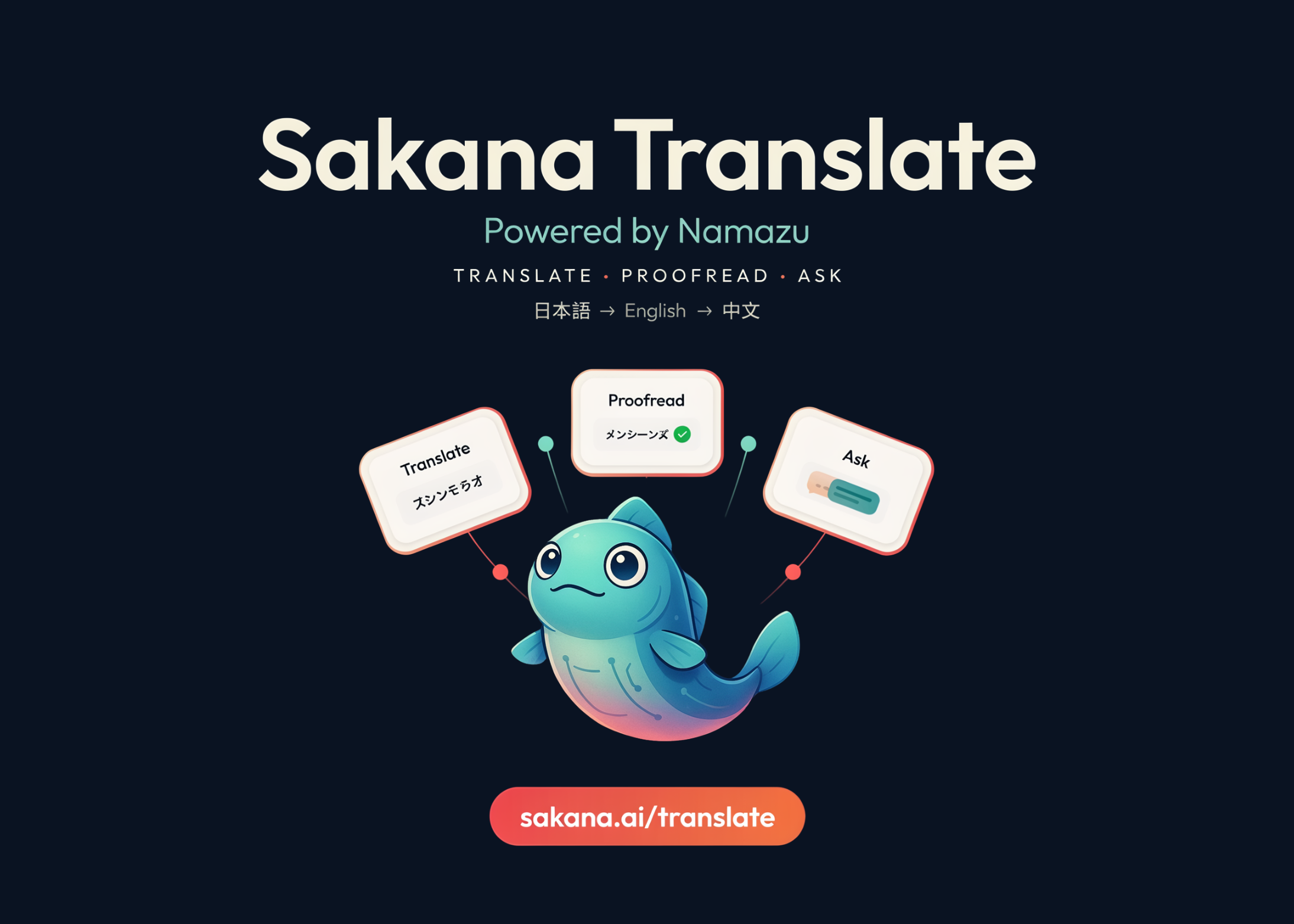
Sakana Translate is a browser-based translation product that bundles three functions into one screen. It runs on Sakana AI’s Namazu model series, which is specifically fine-tuned for Japanese language and culture. But the principle applies to any language pair: translation is about more than grammar.
For Malaysian businesses, you often work across English, Chinese, and Malay. The idea of a tool that preserves tone and cultural context could be valuable—especially when dealing with honorifics or indirect requests. While the tool currently covers only Japanese-English-Chinese, the features (like proofreading and clarifying nuance) are worth watching.
The Three Modes That Could Save You Time (and Avoid Misunderstandings)
The tool combines Translate, Proofread, and Ask in one interface. Here’s how they differ:
| Mode | What it does | Why you’d use it |
|---|---|---|
| Translate | Converts text between Japanese, English, Chinese up to ~5,000 characters with streaming output | Send an email, translate an article |
| Proofread | Refines your draft to improve naturalness, politeness, and register; shows changes with diff highlighting | Polish a business email or document |
| Ask | Answers follow-up questions about a translation, explaining nuance and grammar | Learn why a certain phrase was used, get alternatives |
In a typical workflow, you might switch between Google Translate, a grammar checker, and a dictionary. This tool combines them. For a Malaysian SME owner, think about the time saved when writing to a Chinese supplier or an English-speaking client—you can translate, polish, and clarify all in one place.
Why “Post-Training” Matters for Business Users (Even If You’re Not Technical)
The engine behind Sakana Translate is Namazu, which is not built from scratch. It uses a technique called post-training on existing open-source models like DeepSeek and Llama. What does that mean for you? The tool leverages powerful AI but is tailored to a specific language’s cultural nuances.
This approach is likely cheaper and faster to develop—and the result is a tool that catches things like formal register in business Japanese, which generic models often miss. For SMEs, this probably means that specialized tools can offer better value than generic ones, especially for your core communication needs.
Real-World Examples: From Business Emails to Internet Slang
Sakana AI shared two concrete outputs in the release that illustrate the tone-preservation goal.
The first is a business email in Japanese asking for a favour. The translation keeps the polite, indirect tone: “This is a bit of a selfish request, but could we talk a bit more?” instead of a blunt “I want to discuss the budget.”
The second is an English slang phrase “Iykyk” translated into casual Japanese that matches the original’s informality.
“The output keeps the same casual temperature in conversational Japanese.” — Sakana AI source.
These examples show what’s possible: translations that don’t strip away personality. For your business, imagine translating marketing copy or customer support messages without losing the brand voice.
The Bigger Picture: What This Means for Communication Tools in Business
The key takeaway isn’t just about Japanese translation. It’s about the direction AI translation is heading: away from literal exchange and toward cultural adaptation. For Malaysian SMEs with international clients, choosing a translation tool that understands context can prevent misunderstandings and build stronger relationships.
Whether it’s negotiating with a Japanese partner, writing to a Chinese supplier, or even corresponding in English with non-native speakers, tools that focus on tone and register will become increasingly vital. This trend is about making your business communication sound human, not robotic.
So while Sakana Translate may not cover all your language pairs today, the features it introduces—translation that keeps tone, proofreading that improves politeness, and an assistant that explains nuance—are likely to set expectations for what good business translation software should do.
Book a free 15-min call to see how AI translation tools can apply to your business → https://autorunbiz.com