
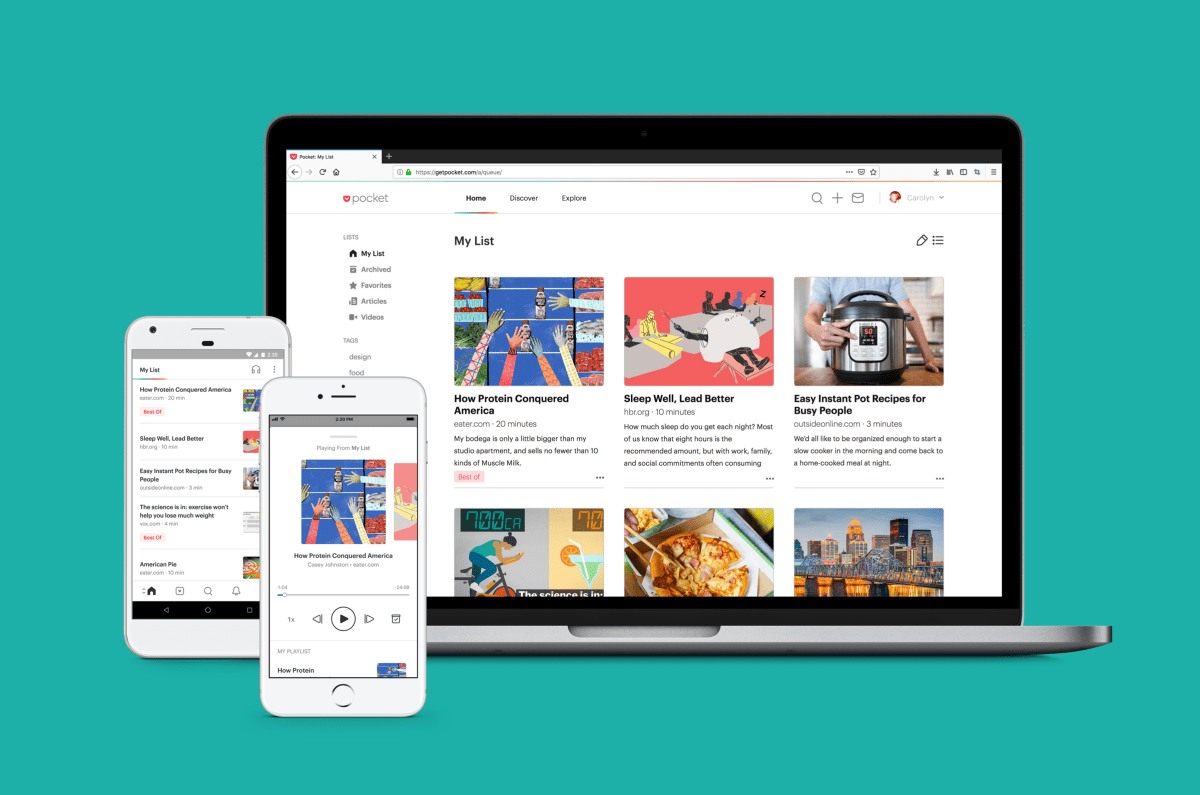
Your reading list just lost its home. Here’s what to do about it.
You know the routine. A supplier sends you a PDF about new export regulations. A competitor posts a story about their latest promotion. An industry newsletter lands in your inbox with something you need to read before your next planning meeting. You save it for later. “Later” never comes.
For years, Pocket was where millions of people parked those articles — including many Malaysian business owners who used it to build personal research libraries. Then Mozilla announced in May 2025 it was shutting Pocket down, saying the way people browse the web is changing.
If you were a Pocket user, you had until October 8, 2025, to export your saved articles, lists, archives, favorites, notes, and highlights. That window has closed. The platform has moved on. But the practical question remains: where do you save things now?
TL;DR: Pocket is gone, and the export deadline has passed. Solid alternatives have stepped in — Instapaper, Matter, Raindrop.io, Readwise Reader, and open-source options like Wallabag. The real lesson for your business: don’t build your knowledge system on a tool you don’t own.
What This Means
Read-it-later apps do one simple thing: they let you save a web page, article, or video so you can view it later without a connection, on a clean layout, without ads. Pocket was the most famous one. Mozilla acquired it in 2017, and the shutdown boosted adoption of apps like Matter, Instapaper, and Raindrop.io.
For you, this matters beyond the inconvenience of switching apps. When you rely on a tool to hold your research — your competitor notes, your saved industry reports, your half-read articles on new SME financing schemes — you’re renting your knowledge. The provider can end the service whenever their priorities change. Pocket users who missed the export deadline learned this the hard way.
“If you weren’t using Pocket, this shutdown is still a warning: any tool you build your workflow around can disappear overnight.”
How This Applies to Malaysian SMEs
Think about how you actually consume information as a business owner. You’re not tracking global tech trends — you’re reading about Budget 2026 announcements, LHDN e-Invoicing updates, EPF and SOCSO changes, SSM filing reminders, and industry reports from your trade association. You don’t have time to read these the moment they appear. A read-it-later tool is how you batch that reading into a dedicated slot on a slow afternoon or a weekend morning.
But this works well beyond personal reading. For SMEs with 10 to 50 staff, knowledge sharing is a quiet bottleneck. Your sales team needs product updates. Your operations person needs the new regulatory details. Your marketing person needs the context you gathered from three different industry reports. Tools like Readwise Reader integrate with Notion, Obsidian, and Evernote, which means you can save an article once and have it flow into your company wiki or shared notes. That turns a personal reading list into a shared intelligence file.
There’s also the Malaysian content marketing angle. If your SME posts on Facebook, Instagram, or LinkedIn — and most Malaysian SMEs do — you need a steady supply of ideas. Raindrop.io works as a bookmark manager where you can tag articles by theme, so when you need a post about “customer service in retail” you already have seven saved sources to reference. Matter even transcribes podcasts and lets you listen to articles, which suits the owner who spends their commute to the warehouse or factory catching up.
The open-source option is worth a serious look for Malaysian SMEs, too. Wallabag lets you export everything in PDF, ePUB, or CSV format and works across iOS, Android, and web. The advantage is control: your data lives under your terms, and you’re not at the mercy of a Silicon Valley product roadmap. For a business where saved research is a real asset, that control matters.
Choosing the right tool for your work style
| App | Best for | Standout feature | Platforms |
|---|---|---|---|
| Instapaper | Simple, reliable saving | Text-to-speech playlists | iOS, Android |
| Matter | Learning on the go | AI-powered co-reader for questions | iOS, Chrome, Safari, Firefox |
| Raindrop.io | Organizing bookmarks | Tagging and AI organizing suggestions | Web, iOS, Android |
| Readwise Reader | Notes and annotation | Integrates with Notion, Obsidian, Evernote | Web, iOS, Android |
| Wallabag | Data ownership | Full export to PDF, ePUB, CSV | iOS, Android, Web, Kindle |
| Recall | Remembering what you read | AI summaries with spaced repetition | Browser extension, mobile |
That table only scratches the surface. Plinky targets Apple users with folders and tags, and even lets you set reminders to read a link at a specific time. DoubleMemory saves content with a double copy on Mac and syncs through iCloud. Recall uses AI to summarize saved content and resurface it when you’re learning something related — a different approach from “store everything and never look again.”
Practical takeaways
- Make a decision this week. Pick one alternative and set up an account. Don’t let this become another “saved for later” task.
- Start with imports. Several alternatives supported importing Pocket archives during the transition. If you still have access to your old Pocket data, check whether your chosen app still accepts imports.
- Match the tool to your reading habits. Android user? Instapaper is a solid cross-platform choice. Deep into Apple’s ecosystem? Plinky or DoubleMemory fit better. Need team sharing? Readwise Reader’s note features win.
- Set up a monthly export reminder. Once a month, export your saved items from whatever tool you chose. It takes five minutes and guarantees you’re never locked in again.
- Use tags from day one. Raindrop and Plinky make tagging easy, but all the tools support some organization. Create tags for “suppliers”, “regulations”, “marketing ideas”, and “competitors” before you start saving, so your future self can actually find things.
- Consider open source for sensitive material. If your saved articles include confidential supplier information or business strategies, a self-hosted option like Wallabag keeps that data under your control.
The Bigger Picture
Mozilla didn’t close Pocket because the app failed. It closed it because the way people browse the web is changing. Reading habits are fragmenting — video, social feeds, and AI summaries are replacing the long-form, save-for-later ritual. That’s why the new generation of tools looks different. Matter has an AI co-reader. Recall summarizes and resurfaces information on a schedule. These aren’t just “save it and read it later” apps; they’re becoming knowledge assistants.
For Malaysian SME owners, the long-term implication is straightforward. The tools you use to capture business knowledge will keep evolving, and some will keep disappearing. What should stay constant is the habit — saving, organizing, and actually consuming the information that makes your business sharper. The app you use matters far less than the system you build around it. Pick a tool, use it consistently, and keep your data portable.
Your competitor research, your regulatory reading, your industry insights — these are assets. Treat them like you treat your inventory: store them properly, back them up, and know exactly where they are.
Ready to Streamline Your Operations?
Your business should run itself. AutoRunBiz deploys AI agents to automate your daily operations — WhatsApp orders, invoicing, customer follow-ups, and accounting. Book a free 15-min ops audit to see where automation fits your business →