
Penang’s New EV Supercharger: What It Means for Your SME
You probably scrolled past the headline: Tesla’s V4 Supercharger at Queensbay Mall Penang is now available. If you don’t drive a Tesla, it’s tempting to think this has nothing to do with you. But it does. Your customers, your delivery routes, and the way people see your business location are all quietly shifting because of what this charger represents.
The real problem for most Malaysian SME owners isn’t a lack of ambition — it’s the risk of making the wrong call. Should you put an electric vehicle in your fleet? Should you add a charger at your shop? Is the EV transition moving fast enough to matter for your business? Every new piece of charging infrastructure answers one of those questions for you. This one answers several.
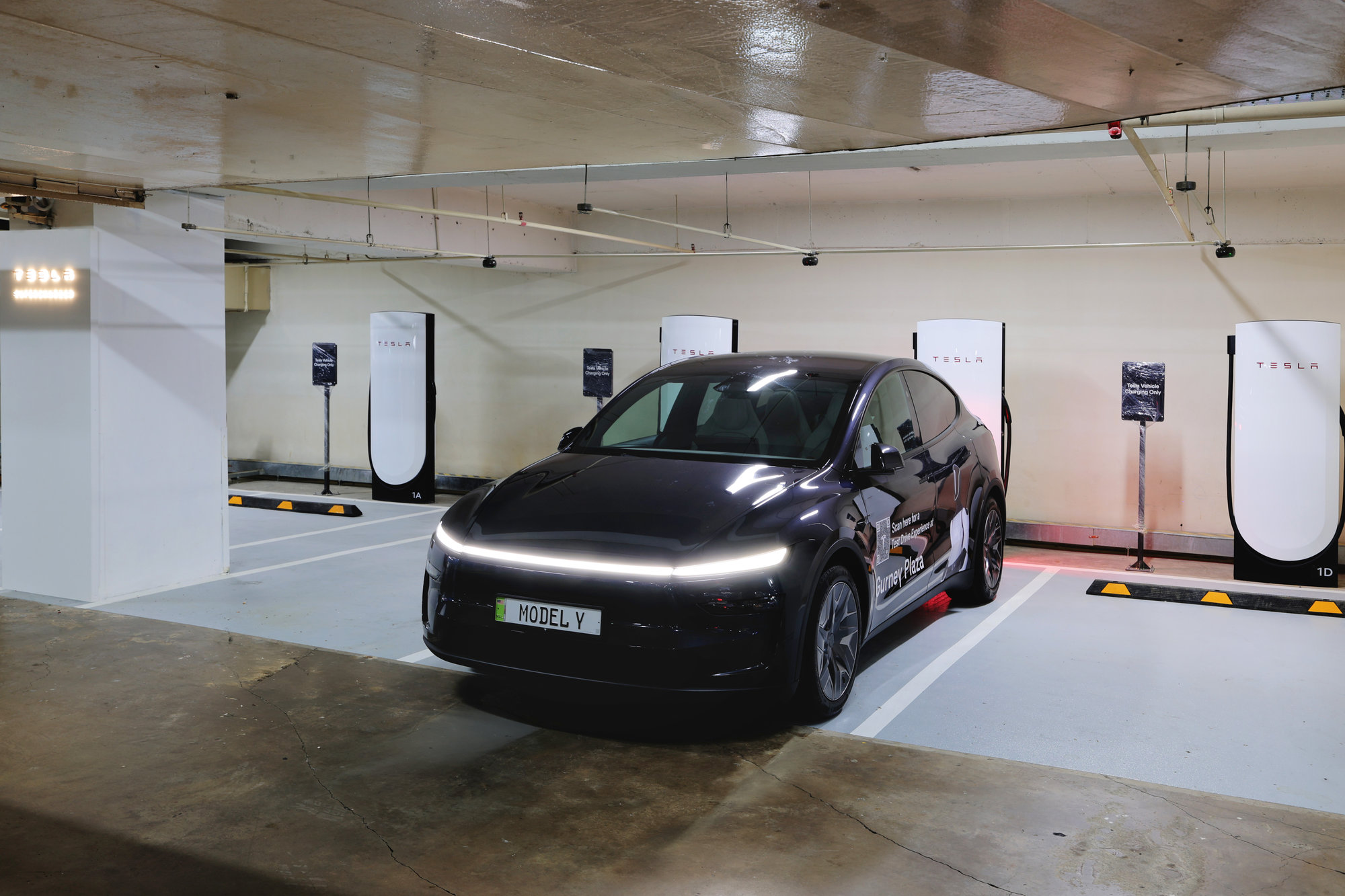
Here’s the simple version: the charging point at Queensbay Mall is now live, and it’s a V4 — Tesla’s latest generation of Supercharger. That means faster charging, longer cables, and more stalls compared to older stations. But the real story for you as a business owner isn’t the hardware. It’s what the hardware says about where Malaysia’s commercial traffic is heading. The V4 station is now available to drivers.
TL;DR: The Tesla V4 Supercharger at Queensbay Mall Penang is now available. It puts fast EV charging inside one of Penang’s busiest shopping destinations. For your SME, that means more EV-driving customers in the area, a stronger practical case for electrifying any delivery or service fleet, and a clear signal that charging access is becoming a competitive advantage for businesses that offer it. Source
What This Means
A V4 Supercharger is, in plain language, a faster and more flexible charging station. Instead of planning a dedicated stop to charge, a driver can top up while doing something they were going to do anyway — like shopping at a mall. Tesla’s Supercharger network is designed around that idea: charging should blend into time that’s already spoken for rather than becoming a separate errand. When the charger sits inside Queensbay Mall, the car charges while the human browses, eats, or runs errands on the same premises. That’s not a small detail. That’s the whole point.
Penang is also a meaningful location for this. The island is a concentrated tech and manufacturing hub, and Queensbay is one of its most visited retail destinations. Placing a V4 charger there means the people who live, work, and travel around Penang now have a proper charging option where they already spend time. And every reliable charging point makes the next EV decision easier — for individuals, and for business owners trying to plan ahead.
“EV drivers don’t charge their cars for fun. They charge while they do something else. The businesses that make those ‘something else’ moments better are the ones who win the customer.”
How This Applies to Malaysian SMEs
If you run a retail or F&B business in Penang — especially anywhere near Bayan Lepas, Gelugor, or the eastern side of the island — this charger changes who walks through your door. EV drivers skew toward urban professionals, and a 30-minute charging session is a 30-minute window where they’re looking for somewhere to eat, drink, or browse. If your shop sits anywhere near the flow of foot traffic to and from Queensbay, you’ve just gained a customer segment you didn’t pay to reach. The station is live now, so this isn’t a future scenario. It’s a present one.
If you run a delivery or field-service operation, the V4’s faster charging — up to 250 kW at peak for compatible vehicles according to Tesla — means a vehicle can be meaningfully topped up during a driver’s lunch break instead of sitting idle all afternoon. More charging stations across the country also make routes that were previously impossible for an EV suddenly practical. You don’t need to buy an electric van this month. But you should start logging which of your regular routes could work on battery power. That knowledge becomes more valuable with every new charger that goes in.
If you own a commercial building, a shop lot, or even a coffee shop with a parking area, this is the moment to ask a simple question: would a charging point make your property more attractive? Tenants and visitors are already starting to ask where they can charge. The first few businesses in a neighbourhood to offer charging access will stand out in a way that’s hard to copy — and the expansion of the network in places like Queensbay sets the expectation that charging is becoming normal, not exotic.
And if you’re not in Penang at all? Watch the pattern. Chargers get built where demand already exists, and demand follows where people live, spend, and travel. When infrastructure becomes routine, adoption rises. Your customers are going to start driving EVs — probably sooner than you expect. The businesses that treat this as a normal planning factor, rather than a novelty, will be the ones who don’t get caught off guard when the trend hits their neighbourhood.
Practical Takeaways
Here’s what you can actually do with this information, without making any big commitments:
- Map your customer’s time. If someone parks near your premises for 30 minutes while their car charges, what can they do at your business in that window? Have a concrete answer.
- Do a quick route audit. List your regular delivery or service routes. Note which ones fall comfortably within the range of a typical EV. Future you will be glad you did.
- If you own property, find out about charging readiness. Is your electrical panel set up for a charger? What would installation involve? Getting that answer now is simple; getting it in an emergency is not.
- Track the infrastructure map. Every few months, check where new chargers are being installed in your state. Where the chargers go, EV users follow.
- Don’t rush into a purchase. You don’t need an EV or a charger this year. You need to stop treating electric vehicles as a distant curiosity and start treating them as a planning factor like any other.
What the V4 changes, in practical terms
| Aspect | Older Superchargers | V4 at Queensbay | Why it matters to you |
|---|---|---|---|
| Charging speed | Slower peak rates | Up to 250 kW for compatible vehicles | Drivers finish sooner, which shortens your window to serve them |
| Stall design | Shorter cables, limited port positions | Longer cables, easier access from both sides | More vehicles can use the station without blocking others |
| Location | Often placed along highways | Inside a major mall in Penang | Charging time becomes shopping and eating time |
| Network impact | Fewer stalls spread wider | More capacity in a key urban hub | Less congestion and more practical route planning for local businesses |
Table data draws from the Queensbay V4 announcement and Tesla’s official Malaysia Supercharger page.
The Bigger Picture
Malaysia’s shift toward electric vehicles has been building for years, and it has always faced the same practical bottleneck: where do you plug in? Each new Supercharger removes that bottleneck in a specific location, and each removal makes the next one easier to justify. This isn’t just a story about Penang drivers. It’s a story about how infrastructure quietly rewrites business assumptions.
When chargers are rare, an EV is a curiosity. When they’re common, an EV is just another tool. For your SME, the long-term implication is simple: transport choices in Malaysia are diversifying, and your business decisions should reflect that. Whether it’s the vehicle your delivery rider uses, the amenity your building offers, or simply the customer profile you serve, the EV question is moving from “if” to “when.”
The Queensbay installation is one data point in a larger pattern. Keep watching where the chargers go — because your customers already are.
Ready to Streamline Your Operations?
Your business should run itself. AutoRunBiz deploys AI agents to automate your daily operations — WhatsApp orders, invoicing, customer follow-ups, and accounting. Book a free 15-min ops audit to see where automation fits your business →