
Your delivery vans are eating your margins. Here’s what a $250 million robotaxi bet tells you.
If you run a business in Malaysia that depends on vehicles — food delivery, logistics, retail distribution, even a service crew that drives from client to client — you’ve felt the squeeze. Fuel prices fluctuate, drivers come and go, vehicles break down at the worst moments, and you’re constantly chasing maintenance costs. You didn’t start your business to manage a fleet. You started it to serve customers.
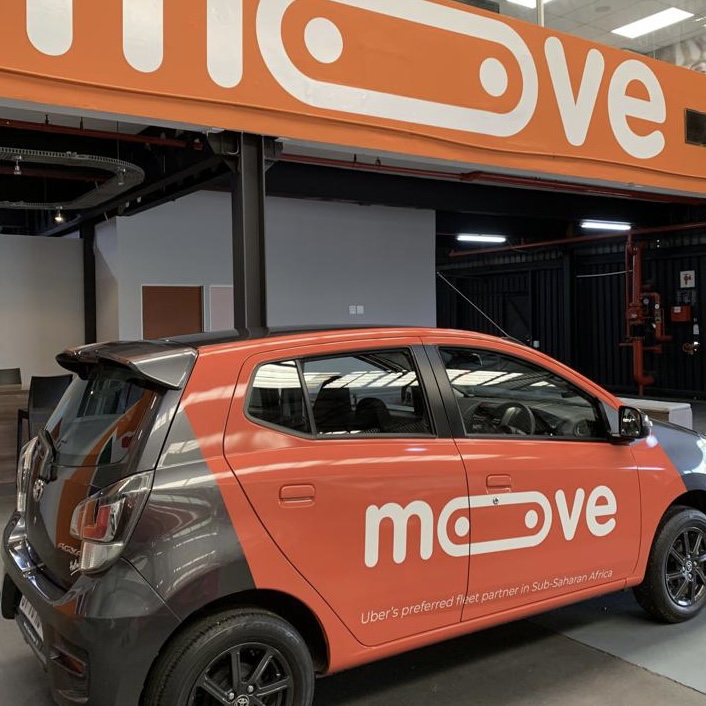
Now imagine a company that runs 42,000 vehicles across 14 countries, and whose entire future strategy is built on not having human drivers at all. That company, Moove, just raised a massive funding round to scale its autonomous vehicle fleet operation. And while robotaxis aren’t cruising Kuala Lumpur streets anytime soon, the operational logic behind Moove’s bet has direct lessons for your business.
The news isn’t about self-driving cars. It’s about what happens after the car is built — who owns it, maintains it, cleans it, charges it, and schedules it. That’s the part of the business you, as a Malaysian SME owner, can start fixing today.
TL;DR
Moove raised $250 million at a $2.1 billion valuation to scale its robotaxi fleet operations, according to TechCrunch. But the real story is how Moove is turning fleet management into a specialised, automated service. For Malaysian SME owners, the takeaways are: don’t own what you can’t operate efficiently, automate repetitive maintenance and scheduling tasks, and use data to make your vehicles work harder.
What This Means
Moove started in 2020 as a vehicle financing startup for gig drivers in Africa. It now owns and operates a 42,000-vehicle ride-hailing fleet across 14 countries and employs 3,300 people globally. The company’s move into autonomous vehicles began in 2023, and it is now the fleet operator for Waymo in Phoenix, Miami, Las Vegas, and soon London, according to the TechCrunch report. Moove plans to eventually own the robotaxis it operates, and its vision is to own hundreds of thousands of autonomous vehicles.
Why does this matter to you? Because Moove’s entire pitch is that nobody else wants to “own the metal.” The vehicle developers, manufacturers, and marketplaces like Uber all want to focus on software, brands, and consumer apps. Someone has to handle the boring, operational side: charging, washing, repairing, storing, and dispatching. That someone is Moove.
In plain terms: Moove is building the infrastructure that makes vehicles-as-a-service work. And the same principle applies to your business. You don’t need to own a fleet — you need to deliver goods and services reliably.
“Who owns the vehicle? Who operates the vehicle? Who orchestrates the vehicle? Who does the servicing, the maintenance? Who does the lost property? Who does the cleaning?” — Ladi Delano, Moove co-CEO, as quoted by TechCrunch. That is exactly the question you should be asking about every part of your business.
How This Applies to Malaysian SMEs
Let’s make this concrete for you. Malaysian SMEs run fleets of all sizes — from a single van for a bakery doing delivery, to a motorbike fleet for a food delivery aggregator partner, to a few lorries for a hardware supplier. The problem is rarely the vehicle itself. It’s everything around it. Who schedules maintenance? Who tracks vehicle location? Who knows which route is most efficient? Who handles the driver’s vehicle breakdown at 9pm? Moove’s answer is to build automated depots called “nests” that use robotics to handle charging, maintenance, and servicing around the clock. You don’t need robots, but you do need a system that removes the manual guesswork.
The “nests” concept can be translated into a simpler automated workflow for your business. Imagine a dashboard that tracks oil changes, service intervals, road tax expiries, and driver assignments. In Malaysia, where SME owners often wear every hat, this kind of operational backbone is what separates a business that scales from one that stalls. Moove’s 15 depots in various stages of development, as noted in the TechCrunch report, show that even a well-funded company plans its infrastructure carefully. You can do the same with a spreadsheet or a basic fleet management app — the key is that the system exists and is followed.
Another lesson: Moove’s partnership-first approach. Instead of trying to build its own autonomous vehicle technology, it partnered with Waymo and other AV developers. For you, that means don’t try to build custom software or hire a team of engineers to manage your fleet. Use existing tools. If you’re a food delivery SME, partner with third-party logistics providers or use route optimisation apps. If you run a cleaning service, use a scheduling platform. The competitive edge doesn’t come from owning technology, it comes from operating it well. Moove’s success is based on being the best operator, not the best vehicle manufacturer.
Finally, consider the human side. Moove employs 3,300 people and plans to hire about 350 more, but its long-term vision is autonomous vehicles that don’t need drivers. For Malaysian SMEs, this signals a longer-term shift: the cost of human labour will rise, and automation technologies will become more accessible. You don’t need to wait for autonomous vehicles. Start by automating simple tasks like driver trip logs, delivery confirmation messages, and maintenance reminders. That frees up humans to handle the unpredictable work — customer service, complex problem-solving, sales — that actually grows your business.
Practical Takeaways
- Audit your fleet operations: List every vehicle, its usage, maintenance schedule, and idle time. Moove’s data-driven approach means their vehicles are nearly always generating value. Find your idle hours.
- Automate maintenance reminders: Use a simple tool to track service intervals for every vehicle. A missed oil change is costly; a missed brake inspection is dangerous.
- Digitise your routes: Even without GPS tracking on every vehicle, use a route planning app that considers traffic, tolls, and delivery windows. The goal is to reduce empty return trips.
- Outsource what isn’t your core: If you don’t want to manage vehicle repairs, partner with a workshop that offers regular fleet maintenance packages. Focus your time on serving customers.
- Track your operating metrics: Know your cost per delivery, vehicle utilisation rate, and average turnaround time. Moove’s model only works because it tracks every detail of its fleet. You should too.
| Metric from Moove’s announcement | Number |
|---|---|
| Fresh funding raised | $250 million source |
| Valuation after this round | $2.1 billion source |
| Ride-hailing fleet size | 42,000 vehicles source |
| Countries where Moove operates | 14 source |
| Global employees | 3,300 source |
| Automated depots (“nests”) in development | 15 source |
| Planned new hires for AV business | 350 source |
The Bigger Picture
Moove’s trajectory — from financing human-driven gig vehicles to owning a fleet of autonomous robotaxis — is a preview of how the transportation industry will shift. But the deeper story is about the separation of ownership from operation. In the future, more businesses will stop buying vehicles and instead lease them from fleet operators that handle all maintenance and logistics. This is already happening in Malaysia with leasing companies and e-hailing fleet providers, but it will become more mainstream for SME logistics.
For you, the long-term skill is not learning to drive autonomous vehicles — it’s learning to manage operations with data and automated tools. The Malaysian government is already setting up regulatory sandboxes for autonomous vehicles, and the country is slowly building the digital infrastructure for smart cities. You don’t need to wait for a robotaxi to arrive. Start building the operational discipline now: know your numbers, automate the repetitive tasks, and focus on what makes your business unique.
Moove believes that the future belongs to whoever can orchestrate vehicles at scale. Your version of that might be orchestrating three vans, five riders, or one service crew. The same principle applies: build a system that handles the boring stuff, and you’ll have the energy and capital to handle the important stuff — your customers.
Ready to Streamline Your Operations?
Your business should run itself. AutoRunBiz deploys AI agents to automate your daily operations — WhatsApp orders, invoicing, customer follow-ups, and accounting. Book a free 15-min ops audit to see where automation fits your business →