
Why Modular Thinking Matters for Your Business
You may not run a transport company, but you probably face a familiar problem: your business needs to adapt while your existing tools, vehicles, staff and processes are still in use. A catering company may need a mobile preparation unit. A contractor may need a van fitted with shelves, tools and safety equipment. A healthcare provider may need a vehicle that supports field visits. A retailer may need a mobile sales or delivery setup.
The difficult part is that business requirements change faster than the equipment you buy. A solution designed for one purpose can become unsuitable when customer demand, regulations, fuel choices or operating conditions change. Replacing everything each time is disruptive. A modular approach gives you a way to change selected parts while keeping the core asset useful.
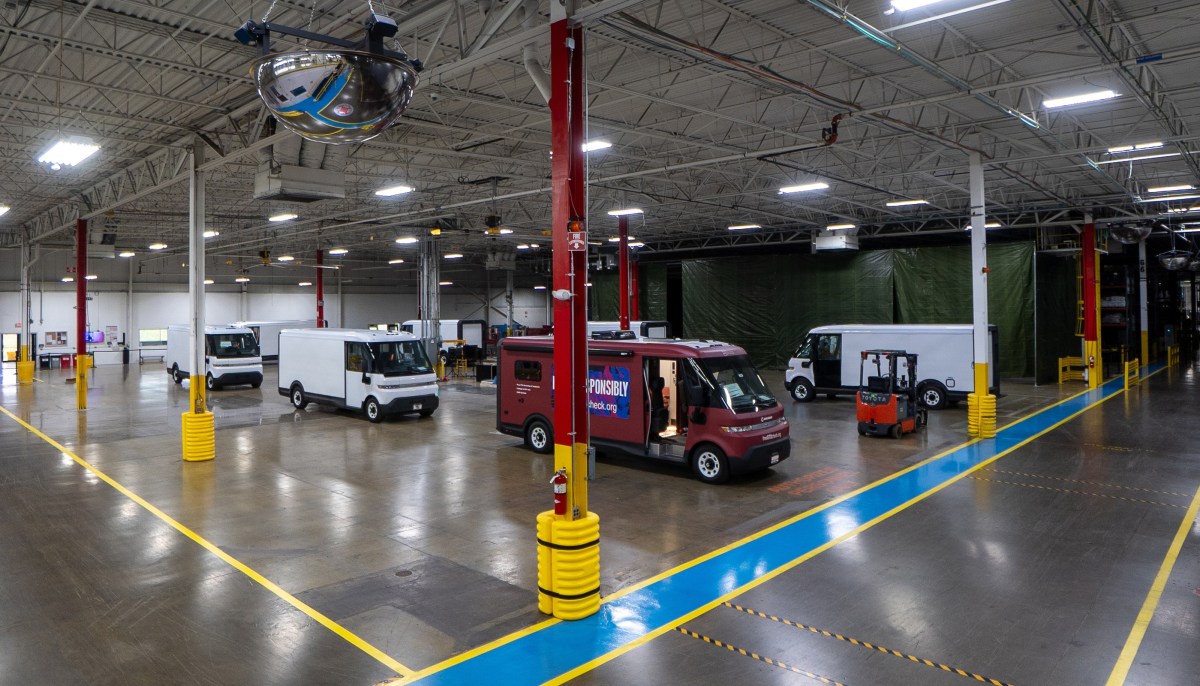
This is the practical lesson behind Detroit startup Grounded. The company began by customising electric vans, then expanded its approach to support both electric and combustion-powered vehicles after changes in the vehicle market. Its product is not simply the van. It is the adaptable workspace, storage system, power setup and software installed on top of the vehicle.
TL;DR
Grounded’s experience shows that flexibility can be more valuable than committing to one technology too early. For your SME, the same principle applies to vehicles, equipment, software and daily workflows.
Build systems in replaceable modules, standardise what you can and choose solutions that remain useful when your business direction changes.
What This Means
Grounded was founded in 2022 to customise electric vans with a modular, “Lego-like” system. It later began serving small businesses and other commercial users. The company then had to respond when General Motors discontinued BrightDrop and Ford dropped plans for a next-generation electric Transit van. Electric vehicles also became more difficult to sell in the United States because some customers faced infrastructure concerns. Source: TechCrunch
Instead of treating those changes as a reason to abandon its core capability, Grounded changed the base vehicles it could support. It moved towards a vehicle-agnostic model, meaning its interior systems and connected tools could be installed on different vehicle types. The company announced a new 50,000-square-foot manufacturing facility in Detroit, with production scheduled to begin in August 2026 and capacity expected to increase in 2027. Source: TechCrunch
In plain language, the company separated the stable part of its offering from the changing part. The stable part is the design and functionality customers need: organised storage, power, workspace, connectivity and a layout suited to a specific job. The changing part is the vehicle chassis, which may be electric, hybrid or powered by an internal-combustion engine.
Key insight: When the underlying technology changes, protect the customer outcome instead of becoming attached to one particular tool or platform.
How This Applies to Malaysian SMEs
1. Design service vehicles around the work, not only the vehicle model. If you operate air-conditioning maintenance, plumbing, electrical, pest-control or renovation services, your van is effectively a mobile warehouse. A poor layout causes wasted time, missing tools and repeated trips. A modular setup lets you separate shelves, drawers, safety equipment, consumables and larger tools. If you later change from a panel van to a larger model, the working logic can remain familiar.
For example, you can create standard modules for daily tools, spare parts, personal protective equipment, customer documents and emergency items. Each module can have a label, assigned location and restocking checklist. This is more useful than simply adding more shelves. Your objective is to make every technician able to find and return items quickly, even when different people use the same vehicle.
2. Prepare for mixed vehicle conditions. Malaysia’s operating environment differs widely by location. A business in central Kuala Lumpur may have different access to charging facilities than one serving industrial areas, rural districts or island locations. If you are considering electric vehicles, you should assess route length, charging access, payload, weather exposure, downtime and the type of work performed before making a fleet decision.
A modular fit-out allows you to standardise the business function while keeping vehicle choices practical. Your mobile pharmacy, food-preparation unit, field-service van or event-support vehicle can use the same storage principles whether the base vehicle is electric, hybrid or combustion-powered. This reduces the risk of designing your entire operation around a single vehicle technology before your routes and infrastructure are ready.
3. Use the same thinking for equipment and digital systems. Modular design is not limited to vans. A Malaysian SME can apply it to inventory management, customer relationship management, accounting workflows and internal approvals. Start with a clear core process, then add separate modules for quotations, purchase orders, stock alerts, delivery updates and customer follow-up.
Suppose you run a food distributor. Your core process may be receiving orders, checking stock, preparing deliveries and confirming receipt. Additional modules can handle expiry tracking, route planning, temperature records or credit control. If your customer mix changes, you can adjust the relevant module without rebuilding the entire operation.
4. Build for different industries and use cases. Grounded has served commercial, medical, veterinary, food and beverage and public safety customers, including organisations such as Colgate and Nokia, according to the report. Source: TechCrunch The broader lesson is to identify the common operating problem beneath different customer types.
A mobile veterinary service and a mobile medical screening team may need different equipment, but both need secure storage, cleaning procedures, power management, appointment information and reliable documentation. Once you identify those shared needs, you can create a repeatable base system and customise only the parts that genuinely differ.
A Simple Modular Planning Framework
| Business area | Core module | Optional modules | Review trigger |
|---|---|---|---|
| Service vehicle | Storage, safety and job tools | Power, refrigeration, branding, connectivity | New service type or vehicle change |
| Delivery operation | Order, picking and proof of delivery | Temperature logs, route planning, customer alerts | More delivery zones or product categories |
| Field healthcare | Patient records and equipment control | Portable power, privacy partitions, appointment sync | New treatment or compliance requirement |
| Retail operations | Product catalogue and stock updates | Mobile checkout, loyalty, promotions, analytics | New sales channel or outlet |
Use this table as a starting point. The purpose is not to buy every feature. It is to distinguish what must remain consistent from what may change as your business grows.
Practical Takeaways
- Define the outcome first: Decide whether you need faster service visits, better stock control, improved customer communication or a safer mobile workspace.
- Separate the core from the add-ons: Keep essential functions stable and make optional features replaceable.
- Document layouts and workflows: Create simple diagrams, labels, checklists and standard operating procedures so the system does not depend on one employee.
- Plan for mixed conditions: Test your process across different vehicle types, locations, routes, connectivity levels and staffing arrangements.
- Use real operating data: Track repeat trips, missing items, service delays, stock errors and vehicle downtime before deciding what to change.
- Pilot one unit or workflow: Test a modular setup in one vehicle, team or branch before applying it across the business.
- Review quarterly: A simple quarterly review can reveal which modules are still useful and which ones are creating unnecessary work.
The Bigger Picture
Grounded’s story reflects a wider business principle: infrastructure can change, but customer needs often remain recognisable. A company may need to respond to new vehicle availability, software platforms, regulations, energy options or supplier decisions. If every change forces you to start again, growth becomes harder to manage.
For Malaysian SMEs, modular thinking is especially useful because many businesses operate with small teams and limited management time. You may not have a dedicated operations department to redesign every process. A modular setup gives you smaller decisions that can be tested, documented and improved one at a time.
It also helps you avoid confusing technology adoption with business improvement. An electric vehicle, cloud platform or automation tool is only useful when it supports a measurable operating need. Grounded’s positioning is instructive because the company describes itself as building the application layer on top of the vehicle: the workspace, materials, power system and connected software that make the vehicle useful for a specific purpose. Source: TechCrunch
Your business can apply the same logic. Do not ask only, “Which technology should we buy?” Ask, “Which part of our operation should become easier to change?” That question leads to better decisions about vehicles, equipment, software and staff workflows.
Start with one recurring problem, break the solution into modules and make each part easy to replace or improve. Over time, you will build an operation that can adjust without losing its structure.
Ready to Streamline Your Operations?
Your business should run itself. AutoRunBiz deploys AI agents to automate your daily operations — WhatsApp orders, invoicing, customer follow-ups, and accounting. Book a free 15-min ops audit to see where automation fits your business →