
Why Meta’s AI Chip Production in September Matters for Your Business (Even If You’re Not in Tech)
Big tech companies are spending tens of billions to build their own AI hardware. Meta alone expects to invest between $125 billion and $145 billion this year (source), much of it on chips and data centers. If you run a small or medium business in Malaysia, you might think this has nothing to do with you. But this shift in how AI is built and deployed will soon ripple through every industry — including yours.
TL;DR: Meta is producing its own AI chips (MTIA) starting September to cut reliance on Nvidia GPUs. The company plans to deploy 7 gigawatts of compute this year and double it next. For SMEs, this means faster, cheaper, and more accessible AI tools are coming — but also that you need to start thinking about how to integrate AI into your operations now, not later.
The Real Reason Meta Is Building Its Own Chips
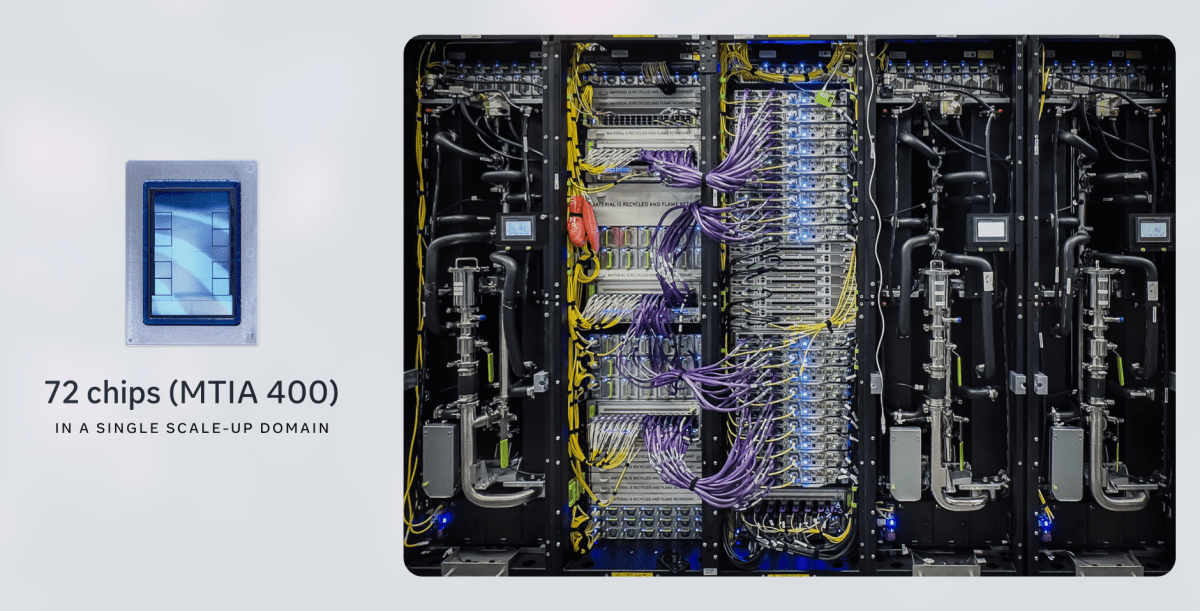
Meta has been making its own AI chips since 2023 (source), but the latest generation marks a turning point. Working with Broadcom on design and TSMC on manufacturing, Meta aims to handle both training and inference for its ranking, recommendation, and broader AI workloads. The company is also buying RAM from Samsung, storage from Sandisk, and fiber-optic equipment from Sumitomo Electric (source).
“Each MTIA generation builds on the last, using modular chiplets, incorporating the latest AI workload insights and hardware technologies, and deploying on a shorter cadence.” — Meta (source)
Why go through all this trouble? Because waiting for Nvidia or AMD to supply GPUs is expensive and slow. By controlling the hardware, Meta can optimise for its specific needs — and save billions in the process.
What This Means for Your Business
When Meta, OpenAI, Amazon, and Google all race to build cheaper, faster AI infrastructure, the benefits eventually trickle down to smaller players. Here’s what’s likely coming soon:
- Lower cost of AI tools — As big tech reduces its own infrastructure costs, the price of AI services (like APIs, cloud AI features, and SaaS tools) should follow.
- Better performance for everyday tasks — Recommendation engines, customer service chatbots, and content generation tools will become faster and more accurate.
- More off-the-shelf AI solutions — When the underlying infrastructure is cheaper, more startups and developers build products that SMEs can plug in without a technical team.
But there’s a catch: you need to be ready to adopt these tools when they arrive. Many Malaysian SMEs still rely on manual processes that AI could easily automate.
The Trend: Everyone Is Building Their Own AI Engine
Meta isn’t alone. OpenAI recently unveiled an inference processor built with Broadcom (source). Anthropic is reportedly considering developing its own chips with Samsung (source). Amazon and Google already produce their own AI training and inference chips (source).
Here’s a quick look at how the major players are approaching AI hardware:
| Company | Approach | Key Partners |
|---|---|---|
| Meta | Own MTIA chips for training & inference | Broadcom, TSMC, Samsung |
| OpenAI | Inference processor | Broadcom |
| Anthropic | Exploring own chip development | Samsung (potential) |
| Amazon | Homegrown CPUs for AI | Internal |
| TPU chips for AI workloads | Internal |
This trend tells you one thing: AI is becoming a utility, like electricity. The companies that provide it are investing heavily in making it cheaper and more reliable. Your job as a business owner is to start using it before your competitors do.
The Bigger Picture
This story isn’t really about chips. It’s about a fundamental shift in how technology gets built. When the biggest companies in the world treat AI infrastructure as a core part of their business — not an add-on — it signals that AI will soon be embedded in everything.
For Malaysian SMEs, the practical takeaway is simple: you don’t need to build your own AI chips or data centers. But you should be watching how these developments make AI tools more affordable and accessible. The next year will likely bring a wave of new AI-powered features to the software you already use — and to new tools designed specifically for small businesses.
The businesses that thrive will be the ones that start experimenting now, not the ones that wait until everything is perfect.
Ready to See How AI Can Work for Your Business?
You don’t need to understand chips or data centers to benefit from AI. You just need a partner who can match the right tools to your specific needs. Book a free 15-min call to see how AI applies to your business → https://autorunbiz.com