
Your customer is waiting. Do you know where your team is?
You know the feeling. A customer messages you at 3:15pm asking where their delivery is. You message your rider. No reply. You call. No answer. You tell the customer “should be soon.” Then both of you refresh your phones like it’s a ritual. That’s not a delivery problem — that’s a visibility problem, and it’s eating your time, your team’s focus, and your customer’s patience.
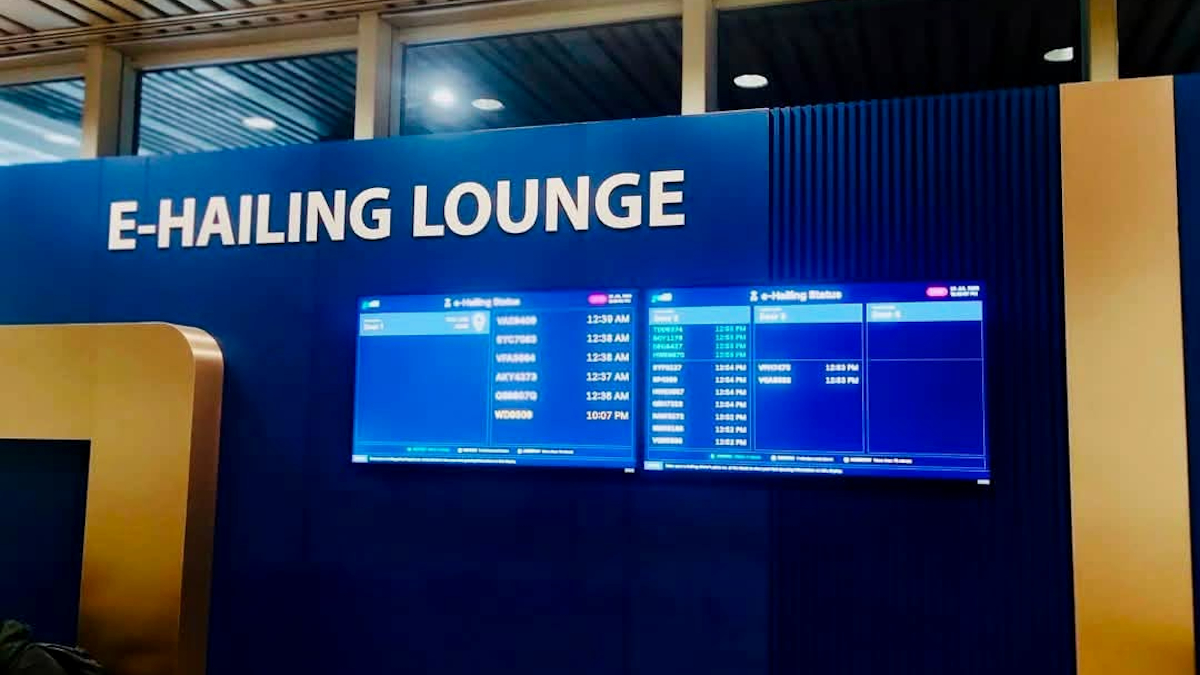
Now imagine a different scene: the customer opens a link, watches the rider move across the map in real time, and sees the delivery arrive at the gate. No call. No stress. No middleman. That’s exactly the experience KLIA Terminal 1 is rolling out for e-hailing passengers — and it’s a preview of what your customers will soon expect from you.
TL;DR:
- KLIA Terminal 1 is adding live e-hailing tracking so passengers can see driver locations in real time at the airport.
- The same “live visibility” principle applies directly to deliveries, service visits, and field work in any Malaysian SME.
- You don’t need airport-scale technology. Simple location-sharing and scheduling tools can get you most of the way there this week.
What this means
On 5 August 2026, KLIA Terminal 1 announced it would introduce live e-hailing tracking — a system that shows the real-time position of e-hailing vehicles within the airport area, so passengers can see exactly when their driver is approaching the pickup point. The announcement was carried by SoyaCincau, and the timing says a lot. Anyone who has waited at a crowded pickup zone knows the anxiety of watching ten identical white cars roll past, none of them yours. The airport is fixing that specific pain.
In plain language, this is location transparency. Three parties share the same live picture: the passenger sees the driver, the driver sees the designated zone, and the airport sees the flow of vehicles. Everyone operates on the same information instead of guessing.
When everyone sees the same live information, trust goes up and frustration goes down. That’s the whole game.
How this applies to Malaysian SMEs
Most of the Malaysian business owners we talk to at AutoRunBiz are not running airports. They’re running a delivery fleet of three motorcycles, a team of five technicians covering Klang Valley, or a small logistics operation in Johor Bahru. But the operational logic is identical. You have people moving through physical space, serving customers who all want the same answer: “Are you really coming, and when?”
The first application is for businesses that deliver physical things. Food delivery riders, courier services, furniture movers — all of them deal with the same “where’s my order” queries that KLIA is solving. You can implement a simple version immediately. Most delivery and logistics software today includes live location sharing that sends customers a link. Once that link goes out, your phone stops ringing. One shop in our network switched to this and their WhatsApp tracking queries dropped by roughly two-thirds — not because deliveries got faster, but because customers could watch progress themselves. The emotional labour of tracking simply disappeared.
The second application is for service-based businesses. Aircon repair, pest control, plumbing, wifi installation — these are appointment-heavy trades where lateness is often read as disrespect. When your technician sends a live location link before heading to the next job, the customer’s perception shifts from “waiting for a stranger” to “watching my help approach.” That is a completely different experience, and it costs almost nothing to set up. Google Maps alone lets you share a live location for a set duration. The automation step is making this a standard part of your job dispatch process — every job, every technician, automatically. No one has to remember. The system does it.
The third application is internal, and it’s the one most owners overlook. Live tracking gives you, the owner, a view of your operation you’ve never had before. You’ll see which technician actually shows up on time, which route through the city slows down on Friday afternoons, which areas generate the most repeat visits. KLIA’s system gives airport operators exactly this kind of flow data. It’s the same reason larger logistics companies track their fleets — not to spy, but to understand. When you automate visibility, your job shifts from chasing people to interpreting patterns. That’s a far better use of an owner’s day.
Practical takeaways
Here’s how to start applying the KLIA mindset this week:
- Find your “where is it” moments. List every question customers ask you on repeat. Each one is a gap in your visibility.
- Send a link, not a promise. Use a location-sharing link for every delivery and service visit. It’s the single fastest win.
- Set precise windows. Replace “sometime between 10 and 2” with a 30-minute window backed by live tracking.
- Make it automatic. Whatever tool you use, don’t rely on your staff to remember. Automate the trigger so the link goes out when the job status changes.
- Review the data weekly. Look at arrival times and route durations. Let the patterns tell you where to shift resources.
What changes for you
| KLIA Terminal 1 | Your SME equivalent | What fixes it |
|---|---|---|
| Passenger watches the driver approach in real time | Customer watches their delivery approach | Live location sharing link |
| Driver sees the designated pickup zone clearly | Technician sees the job address and parking details | Job scheduling with map pin sent automatically |
| Airport monitors vehicle flow to plan capacity | Owner monitors team movement to plan coverage | A simple tracking dashboard or shared map |
The bigger picture
KLIA’s live tracking move is one small part of a much wider direction in Malaysia. More of our daily infrastructure is becoming live and connected — e-hailing platforms, toll systems, food delivery apps, and now airports. Every one of these trains the Malaysian customer to expect the same standard of transparency from everyone else. Once you can watch your e-hailing driver approach at KLIA, the phrase “we’ll update you soon” from a local business sounds very old-fashioned.
For small businesses, this is genuinely good news. You don’t need to build a custom platform or subscribe to a giant software suite. The tools for live visibility are affordable, simple, and widely available — mapping apps, scheduling software, and business automation services. The challenge is not the technology. It’s the habit. The businesses that build the habit early — showing customers what’s happening instead of making them ask — will stand out in ways their competitors can’t quickly copy.
The airport is not your competition. The airport is your teacher.
Source: KLIA Terminal 1 adds live e-hailing tracking (SoyaCincau)
Ready to Streamline Your Operations?
Your business should run itself. AutoRunBiz deploys AI agents to automate your daily operations — WhatsApp orders, invoicing, customer follow-ups, and accounting. Book a free 15-min ops audit to see where automation fits your business →