
Your Customer is Holding a JCB Card. Now You Can Accept It.
Imagine a customer walks into your shop, browses your products, and builds up a full basket. They step up to your counter, pull out their card… and you have to politely turn them away. This isn’t a hypothetical scenario for many Malaysian SMEs. Japanese tourists are a core demographic for countless businesses across the country, and they almost always carry a JCB card.
Malaysia has long been a favorite destination for Japanese travelers. They appreciate our heritage, our food, and our manufacturing. But your checkout system wasn’t always built to handle their preferred method of payment. Processing JCB directly in Southeast Asia historically required a specific infrastructure that was difficult for smaller, independent businesses to implement.
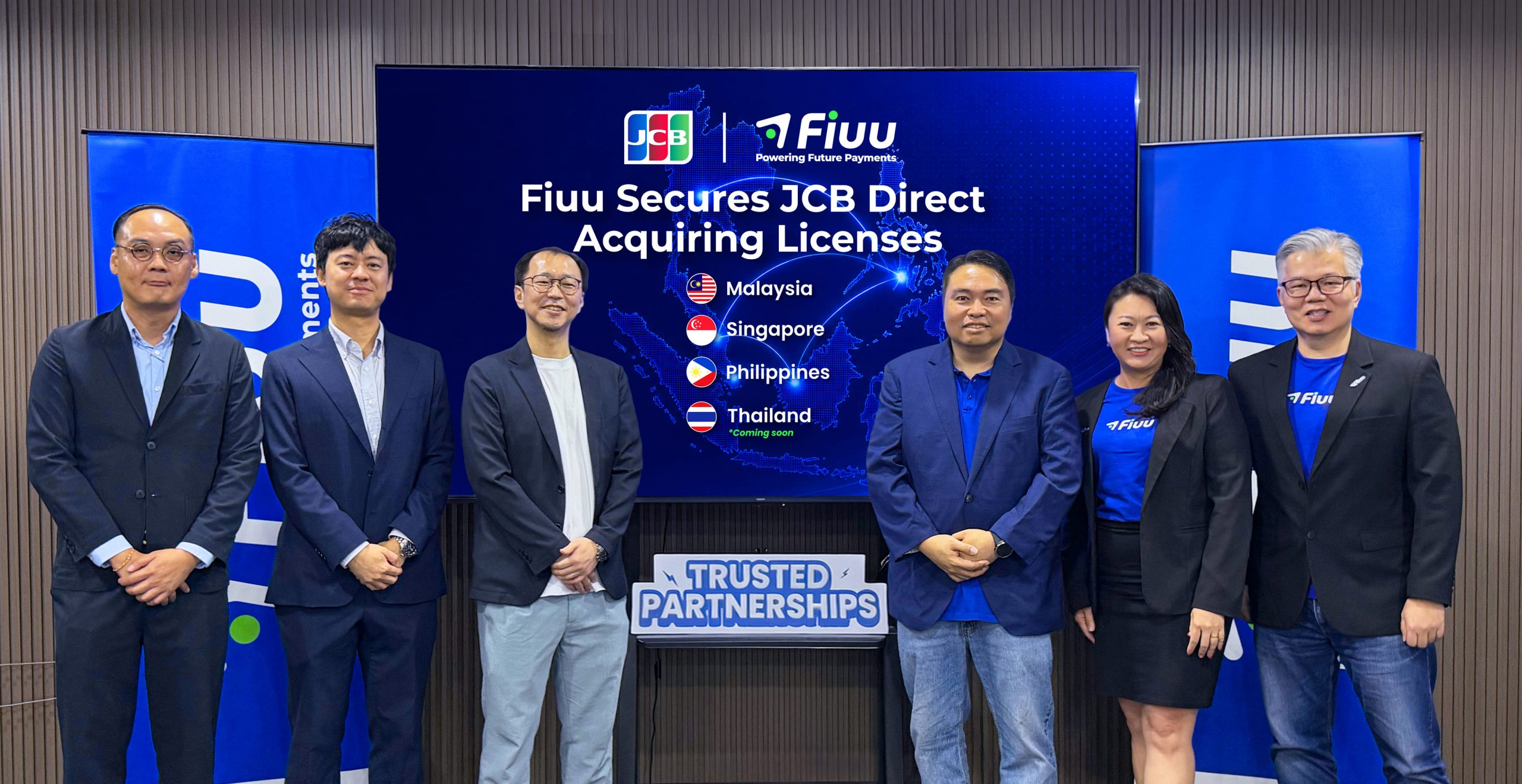
That barrier just got lower. Fiuu, a payment platform widely adopted by Malaysian merchants, can now process JCB payments directly in Southeast Asia (source). For a busy SME owner like you, this isn’t just a backend tech upgrade. It is a practical, immediate tool for connecting your business with an active customer base that was previously harder to serve.
TL;DR: What You Need to Know
- Fiuu now directly processes JCB payments in Southeast Asia, simplifying how your business accepts and routes Japanese credit cards.
- JCB is one of the world’s major payment networks with over 140 million cardholders, primarily in Japan and across Asia.
- For your Malaysian SME, direct processing means higher approval rates, a smoother checkout experience for international tourists, and a smarter way to serve a growing segment without complex workarounds.
What This Means for Your Day-to-Day Operations
JCB (Japan Credit Bureau) is a major global payment brand, but its strongest presence has always been in Japan. Without direct processing, your business relied on fallback routing or complicated third-party gateways. This often led to slower transaction approvals, higher chances of a decline, or a frustrating “card not accepted” message at the worst possible moment.
Direct processing via Fiuu means the transaction is routed natively. Your system treats a JCB card with the same priority as a Visa or Mastercard. Native routing generally translates to better approval rates and a cleaner checkout experience. If you already use Fiuu for payments in your physical store or online checkout, enabling JCB is likely a simple configuration change that immediately connects your business with the millions of Japanese customers who prefer to use it.
“Your business doesn’t need to cater to everyone. But if a Japanese tourist is standing at your counter, accepting JCB isn’t a luxury. It is the minimum standard for removing friction at the final point of sale.”
How This Applies to Malaysian SMEs
1. The Boutique in a Tourist Belt. Think of your shop in Penang, Melaka, or Kota Kinabalu. Japanese visitors are a familiar sight. They look for authentic, quality products. When a customer at your counter reaches for their wallet and pulls out a JCB card, your system says “yes.” That single transaction represents a happy customer and a seamless brand experience. Before, this moment might have resulted in a confused employee and a frustrated tourist being directed to an ATM. Now, the transaction just goes through.
2. The Online Bookings for Travel and Hospitality. You run a homestay, a local tour operator, or a cooking class in Langkawi. Your automated booking system is the front door of your business. Japanese tourists plan meticulously. They research, they compare, and they book using their preferred cards to secure travel insurance and rewards points. If your checkout page lacks a JCB option, they may simply choose a competitor. Direct JCB processing through Fiuu means your automated booking engine reliably serves that segment of the market.
3. The Strategic Layer in Your Automation. At AutoRunBiz, we think a lot about the “last mile” of your business systems. You can have the best CRM, an efficient website, and a solid inventory system. But if the payment gateway at the end of the funnel is a blocker, your automation has a weak spot. A payment infrastructure that includes direct JCB processing means the path from “customer booked” to “payment settled” is truly friction-free for a significant demographic of visitors.
4. The High-Traffic F&B Venue. Your restaurant in Bukit Bintang, a busy shopping mall, or near a business district. The lunch crowd includes Japanese families or business travelers. Seeing the JCB logo on your Fiuu terminal gives them confidence. It signals that you are set up for international guests and removes the awkwardness of having to find an ATM or split the bill across multiple cards.
Practical Takeaways for Your SME
- Verify Your Setup: Contact Fiuu support or check your merchant dashboard. Request the activation of JCB direct processing if it is not already enabled on your existing account.
- Update Customer Touchpoints: Add the JCB logo to your online checkout page, your POS terminal, and any marketing materials aimed at international tourists.
- Brief Your Team: Explain to your counter staff that the business now accepts JCB. A simple “Yes, we can accept that” at the register builds immediate trust with the customer.
- Test Your Funnels: If you use an automated booking system or invoice process integrated with Fiuu, run a test transaction to ensure everything flows smoothly from payment notification to fulfillment.
- Communicate to Partners: If your business works with travel agencies or Japanese tour groups, let them know you accept JCB. It removes one more barrier for them when recommending your location.
Looking at the Numbers
The Japanese traveler segment is a consistent part of Malaysia’s tourism economy. Here is a quick look at the scale of the card networks relevant to your business:
| Card Network | Global Cardholders | Key Market Presence | Source |
|---|---|---|---|
| Visa | ~3.5 Billion | Global | Industry Averages |
| Mastercard | ~2.5 Billion | Global | Industry Averages |
| JCB | ~140 Million | Japan, Asia | JCB Global |
| American Express | ~110 Million | Global, Premium | Industry Averages |
While JCB’s total cardholder number is smaller than the major US networks, its deep focus on the Japanese market makes it highly relevant for Malaysian businesses that serve tourists. Japan is a consistent top-tier source market for visitors to Malaysia (Tourism Malaysia). Direct processing via Fiuu removes a long-standing point of friction for this specific demographic.
The Bigger Picture: Borderless Business Automation
This move by Fiuu represents a broader trend in the region: the wider availability of international payment infrastructure. Historically, the ability to handle a wide array of international cards was a capability mostly available to large hotel chains and big-box retailers through expensive proprietary systems.
Today, a small boutique in George Town can have the same payment capabilities as a multinational chain. This levels the playing field. It allows you to compete on the quality of your product and your service, rather than being limited by your technology stack. When a visitor spends freely without friction, they leave with a better impression of your business and of Malaysia as a whole.
For the Malaysian economy, which is deeply connected to the service and tourism sectors, making it easier for visitors to transact smoothly creates positive momentum. Satisfied travelers return, and they tell their friends.
As a business owner, the question is no longer if you should be ready for international payment standards, but how quickly you can adapt. The infrastructure is in place. The Japanese customers are already here. Your next step is to ensure your automated systems are ready to welcome them.
Ready to Streamline Your Operations?
Your business should run itself. AutoRunBiz deploys AI agents to automate your daily operations — WhatsApp orders, invoicing, customer follow-ups, and accounting. Book a free 15-min ops audit to see where automation fits your business →