
Can AI Agents Actually Use Your Business Website?
You may already have a modern-looking website, online catalogue, booking form, customer portal, or documentation page. But a new question is becoming important: can an AI agent find the right information, understand it, and complete a useful task on your behalf?
That matters because customers are increasingly using digital assistants to compare products, request information, make bookings, find suppliers, and prepare purchase decisions. If an agent cannot read your pages properly, interpret your product details, or identify the next step, your website may be visible to people but difficult for software to use.
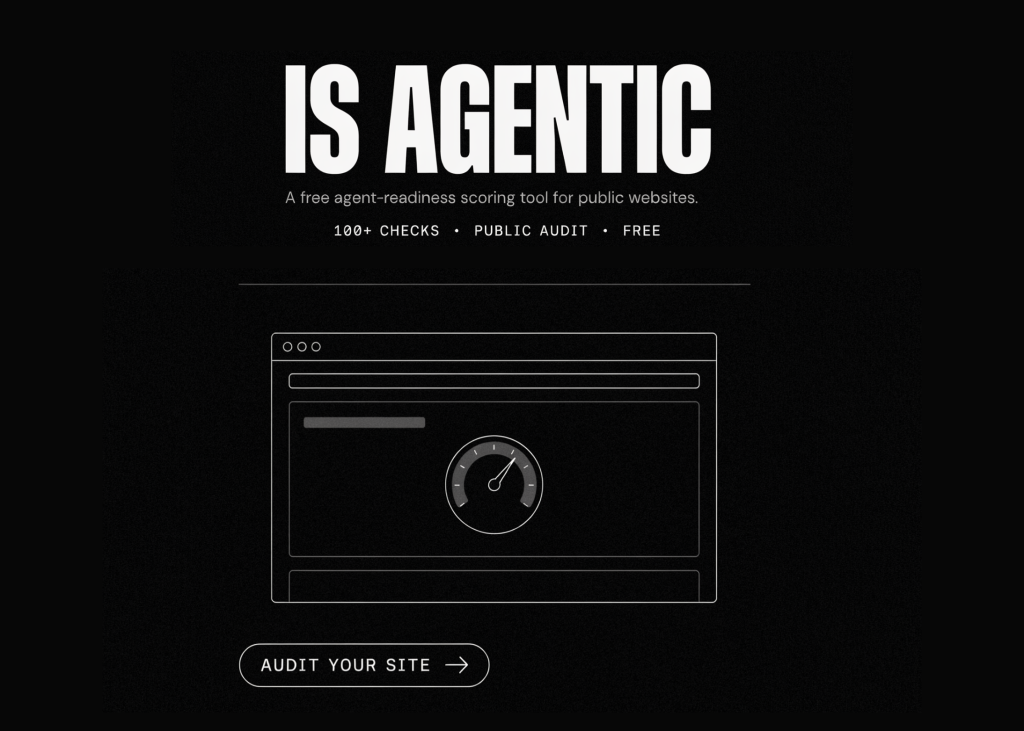
Vercel’s new Is Agentic tool gives business owners a practical way to inspect this problem. It scans a public website using more than 100 checks and produces a readiness score covering discovery, access, usability, and payments. The tool is currently free, and reports can be requested through the website, command line, API, or MCP server. Source
TL;DR
AI agent readiness means making your website easy for software agents to discover, access, understand, and use. Is Agentic checks 118 items and highlights practical issues such as missing structured data, unclear errors, incomplete metadata, and content that only appears after JavaScript runs. Source
For a Malaysian SME, the useful first step is not chasing a high score. It is using the report to fix the information customers and their assistants need most: what you sell, who you serve, where you operate, how people contact you, and what happens next.
What This Means
An AI agent is software that can interpret a request and take steps to complete it. For example, a customer might ask an agent to find three local caterers for a corporate event, compare their menus, check delivery areas, and prepare an enquiry. The agent needs more than attractive pages. It needs clear, accessible information.
Is Agentic examines four broad layers:
| Layer | What it checks | Why it matters |
|---|---|---|
| Discovery | Whether important pages and information can be found | Agents need to locate your products, services, policies, and contact details |
| Access | Whether content can be retrieved reliably | Pages should not depend entirely on a browser executing complex scripts |
| Usability | Whether information is clear, complete, and structured | Agents must understand names, prices, locations, availability, and instructions |
| Payments | Whether transaction-related steps are understandable | Agents need to recognise how a customer can proceed with a purchase or booking |
Ora’s methodology uses 118 checks across those four layers: 15 for discovery, 41 for access, 56 for usability, and 6 for payments. Source Vercel then groups checks into essential items worth 80 points, recommended items worth 20 points, and emerging signals that can add up to 5 bonus points. Checks that do not apply to your website are excluded rather than treated as failures. Source
Your website does not need to become complicated. It needs to become clear enough that both a customer and a software assistant can understand what to do next.
The tool is not a security audit, accessibility review, or formal certification. Think of it as a prioritised technical review. It shows where an agent may encounter friction, then provides evidence and recommendations for possible fixes. Source
How This Applies to Malaysian SMEs
Suppose you run a food manufacturer in Selangor supplying cafés and restaurants. Your website may list products, but the information could be spread across images, downloadable brochures, and social media posts. An AI agent trying to identify halal status, minimum order quantities, delivery locations, packaging options, or enquiry channels may struggle. A clearer product page with readable text, consistent specifications, an updated sitemap, and structured product information gives the agent a better chance of producing an accurate answer.
For a home services company in Johor, agent readiness can affect how easily people find and compare your services. A customer may ask an assistant to locate an air-conditioning technician serving a particular area, available on a certain day, with experience in a specific type of property. Your website should clearly state service areas, operating hours, service categories, response process, and contact options. If these details exist only inside a visual banner or require several unclear clicks, the agent may omit your business.
For a travel operator, hotel, tuition centre, clinic, or event business, the same principle applies. Your pages should separate important facts into clear sections: location, opening hours, eligibility, booking steps, cancellation rules, required documents, and contact methods. Malaysian customers often need location-specific information, including state, town, parking instructions, delivery coverage, or language support. Make those details easy to read rather than hiding them in a graphic.
If you operate an online shop, check whether product names, descriptions, stock information, delivery terms, and return policies are presented in a consistent format. An agent cannot reliably recommend your product if the key details are missing from the page or available only after an interactive widget loads. You do not need to build a special AI system immediately. Start by ensuring your existing website communicates accurately through ordinary web requests.
Service businesses should also pay attention to error handling. One check looks for a genuine HTTP 404 response instead of returning a normal page with a “not found” message. Source This sounds technical, but the business impact is simple: when an old service page disappears, both people and agents should receive a clear signal rather than being sent to a confusing blank or generic page.
Practical Takeaways
- Run an initial scan. Enter your public domain into Is Agentic and save the report as a baseline. The tool also supports command-line output and JSON for technical teams. Source
- Review your top five customer journeys. Check whether an agent could find a product, request a quotation, make a booking, locate your premises, or contact the right department.
- Replace image-only information. Put product specifications, operating hours, service areas, and policies in normal HTML text as well as visual designs.
- Improve page titles and descriptions. Make each page explain exactly what it covers, where the service is available, and who it is for.
- Add structured data where appropriate. Product, organisation, local business, event, and FAQ information can help software interpret your pages.
- Check your sitemap. Make sure important pages are listed and old or irrelevant URLs are not misleading search and agent systems.
- Test your forms. State what information customers must provide, what happens after submission, and how quickly they should expect a response.
- Fix unclear errors. A missing page should return a proper 404 response and offer useful navigation back to relevant content.
- Keep business information consistent. Your address, phone number, operating hours, service areas, and company name should not conflict across pages.
- Re-scan after major changes. A website redesign, new booking system, or content migration can remove important text or create broken links.
A Simple Review Schedule
You can treat agent readiness as a small part of your normal website maintenance rather than a separate technical project.
| Timing | Action | Owner |
|---|---|---|
| First review | Run a scan and list issues affecting key customer journeys | Business owner or marketing lead |
| Monthly | Check contact details, service information, links, and important forms | Assigned website administrator |
| After a redesign | Re-run the scan and compare the report with the previous baseline | Website developer |
| Quarterly | Review whether customer questions and product information have changed | Sales and operations team |
The Bigger Picture
Websites have traditionally been designed around human browsing: menus, images, buttons, and visual layouts. That remains important. But a second audience is forming: software agents that read websites to help people decide and act.
This does not mean every SME needs an advanced chatbot, a custom API, or an expensive rebuild. It means your existing digital information should be organised so it is understandable, retrievable, and dependable. Clear content helps customers, search engines, staff, integration tools, and AI agents at the same time.
Vercel’s approach also shows that agent readiness is becoming measurable. Its reports can be returned as HTML, Markdown, JSON, command-line output, and MCP tools, while the API includes fields such as the score, scan time, eligible checks, breakdown, and issues. Source For a growing SME, this creates a practical habit: document the current state, fix the most important obstacles, and test again.
Your priority should be business clarity, not chasing a letter grade. If a customer asks what you do, where you serve, whether you are suitable, and how to contact you, your website should answer those questions directly. When it does, you are better prepared for both human visitors and the agents helping them.
Ready to Streamline Your Operations?
Your business should run itself. AutoRunBiz deploys AI agents to automate your daily operations — WhatsApp orders, invoicing, customer follow-ups, and accounting. Book a free 15-min ops audit to see where automation fits your business →