
Stop Worrying About What Your Code is Hiding
You run a tight ship. Your staff know their roles. Your products are solid. But what about your website? That e-commerce store your developer just handed over? The customer portal you rely on every day?
Most Malaysian SME owners treat their software like a black box. You pay for it, it appears, and it mostly works. But inside that black box could be gaping security holes. A SQL injection point here. A hardcoded admin password there. A hacker’s playground waiting for a slow Tuesday.
You are not a coder. You should not have to be. But you are responsible for the safety of your customers and your data. This is the quiet anxiety of digital business—the fear that your code might be betraying you and you would never know until it was too late.
TL;DR: Anthropic just released a beta plugin for Claude Code that turns AI into a rigorous security audit team. It works through an inventory phase, a threat modeling phase, and a panel of verifiers who vote on each suspected vulnerability. For a Malaysian SME owner, this means you can finally get an honest, documented security review of your code without hiring a dedicated security team. It puts quality control back in your hands.
What the “Claude Security Plugin” Actually Does
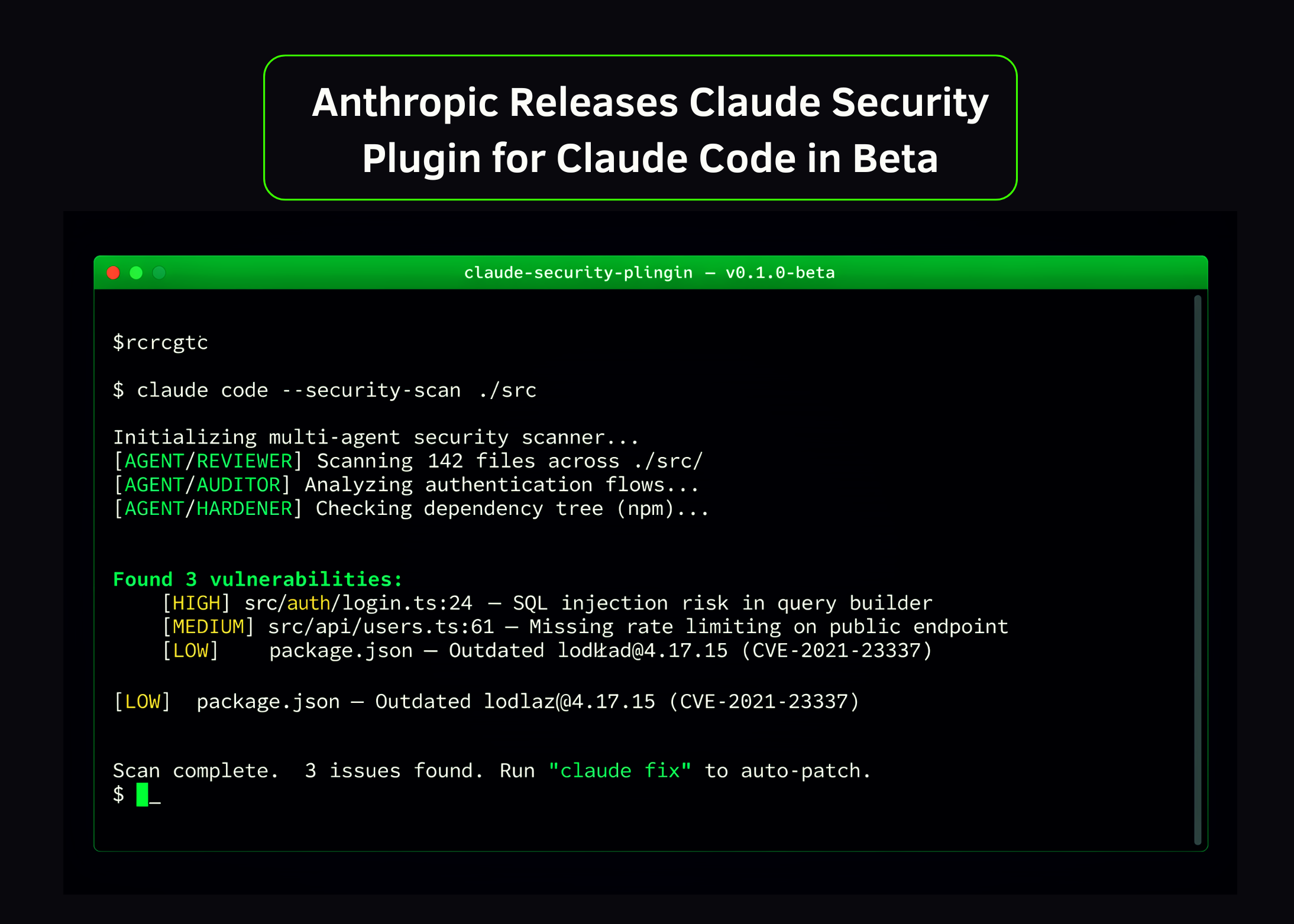
Let’s strip the jargon. Anthropic released the Claude Security plugin for its coding assistant, Claude Code. Instead of a simple scan, it runs a multi-agent investigation.
It breaks your project into components. It assigns AI agents to model threats, research specific categories (like injection attacks, authentication flaws, and encryption issues), and then sweeps for gaps. But here is the part that makes it truly useful for a busy owner:
Every finding goes through a panel of three independent verifiers. They vote. If at least two agree it is a real threat, it earns a spot in the report. This stops the dreaded false alarm flood that makes traditional security tools so hard to act on.
A finding does not go into the report because a researcher found it. It goes in only after surviving a panel.
If a problem passes the vote, the tool drafts a patch file. An independent AI agent then checks that patch to ensure it doesn’t introduce a new problem. Nothing gets applied automatically. You get a folder of fixes, and you decide when and how to apply them. You stay in control.
How This Applies to Your Malaysian SME Right Now
1. Vetting Outsourced Development Work.
Malaysian SMEs rely heavily on freelancers and small agencies. When they hand over the final code, you have no way to check its integrity. Now you do. You can install the plugin, point it at your code repository, and run a full scan. The output is a clear report listing exactly what needs to be fixed. You don’t need to read the code yourself. You just hand the developer the report and say, “Fix these issues before we go live.” It changes the relationship from blind trust to verifiable quality control.
2. Protecting Your Customers During Rapid Updates.
Business moves fast. You need new features yesterday. But every update carries risk. A single line of bad code in a new feature can expose your customer database. The plugin has a “Scan Changes” feature. Before your developer pushes an update, they can scan just the changes on that branch. It catches the vulnerability before it ever reaches your live server. This is how you keep your fast shipping culture without sacrificing safety.
3. Building Your PDPA Compliance Trail.
Under the Personal Data Protection Act, you are responsible for the safety of your customer data. If something goes wrong, you need to prove you took reasonable steps. The plugin writes a timestamped report to your repository. It includes a revision stamp that records exactly which commit was scanned and what the outcome was. If an audit ever happens, you have a paper trail that says, “On this date, we actively scanned our codebase and addressed the findings.” That is a powerful shield for your business.
4. Matching Larger Competitors on Security Standards.
Big companies hire dedicated security teams and pay for deep penetration tests. Most Malaysian SMEs cannot justify that expense. Now, you have a tool that runs a structured, multi-agent review process. For a business in Penang or Johor Bahru competing with a corporate giant in KL, this is a massive advantage. It puts an enterprise-grade review process into the hands of a five-person team.
What a Scan Actually Gives You
When the scan finishes, it creates a dedicated folder in your project. Here is what you get, based on the official documentation:
| File | What It Contains | Why You Should Care |
|---|---|---|
CLAUDE-SECURITY-RESULTS.md |
Human-readable report with severity (HIGH / MEDIUM / LOW), confidence score, exploit scenario, and fix recommendation for each finding. | This is the document you send to your developer. It tells them exactly what is wrong and how to fix it. |
CLAUDE-SECURITY-PATCHES/F*.patch |
Ready-made patch files for each verified vulnerability. | Your developer can apply these with one command. It saves hours of diagnosis time. |
CLAUDE-SECURITY-REVISION-*.json |
Verification stamp showing what commit was scanned and the verification status of the findings. | This is your audit trail. It proves the scan happened and the findings passed the voting panel. |
Your Action Plan for the Next Week
You do not need to be a programmer to get started. Here is how you take control of your code security:
- Ask your developer if they use Claude Code. If they do, they can install the plugin from the official marketplace in minutes.
- Run a full codebase scan on your main production branch. Let the AI inventory everything you own.
- Review the report. You do not need to understand the technical details. Just look at the severity counts. If you see HIGH severity findings, your developer has clear homework to do.
- Establish a security policy. Make it a rule that every major release or project handover must come with a scan report attached. Security becomes part of your standard operating procedure, not an afterthought.
The Bigger Picture for Malaysian Digital Business
Malaysia is digitizing fast. E-commerce, service platforms, and fintech apps are growing. But digital trust is fragile. One major breach at a local SME could make customers fearful of transacting with anyone.
Tools like this are moving code security from a specialist activity to a standard operating procedure. The AI handles the grunt work of auditing, and the business owner retains full control over what gets fixed and how.
This is about raising the minimum bar for everyone. For the first time, a shop with two employees can have the same basic code safety standards as a public company. That is a strong step forward for the Malaysian digital economy.
Your code is the engine of your business. Do not let it be the weak link. You do not need to be an expert. You just need to be willing to run the scan and demand better from your deliverables.
Ready to Streamline Your Operations?
Your business should run itself. AutoRunBiz deploys AI agents to automate your daily operations — WhatsApp orders, invoicing, customer follow-ups, and accounting. Book a free 15-min ops audit to see where automation fits your business →