
Is Camo Illegal? The Law Malaysian Business Owners Keep Missing
Think about your last team event. Or that new shipment from your supplier. Or the staff uniform you ordered for your security crew. Did any of it have camouflage print? Because in Malaysia, that print sits inside a law most business owners have never read.
Here’s what the QuickCheck investigation found: under Section 25A of the Minor Offences Act 1955, wearing camouflage that resembles a military uniform can get you fined up to RM500, jailed up to six months, or both. And the manufacturing or selling side carries even heavier penalties.
Before you panic: nobody is coming for your camo cap. But if your business touches certain products, uniforms, or events, this law has real implications you need to understand.
TL;DR
Wearing camo fashion items is generally fine. Wearing anything that could be mistaken for a military uniform is not. And if your business makes, sells, imports, or exports camouflage cloth or uniforms without written Ministerial permission, you face up to RM1,000 in fines and 12 months’ imprisonment. This is not a forgotten rule — it’s actively enforced.
What This Means, In Plain Language
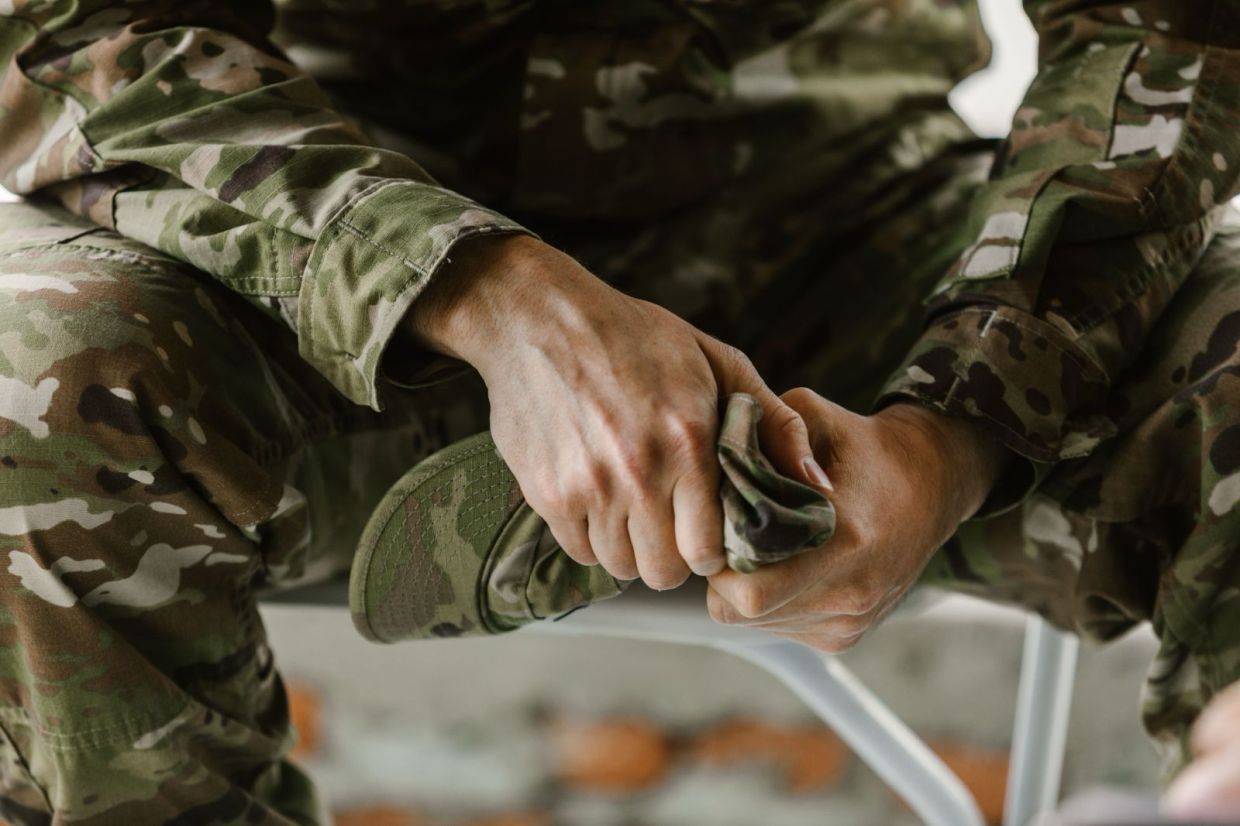
The law isn’t about camouflage print as a design. It’s about the word “uniform”. The Act’s Second Schedule defines a camouflage uniform as a hat, a long-sleeve jacket, and trousers made from camouflage cloth. “Any part thereof” means just one of those items can trigger the offence. And “anything resembling a camouflage uniform” extends the provision to garments that could reasonably be mistaken for military-issue clothing.
The key distinction: a military-style long-sleeve camo jacket that looks like it came off a soldier’s back is almost certainly caught. A pair of camo-print fashion shorts that nobody would mistake for military clothing is a much harder case to make.
Where it gets genuinely broad is on possession of camouflage cloth. The Second Schedule defines it as cotton drill or polyester viscose material with a khaki base and intermittent brown, grey, dark green, and black patches — regardless of whether the fabric is intended for military use or sold by the metre at a fabric shop.
“If what you are wearing could make someone think, even for a moment, that you are a member of the armed forces, Section 25A applies.”
How This Applies to Malaysian SMEs
If you sell clothing, fabric, or accessories. Whether you run a boutique, an online fashion store, or a textile supplier, this law touches your stock. Streetwear camo prints are probably safe. But camo jackets, caps, or trousers styled like military issue sit in a grey zone that authorities could interpret strictly. And under Section 25A(2), anyone who makes, manufactures, sells, buys, imports, or exports camouflage cloth or uniforms without the written permission of the Minister faces a fine of up to RM1,000, imprisonment of up to 12 months, or both. If you’re importing camo-patterned fabric or garments, check whether your supplier’s goods fall under this definition.
If you use uniforms for your team. Security firms, event management companies, production houses, and logistics teams often issue uniforms for visibility and authority. That’s fine — as long as they don’t resemble military dress. Police can arrest without a warrant and seize clothing under Section 25A(3)(a). A staff member in a military-look uniform at an event site could be mistaken for an impersonator — and that’s exactly the scenario law enforcement says it’s watching for.
If you run events, marketing, or community programmes. Hari Merdeka celebrations, sales promos with a “military” theme, NGO activities, even cosplay — all of these have come under scrutiny. In July 2026, Bukit Aman’s Criminal Investigation Department director warned that wearing military costumes or possessing items resembling military equipment could lead to legal action. He confirmed that in the first six months of 2026, one investigation paper was opened under Section 140 of the Penal Code following a viral video of a man wearing clothing resembling security personnel while carrying what appeared to be an imitation weapon. And in January 2025, police investigated an NGO whose members wore uniforms similar to security forces — leading to statements recorded and a request to deregister the organisation.
The practical test for any business decision: if a customer, client, or passer-by could briefly mistake your staff member, your product, or your event prop for real military gear, that’s a risk. “Ignorance of the law cannot be used as an excuse to avoid legal action,” the CID director said. That statement applies to business owners just as much as individuals.
Penalties at a Glance
| Provision | What It Covers | Penalty |
|---|---|---|
| Section 25A(1) | Wearing a camouflage uniform, any part of it, or anything resembling it | Fine up to RM500, jail up to 6 months, or both |
| Section 25A(1) | Possessing, holding in custody, or controlling camouflage cloth | Same as above |
| Section 25A(2) | Making, manufacturing, selling, buying, importing, or exporting camo cloth or uniforms without written Ministerial permission | Fine up to RM1,000, jail up to 12 months, or both |
| Section 25A(3)(a) | Arrest and seizure of clothing or cloth | No warrant required |
Source: Minor Offences Act 1955
Practical Takeaways
- Audit your inventory and uniforms. Separate genuine military-style items from fashion camo prints.
- If you import, export, or manufacture camo cloth or military-look uniforms, get written permission from the Minister — or stop until you do.
- Choose staff uniforms that clearly belong to your brand, not to the armed forces. Avoid long-sleeve military-style jackets in camo.
- For events and promotions, avoid props or costumes that mimic security forces, including imitation weapons.
- Keep clear records of where your camo items come from and what they’re intended for. Written documentation protects you if questions arise.
- Brief your team — especially anyone handling events, procurement, or online listings — so they don’t unknowingly list a prohibited item.
The Bigger Picture
This law has been on the books since 1955, but enforcement attention is growing. The public warnings in July 2026 and the NGO investigation in January 2025 aren’t isolated. As Malaysia tightens security around public events and online content, the line between fashion, costume, and impersonation matters more than ever.
The reason the law exists is legitimate: camouflage clothing that genuinely resembles military uniforms can be used to impersonate armed forces personnel, gain access to restricted areas, or commit crimes while appearing to be authority figures. In a country where uniformed personnel are treated with deference and rarely questioned, the potential for misuse is real.
Nobody is getting arrested for camo shorts at the mamak. But the law doesn’t draw a clean line between fashion and military camouflage in its definitions. That means the provision is broader on paper than in practice — and when enforcement happens, it’s the businesses selling, importing, or dressing people in military-look gear that face the heavier consequences. A simple audit of what you sell, what your staff wear, and what your events showcase can keep your business out of a world of trouble.
And if you’re wondering how to keep track of all these compliance details across your operations, that’s where having a reliable system — even a simple digital checklist — makes life easier. You have a business to run. The last thing you need is a legal surprise hiding in your inventory.
Ready to Streamline Your Operations?
Your business should run itself. AutoRunBiz deploys AI agents to automate your daily operations — WhatsApp orders, invoicing, customer follow-ups, and accounting. Book a free 15-min ops audit to see where automation fits your business →