
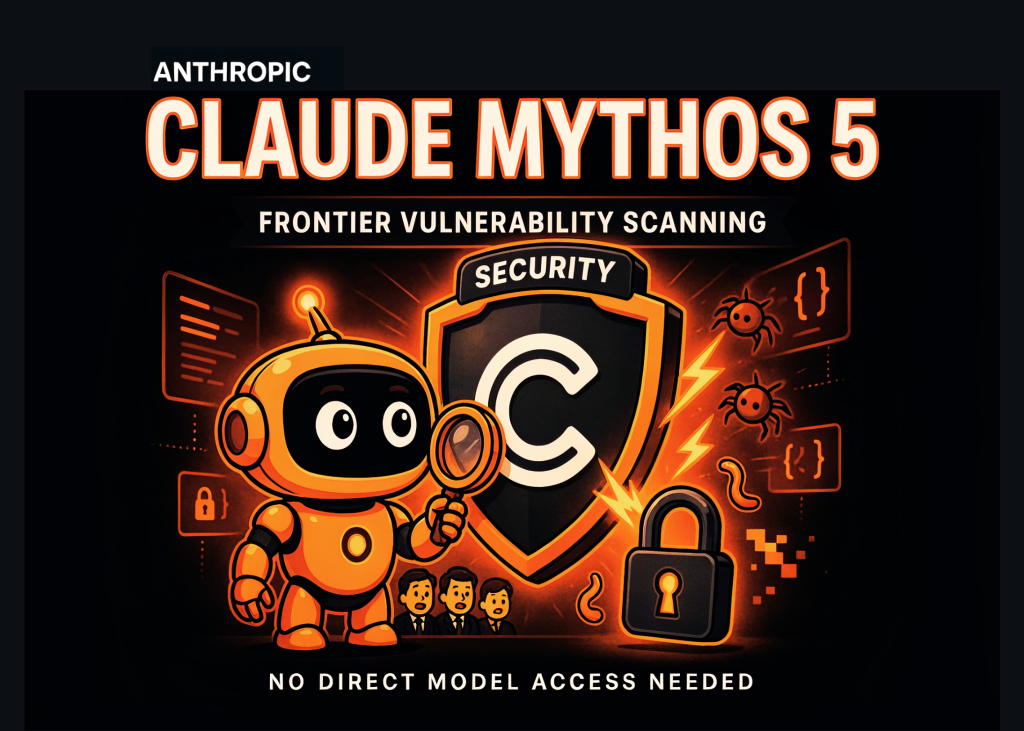
Security Scanning Without Giving AI the Keys
You may not have a large security team, but your business still depends on software. Your website, customer portal, accounting integrations, internal dashboards, mobile applications and cloud systems all contain code that can create problems when a weakness is missed.
The challenge is often practical. Developers are busy shipping features, outsourced teams may maintain parts of your system, and traditional security checks can produce long lists of alerts that nobody has time to investigate. You may want stronger scanning without handing an artificial intelligence system unrestricted access to write code or generate harmful instructions.
Anthropic’s latest Claude Security update points to one possible direction: a highly capable cybersecurity model works behind a controlled scanning interface. Instead of chatting directly with the model, your team receives a structured report containing the suspected weakness, its category, confidence, severity and a proposed fix.
TL;DR
Claude Security now uses Anthropic’s Claude Mythos 5 for Enterprise customers, scanning GitHub repositories and returning structured vulnerability findings. Source
The important lesson for your SME is not simply “use a stronger AI”. It is to use AI through a restricted workflow, with human approval, clear outputs and limited access to sensitive systems.
What This Means
Claude Mythos 5 is described as a cybersecurity-focused model capable of tracing data flows across files, reading Git history and identifying complex weaknesses that simple rule-based scanners may miss. The scan can look for issues such as injection flaws, authentication bypasses, memory corruption and cross-file logic errors. Source
That distinction matters. A conventional scanner may flag a suspicious code pattern. A more advanced system attempts to understand how information moves through the application and whether several pieces of code combine into a real vulnerability.
According to the source article, each finding goes through an adversarial verification step in which the model challenges its own conclusion before presenting it. The results include a Common Weakness Enumeration, or CWE, category, confidence rating, severity rating and suggested patch. Source
The model is not presented as an open chat assistant. It runs inside a security product. You connect a GitHub repository, choose the scope of the scan, and receive an output such as a report, ticket or alert. Results can be sent through Slack or Jira webhooks, or exported as CSV or Markdown. Scans can also be scheduled or limited to a particular directory. Source
The useful idea is controlled capability: let AI inspect your code, but do not automatically let it change production or provide unrestricted instructions.
How This Applies to Malaysian SMEs
For a Malaysian online retailer, this could support checks on the code behind an e-commerce site, order management system or customer loyalty portal. Your team might scan before a major festive campaign, after adding a payment integration or when an external developer hands over a new release. The report could help your project manager prioritise serious issues instead of treating every scanner warning as equally urgent.
A logistics or distribution company may have several systems connected together: warehouse software, delivery tracking, customer notifications and accounting exports. A weakness may not appear in one file by itself. It may occur because an input from a delivery form travels through several services before reaching an internal database. Cross-file and data-flow analysis is relevant here because the risk may depend on how systems interact, not just on one isolated line of code.
Professional firms such as accounting practices, recruitment agencies and business consultancies also hold sensitive client information. Even if you do not build software as your main business, your website, document portal or CRM may contain custom code. A structured security scan can become part of your supplier review process. Ask your outsourced developer to provide scan results, explain unresolved findings and confirm that fixes were reviewed before release.
Healthcare providers, education operators and fintech-related businesses should be especially careful. Your systems may process identity details, health information, payment records or employee data. The source article identifies hospitals, utilities, financial systems and software supply chains as relevant security environments. Source Even when a particular product is unavailable to your company, the operating principle still applies: sensitive code should be scanned in a controlled environment, and every fix should receive human approval.
However, availability is an important limitation. The Mythos-powered Claude Security scan is described as being in public beta for Claude Enterprise customers with code hosted in GitHub. Organisations on Pro, Max or Team plans do not receive that specific Mythos scan. The separate Claude Security plugin for Claude Code is available to Claude Code users, but it uses the models available in their account rather than Mythos 5. Source
What the workflow looks like
| Stage | What happens | SME control to require |
|---|---|---|
| 1. Connect | A GitHub repository is connected to the security scanner. | Limit access to approved repositories and authorised administrators. |
| 2. Scan | The tool examines code, data flows and relevant history. | Start with a test repository and remove secrets from code first. |
| 3. Review | Findings are grouped with CWE, confidence and severity information. | Assign a responsible person to validate each serious finding. |
| 4. Fix | A developer prepares a patch using the organisation’s approved tools. | Do not allow automatic deployment from an AI-generated change. |
| 5. Verify | The application is scanned or tested again after the change. | Keep the result, approval and release record together. |
The source article states that patching happens separately through Claude Code on the web, using the organisation’s existing models, and that every patch requires human review and approval. Source This separation is sensible for a small business: the team that receives a finding should not automatically give an AI permission to alter live systems.
Practical Takeaways
- Map your important repositories. List which code supports customer accounts, payments, personal data, operations and reporting.
- Confirm where your code is hosted. The described Claude Security workflow connects to GitHub, so check whether your repositories are organised and access-controlled there. Source
- Remove secrets from source code. API keys, passwords and private certificates should not be stored directly in repositories.
- Start with high-risk areas. Focus first on login, payment, file upload, administration, customer data and integrations.
- Set a severity response process. Decide who investigates critical, high, medium and low findings, and record the decision.
- Require human approval. AI suggestions should be reviewed by a developer or qualified technology partner before release.
- Keep evidence. Save scan reports, accepted risks, fixes, approvals and follow-up scans for supplier discussions and internal audits.
- Schedule repeat checks. A one-off scan does not protect code that changes every week.
- Check data handling terms. Before connecting a repository, review what code is processed, where it is stored and who can access results.
The Bigger Picture
This announcement suggests that advanced AI security capability may increasingly appear inside specialised business tools rather than as a general-purpose chat window. The user receives a defined result, such as a vulnerability report or patch list, while the model remains behind a controlled interface. Anthropic describes this packaging as a way to reduce the risk of giving users direct access to capabilities that could also be used to create exploits. Source
Anthropic also announced a Defender Advantage Fund offering $35 million in Claude credits to organisations working on open-source software security. Source For your business, the more relevant development is the wider adoption of security scanning in normal software workflows.
You do not need to wait for a particular product to become available. Ask your developer or technology partner how vulnerabilities are found, how findings are verified, who approves fixes and how often systems are rescanned. A strong process is more important than a fashionable tool.
For a Malaysian SME, the practical goal is straightforward: make security checks repeatable, restrict AI access, involve a human reviewer and turn every serious finding into an accountable action. That approach gives you a clearer way to protect your systems as your business grows.
Ready to Streamline Your Operations?
Your business should run itself. AutoRunBiz deploys AI agents to automate your daily operations — WhatsApp orders, invoicing, customer follow-ups, and accounting. Book a free 15-min ops audit to see where automation fits your business →