
When Charging Stops Being a Business Disruption
If you run a Malaysian SME, your vehicles may already be part of your daily operations. Your team could be delivering products, visiting customers, transporting equipment, collecting stock, or travelling between branches. When an electric vehicle needs a long charging stop, that time can interrupt schedules, delay appointments, and create uncertainty for whoever manages the fleet.
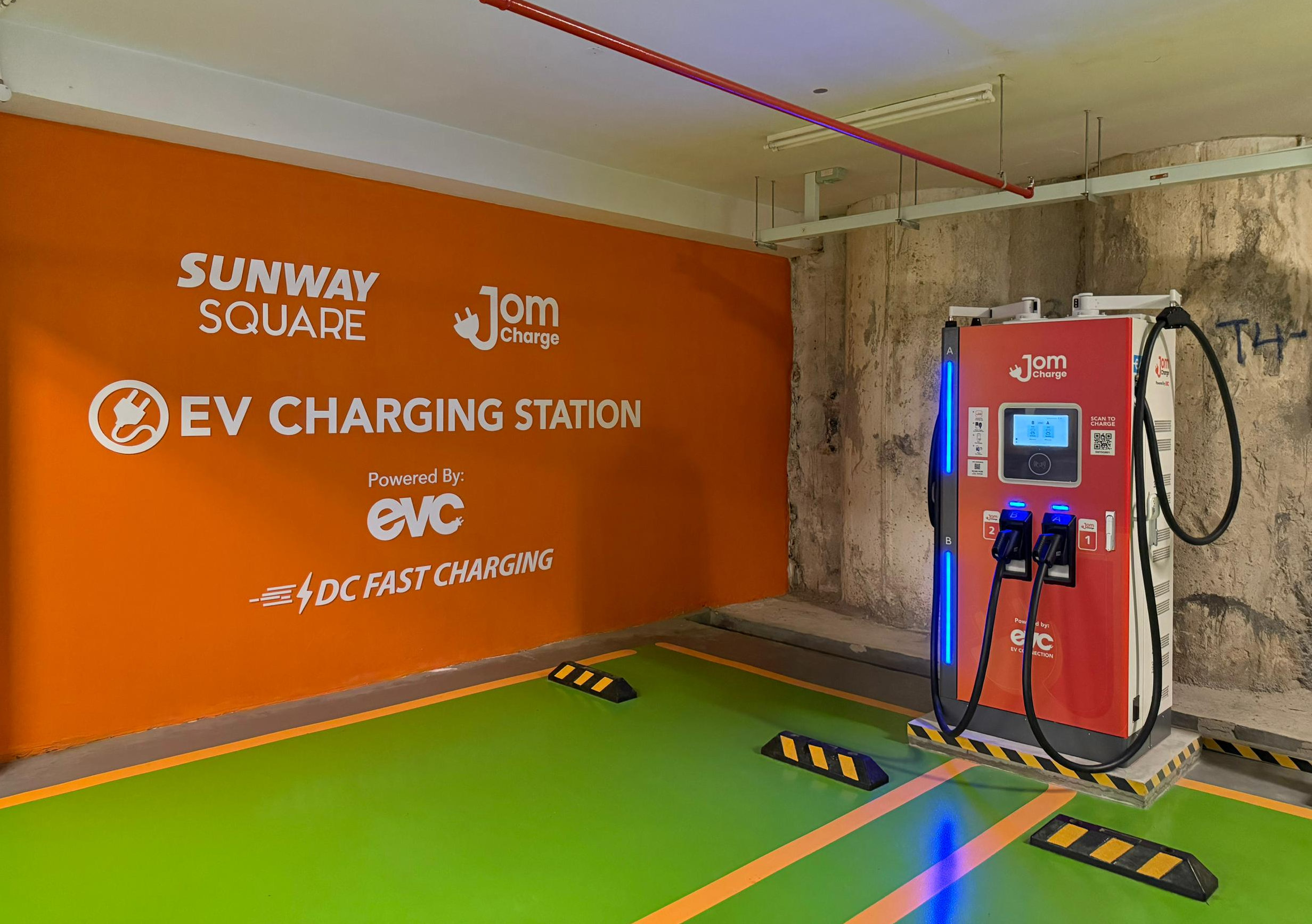
A new charging deployment at Sunway Square Mall shows how charging locations are becoming more practical for working businesses. JomCharge has installed direct-current chargers with charging capacity of up to 120kW at the mall, according to SoyaCincau. For you, the important question is not simply whether the charger is fast. It is how accessible charging can fit into your operating routine.
TL;DR: Faster public EV charging can make electric vehicles easier to include in SME fleets, especially when charging happens during shopping, meetings, meals, or deliveries.
Start by mapping your vehicles’ routes, charging needs, and waiting periods. Then test whether public charging points near your regular destinations can support your schedule before changing fleet or travel policies.
What This Means
There are two common types of EV charging. Alternating-current charging is generally used for longer parking periods, such as overnight charging or several hours at a workplace. Direct-current charging sends power to the vehicle’s battery more directly and is typically used when you need to recharge during a shorter stop.
The Sunway Square Mall deployment provides DC chargers with capacity of up to 120kW, as reported by SoyaCincau. However, 120kW is the charger’s maximum capacity, not a guaranteed charging speed for every vehicle. Actual performance can depend on the car model, battery condition, battery temperature, state of charge, charger availability, and the charging network.
That distinction matters for business planning. You should not promise that every vehicle will be ready after the same amount of time. Instead, treat fast charging as a useful operational option that may work alongside home, office, depot, or destination charging.
The practical insight: The best charging location is not always the fastest one. It is the location that fits naturally into your driver’s route and waiting time.
How This Applies to Malaysian SMEs
1. Delivery and service businesses can reduce route uncertainty. If you operate a bakery delivery service, florist, repair team, cleaning company, or small distribution business, vehicles may travel through busy commercial areas several times a day. A charging point at a mall or mixed-use destination can give drivers another option when a vehicle needs additional battery capacity between jobs.
For example, a technician attending appointments around Bandar Sunway could plan a charging stop while the customer visit, meal break, or parts collection is taking place. This is not a reason to add unnecessary stops. It is a way to make existing pauses more useful. Your operations coordinator can record which routes pass nearby, how long drivers normally remain in the area, and whether the vehicle can complete the next leg safely.
2. Sales teams can combine charging with customer meetings. Many SMEs have staff travelling to offices, retail outlets, construction sites, or supplier locations. If a meeting already takes place near a destination with public charging, the driver may be able to charge without creating a separate trip. The same principle applies to vehicles parked during training sessions, site inspections, or stock checks.
You can make this more reliable by adding charging locations to your travel-planning process. Ask drivers to record the starting battery level, destination, expected parking duration, and backup charging location. This simple checklist can prevent last-minute decisions, especially when traffic, rain, or an unexpected customer request changes the route.
3. Retail and hospitality SMEs can treat charging access as part of the customer experience. If you operate a café, restaurant, salon, clinic, boutique, or small hotel near public chargers, EV drivers may spend time at your premises while their vehicle charges nearby. You can prepare staff for questions about parking directions, walking routes, and operating hours without claiming that your business controls the charger.
You may also notice changes in customer behaviour. A visitor who expects to wait for a vehicle may be more comfortable choosing a sit-down meal, browsing nearby shops, or scheduling an appointment. The useful response is operational: make your location easy to find, provide clear directions, and ensure your team understands how to handle busy periods.
4. Small fleets need better scheduling discipline. If you have several company vehicles, public charging should not be managed through informal messages alone. A shared spreadsheet or simple fleet system can track vehicle registration, driver, route, battery level, charging location, and departure time. You do not need a complicated platform to begin. Consistent records will show whether charging is helping your operation or causing repeated delays.
Numbers to Watch Before You Plan
| Planning item | What the reported deployment tells you | What you should verify |
|---|---|---|
| Charger type | DC charging is available | Whether your vehicle supports compatible DC charging |
| Maximum capacity | Up to 120kW is reported by SoyaCincau | Your vehicle’s accepted charging rate and real-world performance |
| Location | Sunway Square Mall is the reported deployment site SoyaCincau | Parking access, charger availability, opening hours, and route suitability |
| Operational fit | Charging can be combined with a destination stop | Actual parking duration, driver workload, and backup route |
Practical Takeaways for Your Business
- Map your regular routes: Mark malls, offices, service areas, depots, and customer locations near public chargers.
- Separate charger capacity from vehicle speed: A charger rated up to 120kW does not mean every vehicle will charge at 120kW.
- Match charging to waiting time: Use meal breaks, meetings, stock collection, and scheduled parking where possible.
- Keep a backup plan: Record another charging location and identify what the driver should do if the first charger is occupied or unavailable.
- Set a minimum departure buffer: Do not schedule vehicles to leave at the exact moment charging is expected to finish.
- Train drivers on basic checks: They should know the vehicle’s charging connector, app or payment process, dashboard indicators, and safe disconnection procedure.
- Review route records weekly: Look for repeated delays, unsuitable locations, or trips that require a different scheduling pattern.
- Start with one or two suitable vehicles: Test the workflow before applying it across your entire fleet.
A Simple 30-Day Test Plan
During the first week, list every business trip made by your vehicles. Note the route, distance, parking duration, battery level before departure, and whether the driver had to make an unplanned stop. This gives you a baseline based on your own business rather than assumptions.
During the second week, identify public charging sites near your most common destinations. Check whether they are accessible during your operating hours, whether your vehicles use compatible connectors, and whether drivers can safely enter and exit the location. The Sunway Square Mall deployment is one example of a destination-based charging option, as reported by SoyaCincau.
During the third and fourth weeks, test the process with selected routes. Record arrival battery level, waiting time, charging duration, departure battery level, and any operational problem. At the end of the test, decide whether public charging should be used for planned top-ups, emergency support, selected routes, or specific vehicles only.
The Bigger Picture
For Malaysian SMEs, the growth of public EV charging is not only a transport issue. It is also a scheduling, customer-service, and workplace-planning issue. As more charging points appear at malls, offices, hotels, and commercial destinations, businesses will need to think about where vehicles spend time, not just how far they travel.
This may influence fleet policies, delivery windows, employee travel instructions, and customer-site planning. A business that records its routes and charging needs will be better prepared than one that waits for drivers to solve every problem on the road.
The Sunway Square Mall deployment, with DC charging capacity of up to 120kW reported by SoyaCincau, is a useful reminder that charging infrastructure is becoming part of ordinary commercial places. You do not need to change your entire fleet immediately. Begin by testing where charging fits, documenting what happens, and improving the process one route at a time.
Ready to Streamline Your Operations?
Your business should run itself. AutoRunBiz deploys AI agents to automate your daily operations — WhatsApp orders, invoicing, customer follow-ups, and accounting. Book a free 15-min ops audit to see where automation fits your business →