
When Your Workspace Is Full, Every Process Matters
If you run a small café, bakery, catering service, office pantry, food stall, or guesthouse, limited workspace can affect more than appearance. A crowded counter slows preparation, makes cleaning harder, and forces your team to move around one another. When several orders arrive together, equipment capacity becomes an operational issue rather than a simple purchasing decision.
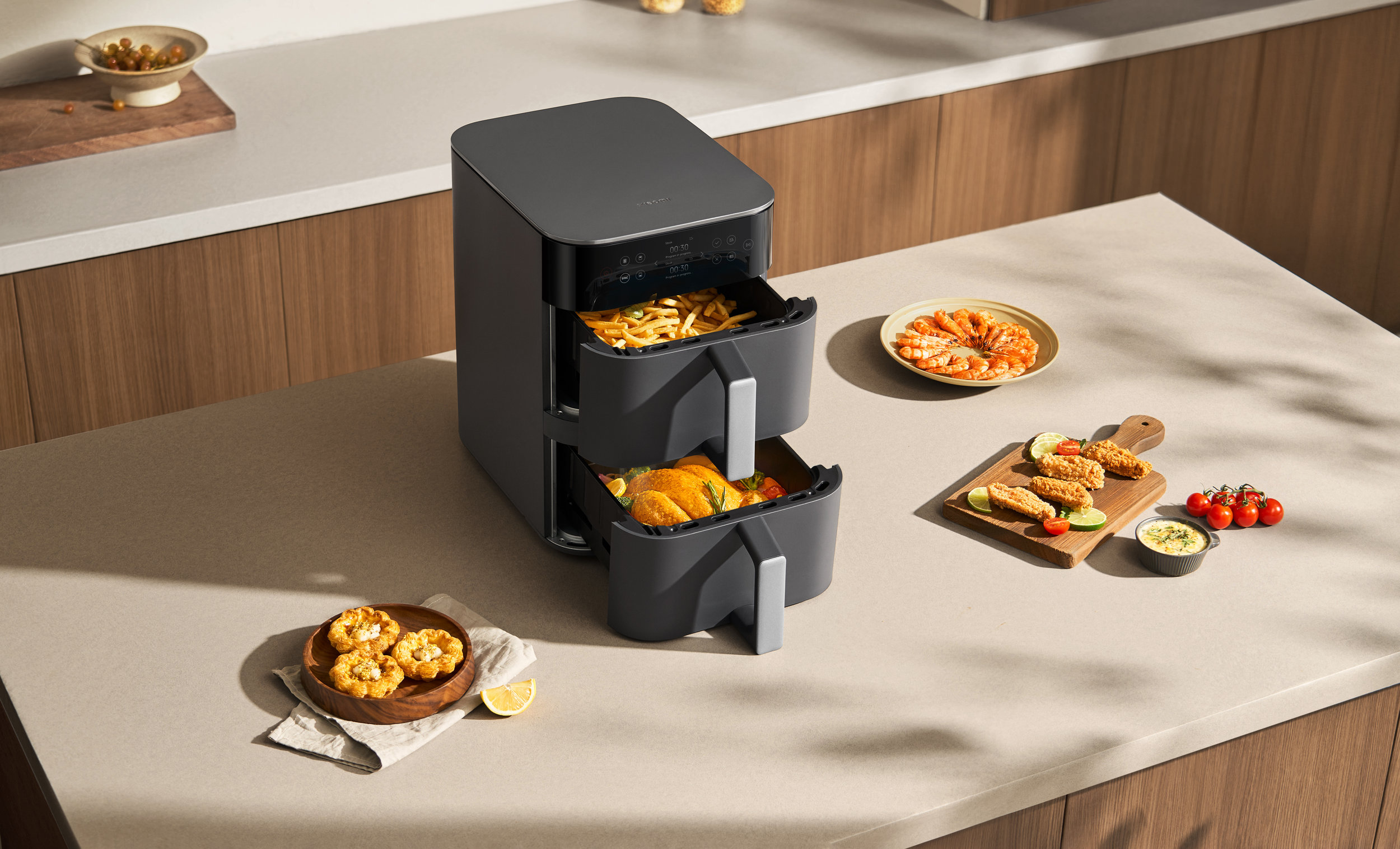
This is why compact multi-function appliances deserve attention from Malaysian SME owners. Xiaomi’s new 12-litre Smart Air Fryer is presented as a double-stack appliance that can cook up to four dishes while using less counter space. The reported Malaysian retail price is below RM900, but the more useful lesson is broader: your business can sometimes improve output by redesigning how equipment is arranged and used, rather than simply adding more machines. Source: SoyaCincau
TL;DR
A compact appliance that handles several cooking tasks may help small food businesses serve more items without expanding their preparation area.
Before buying, assess workflow, electrical capacity, food safety, staff training, ventilation, and whether the equipment fits your actual menu.
What This Means
The Xiaomi appliance uses a 12-litre design with two cooking sections stacked vertically. According to the source article, it can prepare up to four dishes at once, helping separate cooking tasks within one footprint. Source: SoyaCincau
In plain language, this means you may be able to cook different food items at the same time without placing two separate appliances side by side. For a small operation, the benefit is not only the cooking capacity. It may also reduce counter congestion, simplify staff movement, and make it easier to organise a repeatable preparation routine.
However, “smart” does not automatically mean “better for your business”. A connected appliance is useful only when its functions support a clear process. You still need to consider cooking time, portion size, basket loading, cleaning, allergen control, temperature consistency, and whether staff can operate it correctly during busy periods.
The best equipment purchase is not the one with the most features. It is the one that removes a repeated bottleneck in your daily workflow.
How This Applies to Malaysian SMEs
For cafés and small food outlets, a multi-section air fryer could support a tighter menu workflow. You might prepare fries in one compartment, chicken pieces in another, and use separate cycles for snacks or side dishes. This can be useful during lunch or tea-time peaks when one person is handling orders while another manages preparation. The key is to map your menu first. If your most popular items require completely different temperatures, timings, or cleaning routines, the appliance may not deliver the expected improvement.
For home-based food businesses and small caterers, counter space is often shared between preparation, packing, labelling, and dispatch. A vertically arranged appliance may leave more room for containers, sealing equipment, or ingredient trays. You could create a simple batch plan: prepare the first cooking load while packing the previous batch, then move finished food into labelled containers. This reduces unnecessary walking and helps you see which orders are ready. Keep raw and cooked food handling separate, and document cleaning between different food categories.
For office pantries, tuition centres, and small hospitality businesses, the value may be consistency rather than speed. If several staff members prepare snacks or simple meals, preset programmes can reduce guesswork. You can create a one-page operating guide showing the food item, portion size, cooking setting, checking point, and cleaning step. Do not rely on a team member remembering settings from one day to the next. Written instructions make handovers easier, especially when part-time staff or temporary workers are involved.
For convenience stores and small retailers that sell ready-to-eat food, compact cooking equipment may help you test a limited hot-food selection without redesigning the entire outlet. You could begin with a small number of high-demand items, track preparation time and wastage, and review customer response after a defined trial period. Make sure your operating licence, premises requirements, food handling procedures, and electrical installation are suitable for the activity. An appliance should fit your compliance responsibilities, not create a new risk.
Numbers to Check Before You Decide
| Area to assess | What to record | Why it matters |
|---|---|---|
| Capacity | 12 litres for the advertised appliance | Check whether the usable space matches your normal portion sizes. Source: SoyaCincau |
| Cooking sections | Two stacked sections, with up to four dishes reported | Separate dishes only if timing, temperature, and food safety requirements are suitable. Source: SoyaCincau |
| Retail positioning | Reported below RM900 | Use the published figure as a reference, then confirm the current official listing and warranty terms. Source: SoyaCincau |
| Workspace | Measure the counter, clearance, plug location, and ventilation area | A compact footprint still needs safe access for loading, unloading, and cleaning. |
Practical Takeaways
- Measure before buying: Record counter width, depth, height, plug position, and the clearance needed to open each section safely.
- Map your busiest hour: List every item prepared, its cooking time, and which team member handles it.
- Separate suitable foods: Avoid combining items that create cross-contamination, strong odour transfer, or incompatible cooking requirements.
- Standardise portions: Use the same weight or quantity for each batch so cooking results are easier to repeat.
- Create a cleaning schedule: Assign cleaning after specific food categories and at the end of each shift.
- Check electrical readiness: Ask a qualified person whether your outlet and circuit can safely support the appliance alongside existing equipment.
- Run a short trial: Track order completion time, staff movement, rejected batches, cleaning time, and customer complaints.
- Keep a fallback process: Decide what staff should do if the appliance is occupied, unavailable, or needs servicing.
- Train every operator: Use a simple checklist covering loading, settings, checking, unloading, and cleaning.
- Review the menu: Remove or adjust items that create repeated delays, even if they appear attractive on paper.
Make the Appliance Part of a Better Workflow
The appliance alone will not solve an inefficient kitchen. Start by drawing your current process from order received to food packed. Mark where staff wait, where ingredients cross paths, and where finished food is placed. Then test whether a double-section appliance improves that sequence.
For example, one section could handle a main item while the other handles a side dish. If the two sections finish at different times, you may need a holding procedure so the first item does not lose quality while waiting. A simple order board or kitchen display can help staff see which batch is cooking, which batch is ready, and which order requires checking.
You can also connect the equipment decision to basic business records. Track the number of batches, preparation time, rejected items, customer returns, and staff hours spent cleaning. These records help you make decisions based on your own operation rather than general product claims.
The Bigger Picture
Compact smart equipment reflects a wider direction for small businesses: doing more with carefully organised space. As rents, staffing pressures, and customer expectations influence daily operations, SMEs need equipment that supports flexible workflows. A smaller footprint can be valuable when every counter section already has a job.
At the same time, automation should remain practical. A connected appliance may offer controls, programmes, or monitoring features, but those features matter only when your team uses them consistently. You should also consider software support, account access, network reliability, data privacy, warranty service, and what happens if a digital function becomes unavailable.
For Malaysian SME owners, the sensible approach is to treat a compact smart appliance as a workflow experiment. Match it to a specific bottleneck, define what success means, train your team, and review the results. If it helps you prepare more consistently while keeping the workspace safer and easier to manage, it may earn a place in your operation. If it merely adds another device without improving the process, the problem is probably elsewhere.
Ready to Streamline Your Operations?
Your business should run itself. AutoRunBiz deploys AI agents to automate your daily operations — WhatsApp orders, invoicing, customer follow-ups, and accounting. Book a free 15-min ops audit to see where automation fits your business →