
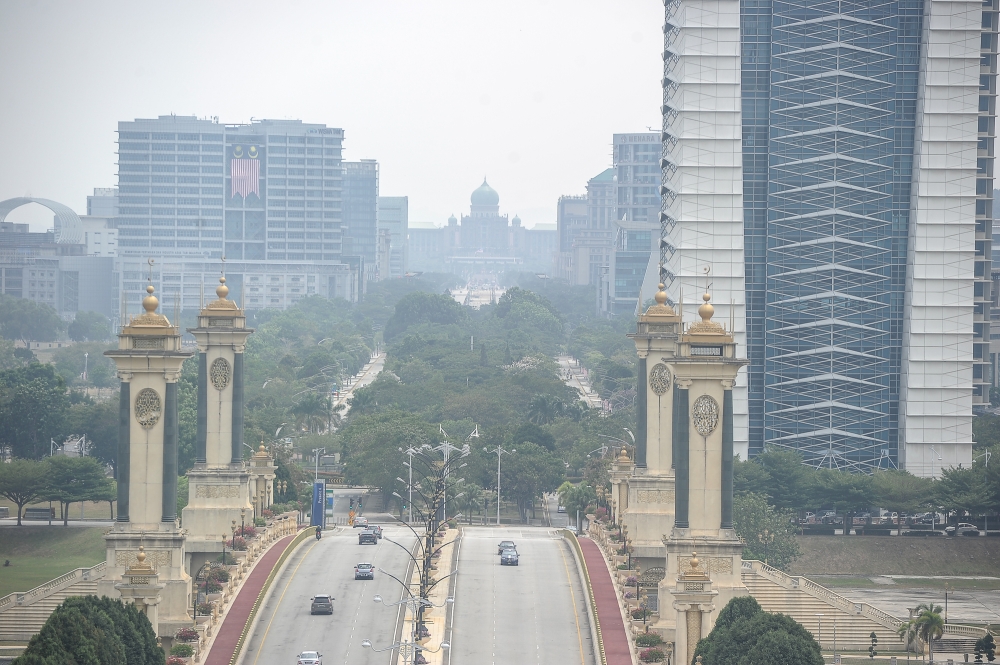
Your Business Has a Haze Problem You Haven’t Planned For
You woke up this morning, checked your phone, and saw the Air Pollutant Index reading for your area. If you’re in Kuching, Samarahan, or even Kuala Lumpur, it wasn’t good news. Samarahan registered the highest API reading at 183, followed by Serian at 182, and Kuching at 176 source. These aren’t just numbers on a government portal. They’re a direct signal that your business operations are about to get harder.
Here’s what most SME owners miss: haze isn’t just a health story. It’s an operational story. When the air turns unhealthy, your staff move slower, delivery drivers face visibility issues, customers stay home, and your team’s ability to show up — physically and mentally — takes a hit. Unlike a thunderstorm that passes in an hour, haze can sit over your town for weeks. And in Sarawak, the situation is already serious.
So the question isn’t whether the haze will affect your business. It’s whether you have systems in place to keep running when it does.
TL;DR: Air quality in 11 Malaysian areas was recorded as unhealthy on 13 August 2026, with Sarawak worst hit source. For SME owners, this means staff absenteeism, delivery delays, and reduced foot traffic. The practical response isn’t just buying air purifiers — it’s automating the parts of your business that depend on people being physically present.
What an “Unhealthy” Reading Actually Means
The Air Pollutant Index (API) is how Malaysia measures air quality. Readings from 0 to 50 indicate good air quality, 51 to 100 is moderate, 101 to 200 is unhealthy, 201 to 300 is very unhealthy, and anything above 300 is classified as hazardous source. The data is released hourly based on readings from 68 monitoring stations nationwide source.
Here’s the breakdown of the 11 affected areas:
| Area | API Reading | Status |
|---|---|---|
| Samarahan, Sarawak | 183 | Unhealthy |
| Serian, Sarawak | 182 | Unhealthy |
| Kuching, Sarawak | 176 | Unhealthy |
| Sarikei, Sarawak | 158 | Unhealthy |
| Sri Aman, Sarawak | 158 | Unhealthy |
| Mukah, Sarawak | 152 | Unhealthy |
| Sibu, Sarawak | 152 | Unhealthy |
| Johan Setia, Selangor | 154 | Unhealthy |
| Kuala Lumpur | 131 | Unhealthy |
| Shah Alam, Selangor | 101 | Unhealthy |
| Putrajaya | 104 | Unhealthy |
Meanwhile, 55 areas recorded moderate readings, and only two areas nationwide had good air quality that morning source. That means the vast majority of your customers, suppliers, and employees are breathing air that’s at least mildly irritating their eyes and lungs right now.
Now, translate that into your business day.
How This Applies to Malaysian SMEs
If you run a F&B outlet or retail shop in any of these areas, foot traffic is your first casualty. When the air outside is visibly hazy, parents keep kids indoors, office workers skip lunch runs, and casual browsing stops. The customers who do still want your products are likely to order delivery instead. If your business doesn’t have a reliable online ordering and dispatch system, you’re losing those customers to competitors who do.
If you’re in logistics, delivery, or any field operation — especially in Sarawak — your drivers and riders are the ones breathing this air. At API 183 in Samarahan, your delivery team is working in conditions that health authorities classify as unhealthy for everyone, not just sensitive groups. They’ll be slower, they’ll need more breaks, and some will call in sick. If your dispatching and scheduling still runs on phone calls and WhatsApp messages, one absent rider creates a chain reaction of late deliveries and frustrated customers. An automated dispatch system that reassigns jobs instantly can mean the difference between a late delivery and a cancelled order.
If you run an office-based SME in Kuala Lumpur or Shah Alam, the challenge is subtler but just as real. Your team might show up, but their productivity drops when they’re tired, headachy, or worried about their kids stuck at home. The companies that handle haze season well are the ones that make it easy for staff to work from home when needed — and that requires more than just a laptop. It requires documented workflows, cloud-based files, automated client updates, and a way to track who’s doing what without hovering over shoulders. If your business processes live only in your employees’ heads, you can’t switch to remote work overnight when the API hits 154 outside your Johan Setia office.
This is where automation stops being a buzzword and becomes a survival tool. AutoRunBiz helps SMEs put these systems in place before a crisis hits — not during it.
“The businesses that weather the haze aren’t the ones with the most resources. They’re the ones that don’t need everyone to be physically present, fully healthy, and fully focused just to process an order, update a client, or schedule a delivery.”
Practical Takeaways: What to Do This Week
- Check your area’s API daily at 9am and 2pm. Bookmark the APIMS portal or follow your state’s environment department. Make it a morning routine, like checking your orders.
- Set a remote work trigger. Decide in advance: “When our area hits API 150, staff can work from home.” Write it down. Share it with your team. Don’t improvise on a hazy morning.
- Move your dispatch and scheduling to an automated system. If a driver calls in sick, your system should reassign the job in seconds, not after three phone calls.
- Make your customer updates automatic. Haze causes delays. Customers forgive delays when they’re told early — automate your delay notifications so nobody is left guessing.
- Digitize your key processes now. An order form on paper that lives on your counter is useless when the person who runs that counter can’t come to work. Put it online.
- Review your leave and medical policies. Make sure your staff know their options for sick leave and health coverage during haze season. A clear policy reduces anxiety, and less anxiety means less downtime.
The Bigger Picture: Haze Season Is Now a Business Cycle
This isn’t a one-off bad day. Haze has become a recurring feature of the Malaysian calendar, and the areas affected are expanding — note that this time it’s not just Sarawak but also Selangor, Kuala Lumpur, and Putrajaya. Eleven areas nationwide recorded unhealthy readings on the same morning source, and 55 more were sitting at moderate levels. That pattern is only going to repeat.
For SME owners, that means building a business that can operate in two modes: full capacity on clear days, and reduced physical presence on hazy ones. The companies that thrive will be the ones that treat automation not as an IT project, but as an operational default. When your orders, communications, and workflows already run through systems rather than specific people, a hazy morning is an inconvenience — not a crisis.
Start this week. Your future self, stuck in a hazy Kuching morning trying to figure out who’s covering which delivery route, will thank you.
Ready to Streamline Your Operations?
Your business should run itself. AutoRunBiz deploys AI agents to automate your daily operations — WhatsApp orders, invoicing, customer follow-ups, and accounting. Book a free 15-min ops audit to see where automation fits your business →