
Google Just Taught an AI to Manage Health Conditions. Here’s the Pattern You Need to See.
If you run a small business, you probably spend a good chunk of your week playing “traffic cop”. You’re managing customer requests, tracking orders, checking compliance rules, and following up on conversations that started weeks ago. It feels like juggling a dozen long-running stories in your head.
Google just published a study in Nature about an AI that does exactly this—but for medicine. The specific application is health, but the underlying breakthrough is something that directly applies to your daily operations as a Malaysian business owner.
What Happened
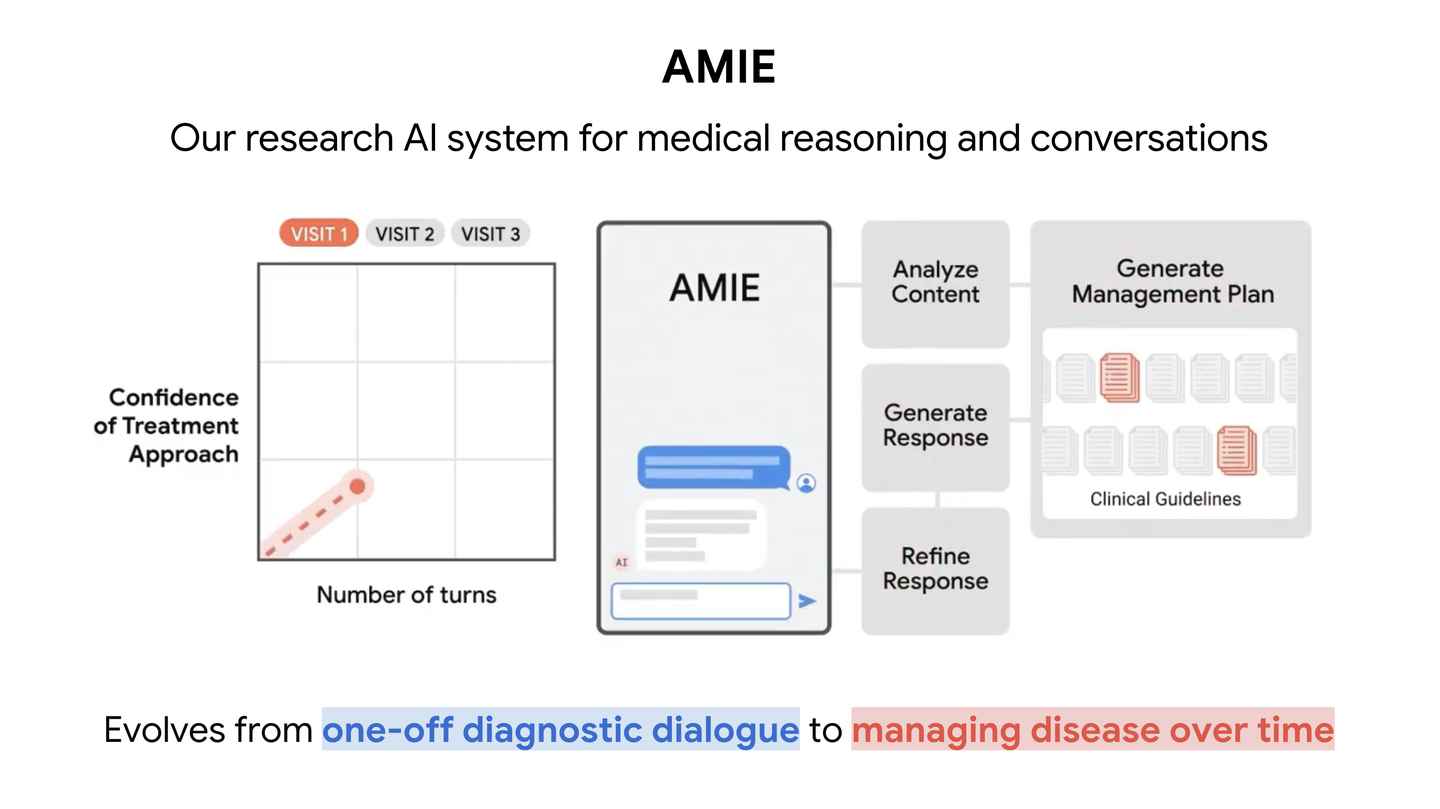
Google’s research team showed off the next version of their medical AI, called AMIE (Articulate Medical Intelligence Explorer). The big leap is that AMIE moved from giving a one-off diagnosis to managing a health condition over time. It tracks symptoms across multiple appointments, cross-references hundreds of pages of clinical guidelines, and suggests how to adjust medications using the long-context capabilities of Gemini models.
In a blinded study with patient actors, AMIE matched primary care doctors in overall management reasoning and scored significantly higher in plan preciseness and guideline alignment.
Google is now exploring a nationwide study to see how this works in real-world virtual care settings. It is a major step from simple Q&A into ongoing, complex management.
Why This Matters for Your Business
You don’t run a clinic. You run a retail shop, a logistics company, a salon, or a consultancy. So why should you care?
Your Business Runs on “Long-Tail” Management
Just like managing a patient, managing a customer over time is hard. They email you, you follow up, the rules change, stock runs out, or the client changes their mind. Most AI tools today are terrible at this—they live entirely in the “now”.
AMIE’s architecture shows us a future where an AI can handle the whole messy story. It combines an empathetic dialogue agent (talking to the customer) with a deep-thinking management reasoning agent (checking the rules and history). For you, this means an AI that can:
- Track a customer journey from inquiry to delivery, remembering every interaction.
- Manage compliance by reading the latest Malaysian regulations and adjusting your internal SOPs automatically.
- Handle complex support tickets that require referring to a knowledge base (your internal “guidelines”) and making decisions based on past conversations.
It feels like we are finally moving past simple chatbots into systems that can actually manage work.
The “Why Now” Factor
The magic is the long-context window. Your business conversations aren’t one sentence—they are emails, invoices, and chat logs spread over weeks. If an AI can manage a complex medical chart across months, it can likely manage a customer profile or a project brief without dropping the ball.
The Bigger Picture
The real trend here is continuous reasoning. AI is getting very good at single tasks. The next step—which Google is actively testing—is AI that manages a whole process from start to finish without you needing to reset the context.
For an SME owner, this is a major shift in what you can automate. It means the tools you use next year won’t just execute one step—they will orchestrate the entire journey. You won’t have to babysit the system. It will remember the history, check the current rules, and plan the next step.
This is exactly the kind of thinking we apply when looking at automation that fits the messy reality of running a business here in Malaysia. It isn’t about replacing you—it’s about giving you a reliable partner for the processes that currently eat up your weekend.
Curious how a “management-mindset” AI could fit your daily operations?
Book a free 15-min call to see how process management AI applies to your business →