
Your delivery trucks might not have drivers someday. Here’s what that means for your business.
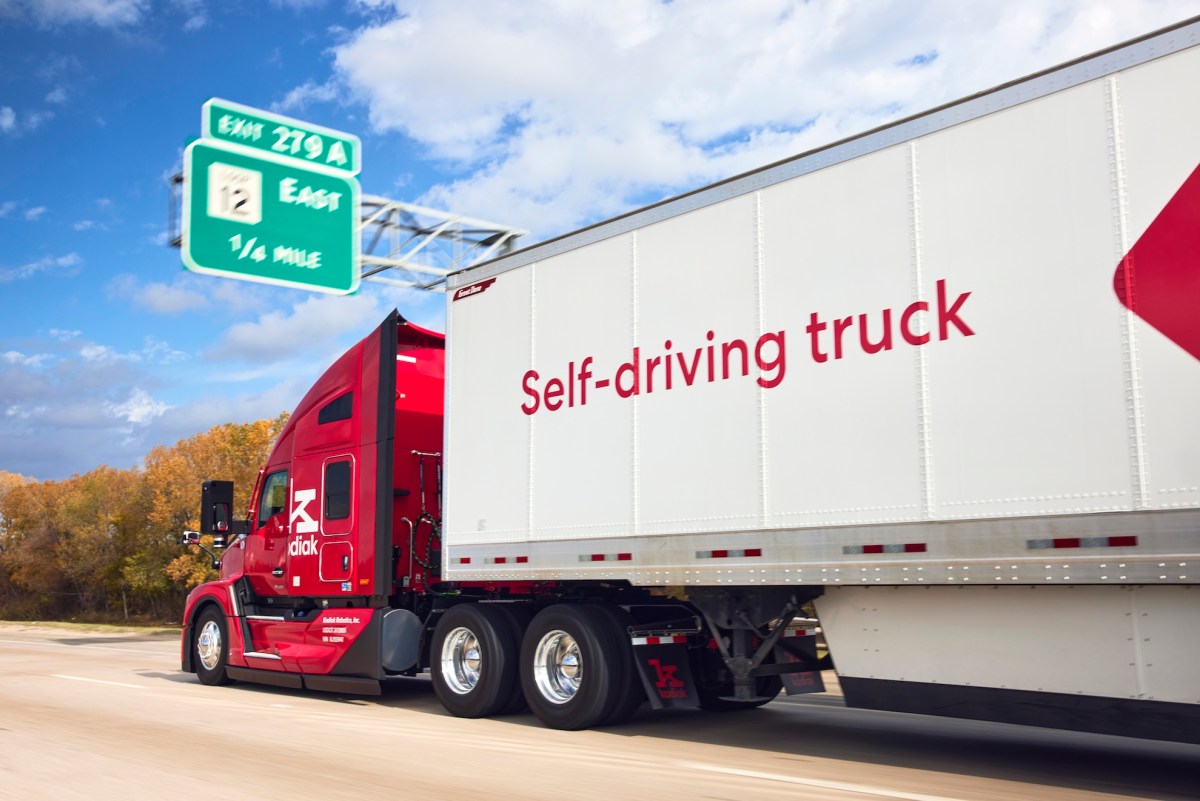
You’ve probably seen them in sci-fi movies: massive 18-wheelers cruising down highways with no one at the wheel. For years, that stayed fiction. But last week, it got one step closer to reality. Self-driving trucks officially started testing on California highways, with companies like Aurora Innovation and Kodiak AI receiving permits from the California DMV. And Kodiak has already put test trucks on the road around its Mountain View office.
Why should you, a Malaysian SME owner running a shop, a factory, or a logistics fleet, care about a regulatory change in California? Because the way goods move around the world is shifting. Your supply chain, your delivery schedules, and even your competition will feel the ripple effects sooner than you think. The question isn’t whether autonomous trucks will reach Malaysia. It’s whether you’ll be ready when they do.
TL;DR: California just ended its ban on heavy driverless trucks, allowing companies like Aurora and Kodiak to test them with a safety driver behind the wheel. This matters for Malaysian SMEs because it signals a global push toward autonomous logistics, which will affect how you plan your fleet, hire drivers, and manage deliveries in the next decade.
What This Means
Let’s break down what actually happened. On April 28, California’s DMV approved updated rules that lifted a ban on driverless vehicles weighing over 10,000 pounds testing on public roads. Previously, autonomous truck companies couldn’t test heavy trucks in their home state, so they went to Texas instead. Aurora launched a self-driving truck service in Texas in May 2025, starting on a Dallas-to-Houston route. Kodiak began commercial driverless operations in January 2025 in an off-road environment in West Texas’s remote Permian Basin, and later expanded to highways. Now, both companies have permission to test in California under specific conditions: a human safety operator must be behind the wheel, and they can’t drive on roads with speed limits of 25 mph or less unless on a direct route.
This isn’t a full green light for driverless trucks. It’s a carefully controlled pilot. But the significance is huge. California is one of the largest freight markets in the world, and its regulatory decisions often set the tone for other states and countries. The fact that they’ve moved from “no” to “maybe, with a safety driver” is a strong signal that autonomous heavy trucks are becoming an accepted part of the transport ecosystem.
There’s also pushback. The Teamsters union sued California’s DMV last week, alleging the agency didn’t study the economic impacts on truck drivers or consider safety risks to motorists. That’s a reminder that this technology won’t roll out without friction. But the testing is happening, and the momentum is real.
“The fact that California has allowed autonomous heavy trucks on public highways—even with safety drivers—means the logistics industry globally needs to start planning for a world where long-haul routes don’t require a human behind the wheel.”
How This Applies to Malaysian SMEs
Malaysia isn’t California. Our roads, traffic patterns, and regulatory environment are very different. But cross-border trade, e-commerce growth, and domestic logistics are the lifeblood of many SME operations. Think about your own business: how many times a week do you rely on a lorry to move raw materials from Port Klang to your factory, or deliver finished goods to your customers in Johor Bahru or Penang? If you’re in the distribution business, you know how hard it is to find reliable, experienced truck drivers. Many SME owners I talk to complain about driver shortages, especially for long-haul routes that require overnight stays.
Autonomous trucks could eventually address that shortage. But more immediately, they’re going to change the competitive landscape in the trucking industry. Large logistics players that adopt autonomous technology won’t need to worry about driver fatigue, rest breaks, or late-night shift availability. That means they could offer faster, more consistent delivery windows—something you’ll have to match if you want to keep your retail customers happy. Even if you never own a self-driving truck yourself, your competitors will use them to undercut your delivery times.
There’s also a historical lesson here. Malaysia was an early adopter of containerization and digital payments, but we’ve often waited for foreign markets to prove technologies before investing locally. For autonomous trucks, that waiting period will be shorter than you think. The technology is already being tested in neighbouring Singapore and in cargo hubs like Rotterdam and Shanghai. Once the regulatory framework exists in Southeast Asia, the infrastructure can be adapted faster than you’d expect—Malaysia already has good highway networks like the PLUS North–South Expressway, which is remarkably similar to the controlled-access highways where autonomous trucks are being tested in Texas and California.
What can you do now? First, start paying attention to your own fleet data. The companies testing in California are collecting massive amounts of telemetry: braking patterns, acceleration, fuel consumption, route efficiency. If you haven’t started tracking even basic metrics like delivery times and driver behaviour, you’ll fall behind when these technologies become available locally. Second, consider your warehousing and loading operations. Autonomous trucks will have precise arrival times, but they’ll also require standardised docks, yard management systems, and digital communication between truck and warehouse. Are your docks ready for a truck that doesn’t have a driver to physically pick up a delivery docket?
Practical Takeaways
- Monitor Malaysian and ASEAN regulations. The Malaysian Road Transport Department (JPJ) has not announced any autonomous truck pilots yet, but Singapore’s Land Transport Authority is already testing autonomous freight vehicles. Stay informed through industry associations or the Malaysian Chamber of Commerce.
- Start digitising your route planning. Use simple GPS tracking and route optimisation software for your existing fleet. Even a basic free tool can give you data that will be crucial when autonomous trucking becomes a choice.
- Review your driver employment strategy. The role of drivers will shift from controlling the vehicle to supervising it. Start training your best drivers on basic vehicle automation and telematics systems; they’ll be your fleet managers in a decade.
- Focus on the “last mile” gap. Autonomous trucks will likely target long-haul highways first, not crowded city streets. Your competitive edge will come from better urban delivery and customer service, so double down on that.
- Have a conversation with your insurance broker about autonomous vehicle coverage. Even if you don’t own any, your freight contracts and liability clauses may need updating once self-driving trucks begin cross-border operations.
| Event | Date | What it means for the industry |
|---|---|---|
| California DMV lifts ban on heavy autonomous truck testing | April 28, 2026 | Makes California a testbed for autonomous freight, setting a precedent for other states |
| Kodiak begins commercial driverless operations in West Texas | January 2025 | Proves the technology can work without a driver in a controlled area |
| Aurora launches self-driving truck service on Dallas–Houston route | May 2025 | Shows commercial viability on real freight corridors |
| California permits issued to Aurora and Kodiak | August 14, 2026 | Brings autonomous truck testing to public highways with safety operators |
| Teamsters lawsuit against California DMV | August 2026 | Highlights the economic and safety concerns that will shape future regulations |
All of the dates and events in that table are sourced directly from the TechCrunch report on the testing permits. The takeaway is that this timeline is accelerating. What started as a Texas-only experiment is now expanding into California, and other US states are likely to follow. In Malaysia, we’re often a few years behind such developments—but the gap is closing.
The Bigger Picture
Think of autonomous trucks as the beginning of a wider transformation in how goods move. Once long-haul routes are automated, the same technology extends to port logistics, warehouse shuttles, and eventually urban delivery vans. For Malaysian SMEs, that means the entire supply chain—from the ship at Port Klang to the last mile in Kota Kinabalu—will become more predictable, more data-driven, and less reliant on human labour for repetitive tasks.
That’s good news for your business’s efficiency, but it also means you have to be adaptable. If you’re a competitor in a niche that depends on long-haul driver scarcity, you’ll lose your moat. If you’re a customer who wants faster deliveries, you’ll gain options. The key is to prepare now: learn about this technology, experiment with your own data, and build relationships with logistics providers who are testing automation overseas. When the first autonomous truck rolls into Malaysia—and it will—you want to be the SME owner who says, “I’ve been expecting you,” not, “What is that thing?”
In a way, this news from California is a reminder that technology doesn’t wait for you to be ready. Your business doesn’t need to own a self-driving truck to be affected by one. It just needs to be paying attention. The advantage will go to those who treat this as a strategic opportunity rather than a distant curiosity.
Ready to Streamline Your Operations?
Your business should run itself. AutoRunBiz deploys AI agents to automate your daily operations — WhatsApp orders, invoicing, customer follow-ups, and accounting. Book a free 15-min ops audit to see where automation fits your business →