
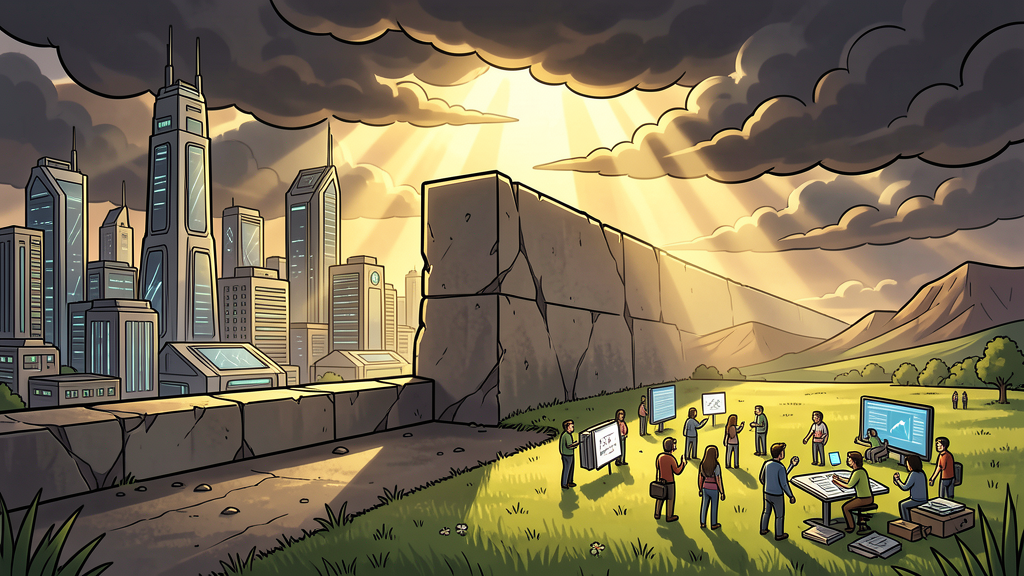
Kimi K3 and the Open Source Checkmate
China’s Moonshot AI just dropped Kimi K3, a 2.8-trillion parameter MoE model, and threw the weights onto the open source pile (source). While OpenAI and Anthropic bolt the doors on their frontier models citing safety and business moats, Beijing’s labs are playing a fundamentally different strategic game. This is a direct challenge to the “open” in OpenAI, forcing a reckoning the US AI ecosystem has been studiously ignoring.
The numbers demand attention. Kimi K3 reportedly matches or exceeds top-tier closed models on key benchmarks while offering aggressive inference efficiency gains via Kimi Delta Attention. This isn’t a toy; it’s a reference implementation for building world-class models without the Silicon Valley playbook. The strategic asymmetry is stark. US labs talk about AGI safety as a reason for secrecy. China talks about national AI strategy as a reason for distribution.
The Trap of Closed Competency
The standard US response is that model weights are simply too dangerous to release. The data tells a different story. Open-source model releases from China have accelerated dramatically. If performance is converging and K3 proves it is, which strategy looks better for the global developer base? The builder deploying a critical application is making a supply chain choice, not a philosophical one. China is aggressively inserting itself into the global AI infrastructure supply chain.
Consider the economics. Training a model at this scale costs tens of millions of dollars. By open sourcing it, Moonshot effectively socialises the R&D cost across the entire Chinese ecosystem, catalysing a wave of applications their domestic giants can monetise. Meanwhile, US companies try to capture 100% of the value in a single API call. It is the classic platform play versus product play, and history (Linux, Android, Kubernetes) consistently shows the platform wins for adoption.
A 2.8T parameter open-source model is not an act of charity. It is a geopolitical power move designed to set the standard for every AI builder operating outside the US firewall.
The Reckoning Isn’t Technical, It’s Strategic
The technical gap is narrowing rapidly. China already leads in AI publications and patents. The quality gap on frontier models is shrinking from years to months. The strategic gap, however, is entirely in the US court. The US ultimately bet on moats and margins. China bet on networks and distribution.
This is the actual reckoning. The US AI industry faces a choice it desperately wants to avoid: continue the closed arms race and cede the global ecosystem and developer mindshare to China, or embrace a degree of openness that threatens their astronomical valuations and narrative of safety through control. Moonshot isn’t a philanthropist. They want a world where the default choice for a foundational model is one made in China.
Are US AI companies building a fortress, or are they digging themselves a grave?