
Your Business Data Just Became a Political Football
Think about everything you keep in your cloud drives. Client contracts. Staff salaries. Supplier price lists. Your accountant’s contact details. For most Malaysian business owners, that data lives on services like iCloud, Google Drive, or Microsoft OneDrive — services you picked because they were convenient, not because you audited their encryption policies.
Now imagine a government — not Malaysia’s, but one 10,000 kilometres away — issuing a secret legal order demanding the keys to that data. Sounds like something that shouldn’t affect you, right? Except it just happened, and the ripple effects will reach your business sooner than you think.
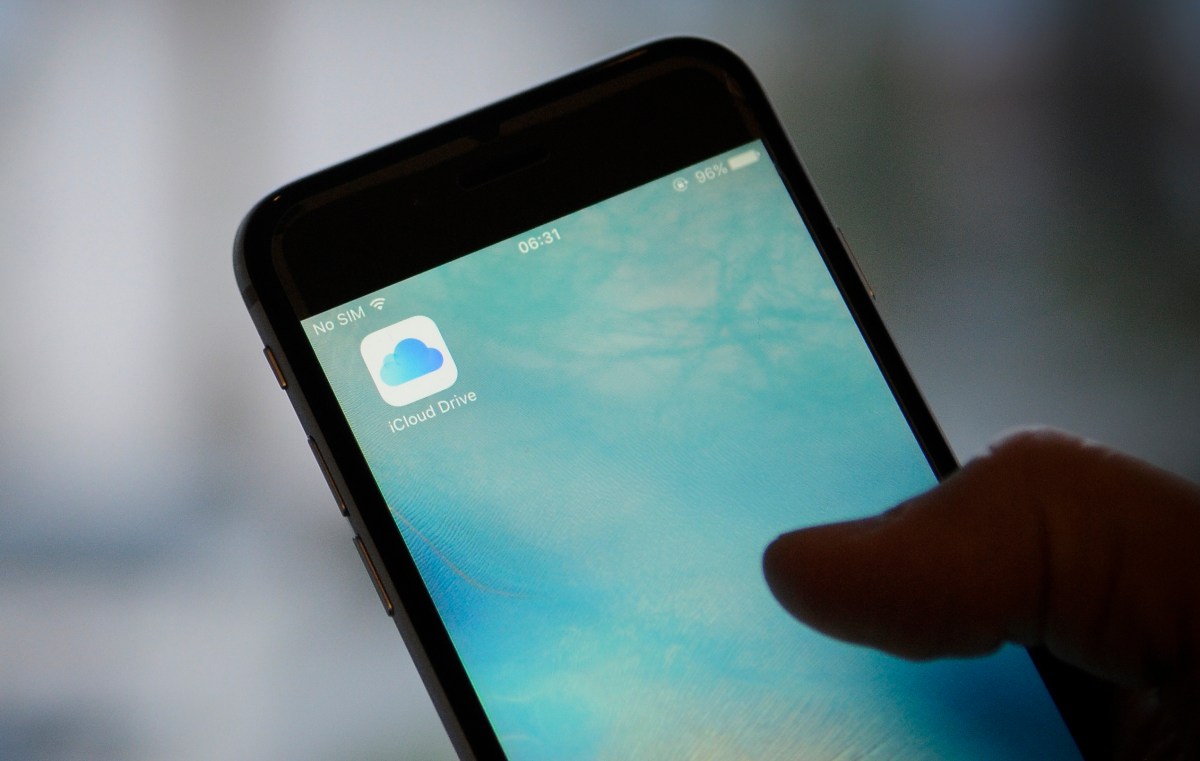
According to TechCrunch, the UK government issued a secret “technical capability notice” demanding Apple give it access to any user’s encrypted iCloud backups. Apple has challenged this order at the UK’s Investigatory Powers Tribunal. This isn’t a distant political squabble. It’s a warning about how safe your business data actually is.
If a foreign government can legally demand a backdoor into iCloud, the question isn’t whether your cloud provider trusts you — it’s whether a foreign court can force your provider to hand over your keys.
TL;DR: Apple is fighting a second UK government demand to access encrypted iCloud backups. The UK wants a backdoor into end-to-end encrypted data. For Malaysian SMEs, this matters because the cloud services you use daily are subject to foreign laws — and those laws can change overnight, as Apple’s UK users already discovered.
What This Means (In Plain Language)
Let’s unpack the jargon. A “technical capability notice” is a secret legal order the UK government uses to force companies to build in ways for officials to access data — even if that data is encrypted and the company itself doesn’t hold the keys.
The specific target here is Apple’s Advanced Data Protection (ADP) feature. Turn on ADP, and your iCloud backups — your messages, photos, documents — are encrypted end-to-end. That means only you can decrypt them. Not Apple. Not the police. Not a hacker with a grudge. This notice is effectively demanding Apple break that protection when the government asks, which is what critics call a backdoor into users’ data.
Here’s the context. In early 2025, the UK issued a similar secret order. Apple’s response? It simply removed the ability for UK users to turn on ADP — a blunt reminder that a security feature you rely on can disappear overnight because of politics. That first order was later dropped after the Trump administration intervened. Then, in October, the UK issued a second order, and Apple filed its complaint with the tribunal rather than quietly complying.
What’s unusual this time is that Apple is fighting back instead of just disabling the feature. That suggests even Apple recognises that caving would set a precedent every other cloud provider would be forced to follow.
How This Applies to Malaysian SMEs
I know what you’re thinking: “I don’t use iCloud, and I’m not in the UK. Not my problem.” Let me explain why it is your problem.
First, you’re almost certainly using foreign cloud services. Your business runs on Google Workspace, Microsoft 365, WhatsApp Business, Xero, or any number of platforms headquartered in the US, Europe, or Australia. Every one of those companies is subject to a government that can issue secret orders — the exact mechanism described in the TechCrunch report. You don’t need a Malaysian court order to lose access to your data; you just need a foreign one.
Second, your legal obligations don’t disappear because your data lives abroad. Malaysia’s Personal Data Protection Act (PDPA) requires you to protect the personal data you collect from your customers and staff. If you’re storing that data in iCloud, Google Drive, or a third-party CRM, you’ve made a cross-border data transfer decision — whether you intended to or not. If a foreign government can access that data, then someone you’ve never met technically has a path to your customers’ information. The PDPA doesn’t just hold you responsible for what you do with data; it holds you responsible for what happens to it after you hand it to a provider.
Third, look at what happened to UK users: after the first secret order, Apple simply turned off a security feature for an entire country. No referendum, no debate, no opt-in. Your business continuity plan can’t be “Apple will always offer the same security features in Malaysia.” These decisions are made in boardrooms and courtrooms far from Kuala Lumpur, and they can change the day after you commit to a tool.
Here’s a more constructive way to think about it: your data should be stored on purpose, not by default. Most Malaysian SMEs store data wherever the app saves it — which means your client database, financial records, and employee details are scattered across different providers, each with a different encryption posture and a different government’s laws attached. Running your business from a cobbled-together collection of consumer apps worked when you had 5 employees. It’s a liability now.
| Data type | Typical location | Who can access it today | Your realistic risk |
|---|---|---|---|
| Client contracts & quotations | iCloud / Google Drive | You + cloud provider (and any government that can compel it) | High — foreign surveillance orders can reach it |
| Staff records & payroll | Spreadsheets in OneDrive / email attachments | You + whoever manages your Microsoft tenant + provider | High — PDPA compliance gets complicated |
| Customer data in CRM | SaaS CRM (HubSpot, Salesforce, or local tools) | You + CRM vendor + their sub-processors | Medium — depends on vendor’s data jurisdiction |
| WhatsApp Business chats | Meta’s servers (backups may be unencrypted) | You, your staff, Meta, and parties in the chat | Medium — backups are the weak link |
| Financial statements | Accounting software, email archives | You + accountant + platform provider | High — the most commonly subpoenaed data category in any country |
The point isn’t “stop using iCloud.” The point is to know which of your data is exposed, to whom, and under what legal conditions. That’s a responsibility you can’t outsource to a tech giant.
Practical Takeaways for Your Business
- Turn on end-to-end encryption wherever it exists. Apple’s Advanced Data Protection, Google’s Advanced Protection Program, and Microsoft’s equivalent all exist precisely because cloud providers know they can be compelled to hand over data. If you’re not using them, you’re relying on the provider’s goodwill instead of your own control.
- Separate sensitive data from everyday files. Keep a few documents — shareholder agreements, IP registrations, audit files — encrypted locally or in a dedicated encrypted vault before syncing to the cloud. If a provider ever disables encryption, your most sensitive files aren’t the ones left exposed.
- Audit your cloud providers annually. Read their transparency reports. Some cloud companies publish how many government requests they receive and how often they comply. Before you commit to your next business tool, ask: “Which country’s law governs this provider?”
- Maintain offline backups of critical records. A disk in a fireproof safe isn’t dramatic — it’s a business continuity measure. If a provider yanks a security feature or freezes access due to a government order, you still have your client records and payroll data.
- Document your data flows for PDPA compliance. Write down what customer data you store, where, and with whom. If the PDPA officer ever asks, you’ll have answers. If they don’t ask, you’ll still have clarity on your own exposure.
The Bigger Picture
This Apple–UK fight is one battle in a global encryption war that’s only intensifying. Governments everywhere — including in Malaysia — are tempted by the idea that they should be able to access any digital data when they claim it’s needed for national security. The UK’s “technical capability notice” is just the most brazen example. Every time a government wins such a case, the door opens wider for others to demand the same.
For SMEs, the long-term implication is clear: you need to design your business systems around the assumption that providers will change their terms, their security features, and their legal jurisdiction. The businesses that thrive will be the ones that treat data storage as a deliberate architecture decision, not an autopilot default.
That’s where the automation angle comes in. When you automate workflows — invoicing, client onboarding, inventory — you’re wiring data through more systems than ever. Each system is a potential point of exposure. Smart automation isn’t about connecting every tool to every other tool; it’s about building flows that route sensitive data through services you trust to protect it. If you haven’t reviewed your stack with that question in mind, it’s overdue.
The UK’s demand will be fought out in a tribunal that meets in secret. You won’t read about the outcome in the news. But the result will shape the security postures of every cloud product you and your team use daily. The only question you can control is whether you’ve prepared.
Ready to Streamline Your Operations?
Your business should run itself. AutoRunBiz deploys AI agents to automate your daily operations — WhatsApp orders, invoicing, customer follow-ups, and accounting. Book a free 15-min ops audit to see where automation fits your business →