
Your customer just tapped their phone at your counter. Your card machine blinked. Nothing happened.
If you run a shop, clinic, workshop, or any counter-facing business in Malaysia, you’ve seen this scene. A customer pulls out their phone, expecting to pay with a tap. Different bank, different card, or maybe they’re just trying Apple Pay for the first time. When the payment doesn’t go through, they fumble for a physical card in a messy bag. You lose momentum. If you run an online store, they might abandon the checkout entirely.
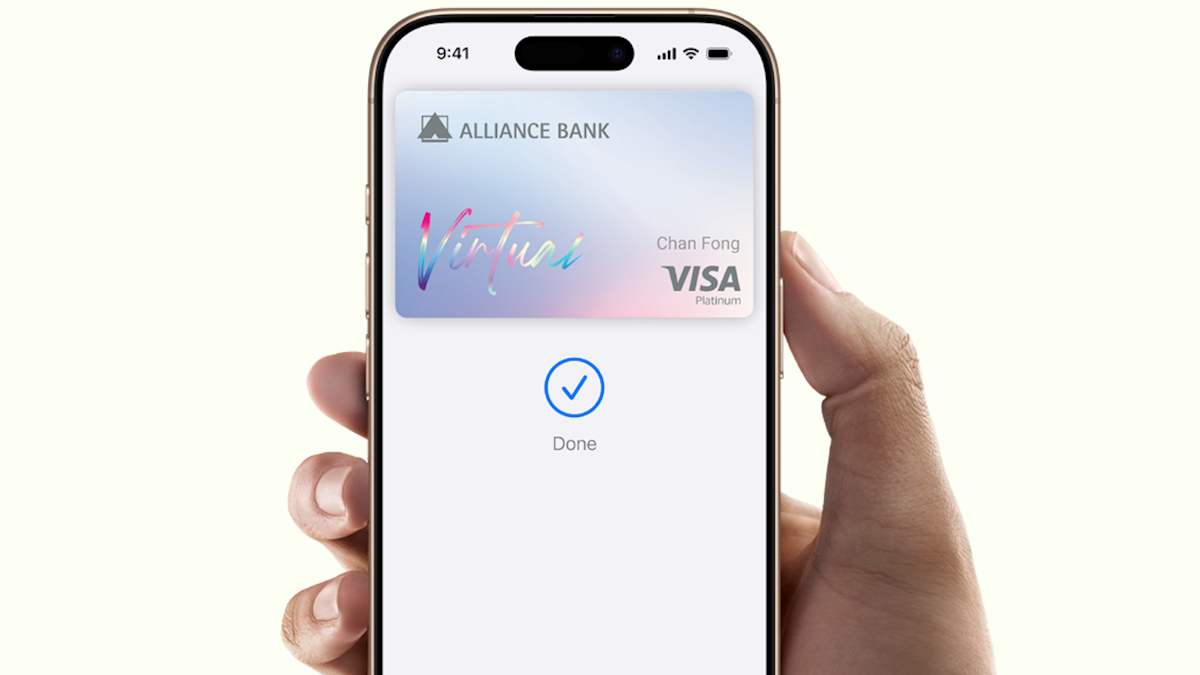
That’s the small moment behind the latest Malaysian banking announcement. Alliance Bank now supports Apple Pay for its Visa credit cards, with a RM30 launch cashback promotion. If you’re an SME owner, this isn’t just a consumer convenience headline. It’s a signal about how your customers expect to pay — and whether your business is ready for it.
TL;DR: Alliance Bank Visa credit cardholders can now add their cards to Apple Pay and tap to pay anywhere that accepts contactless payments. For your SME, this means more customers will expect phone-tap payments at your counter and checkout. The bank is also offering a RM30 cashback to encourage early adoption — a small window to test the feature if you’re an Alliance customer.
What “Alliance Bank Supports Apple Pay” Actually Means
Apple Pay is not a separate e-wallet like Touch ‘n Go or GrabPay. It’s a digital version of your physical card stored on an iPhone or Apple Watch. When a customer pays, the phone uses near-field communication (NFC) to talk to your payment terminal — the same contactless technology behind tap-to-pay cards. Instead of entering a PIN or signing, the customer authenticates with Face ID or their phone passcode.
Behind the scenes, Apple Pay uses tokenization. Your actual card number is never transmitted to the merchant’s terminal. A unique device token stands in for it, which makes the payment more secure than swiping or even tapping a physical card. Bank Negara Malaysia has been pushing for safer digital payment infrastructure for years, and tokenization is part of that direction.
The key detail for now: this is only for Alliance Bank Visa credit cards. It’s not for debit cards, not for Mastercard, and not for the bank’s other card products — yet. Alliance follows other Malaysian banks that already support Apple Pay, but the rollout is gradual.
How This Applies to Malaysian SMEs
Let’s get practical. Here are the real scenarios where this affects your business — not in theory, but at your counter.
Retail and F&B owners: If you’ve noticed younger customers reaching for their phone before their wallet, you’re seeing the shift. According to Bank Negara Malaysia’s 2023 Financial Stability and Payment Systems Report, the country recorded over 11 billion e-payment transactions that year, with growth in contactless and mobile payments outpacing traditional card swipes. When a customer taps their phone, they’re not doing it to be trendy — it’s their default payment habit. If your terminal accepts contactless cards, it already accepts Apple Pay. If it doesn’t, that’s the gap to close.
Alliance Bank business owners: If you hold an Alliance Bank Visa credit card for your business purchases — fuel, supplier orders, office supplies — you can now load it onto your iPhone. This isn’t about customer payments; it’s about how you pay for things. Instead of carrying the physical card, you tap your phone. You get the same card benefits, same statement, same cashback structure — just a faster way to access them.
Online sellers and service businesses: Apple Pay works in apps and on websites that support it. If your SME takes deposits, invoicing, or pre-orders through a website, adding Apple Pay as a checkout option removes the biggest friction point in online sales: typing out a 16-digit card number. A customer who has already saved their card to Apple Pay pays in one tap, without pulling out their wallet. For a business collecting advance payments, that difference matters.
And about the RM30 launch cashback: if you’re an Alliance Bank Visa cardholder, this promotion gives you a small incentive to set up Apple Pay now and test it with real purchases. Use it to buy something for your business, verify the flow, and get comfortable with the technology before more of your customers start asking for it.
The businesses that succeed in Malaysia’s transition to digital payments aren’t the ones chasing every new app — they’re the ones that take a single payment method seriously and make it work flawlessly for their customers.
Practical Takeaways for Your SME
- Check your hardware: If you have a contactless payment terminal, customers can already use Apple Pay at your counter. Test it with your own phone or a staff member’s phone.
- If you’re an Alliance Bank Visa cardholder: Add your card to the Wallet app in iOS, register for the RM30 cashback promotion, and make a small business purchase to confirm it works.
- Train your staff: At least one person at the counter should know that phone taps, card taps, and physical card insert all work — and not panic when a customer holds up a phone.
- Online checkout: If you run an e-commerce site, ask your payment gateway whether Apple Pay is available. Many Malaysian gateways already offer it.
- Watch for follow-up announcements: Alliance Bank will likely extend Apple Pay to debit cards and Mastercard later. Set a reminder to revisit this in a few months.
Where This Fits in Malaysia’s Payment Landscape
Apple Pay launched in Malaysia in 2022, several years after it debuted in other markets. The local rollout has been gradual, with banks joining one at a time. Alliance Bank’s move is part of a slow but steady consolidation.
| Payment Method | Key Feature | Typical User |
|---|---|---|
| DuitNow QR | Scan-and-pay from any bank app | Widely adopted by hawkers and SMEs |
| Contactless card tap | Tap physical card on terminal | Standard for retail chains |
| Apple Pay | Tap iPhone or Apple Watch | Growing among urban professionals |
| E-wallets | App-based wallets such as TNG and GrabPay | Younger consumers, F&B outlets |
This isn’t about replacing DuitNow or e-wallets. It’s about the fact that your customers will continue to fragment their payment preferences. Some will scan a QR code. Some will tap a card. Increasingly, some will tap a phone.
The Bigger Picture
The long-term direction is clear: Malaysia’s payment networks are moving toward contactless, tokenized, and device-based transactions. The physical card itself is becoming redundant. For your SME, the practical implication is that payment acceptance needs to be broader — not narrower.
Every time a Malaysian bank adds Apple Pay support, a small group of customers who previously couldn’t pay with their phone at your counter now can. Accumulate enough of these announcements, and “can I use Apple Pay?” stops being a rare question and becomes a standard one.
You don’t need to become an expert in NFC, tokenization, or card networks. You do need to know one thing: when a customer holds up their phone to pay, the right response is not “sorry, we don’t take that.” It’s a simple tap on your terminal and a thank you.
That’s the entire business case.
Ready to Streamline Your Operations?
Your business should run itself. AutoRunBiz deploys AI agents to automate your daily operations — WhatsApp orders, invoicing, customer follow-ups, and accounting. Book a free 15-min ops audit to see where automation fits your business →