
Why This AI Story Matters to Your Business
Artificial intelligence is often presented as a shortcut: feed information into a powerful model, receive a reliable answer, and move faster than competitors. A recent biotech story offers a more useful lesson for Malaysian SME owners. The limiting factor is frequently not the AI tool itself, but the quality, context and cause-and-effect relationship within the data it receives.
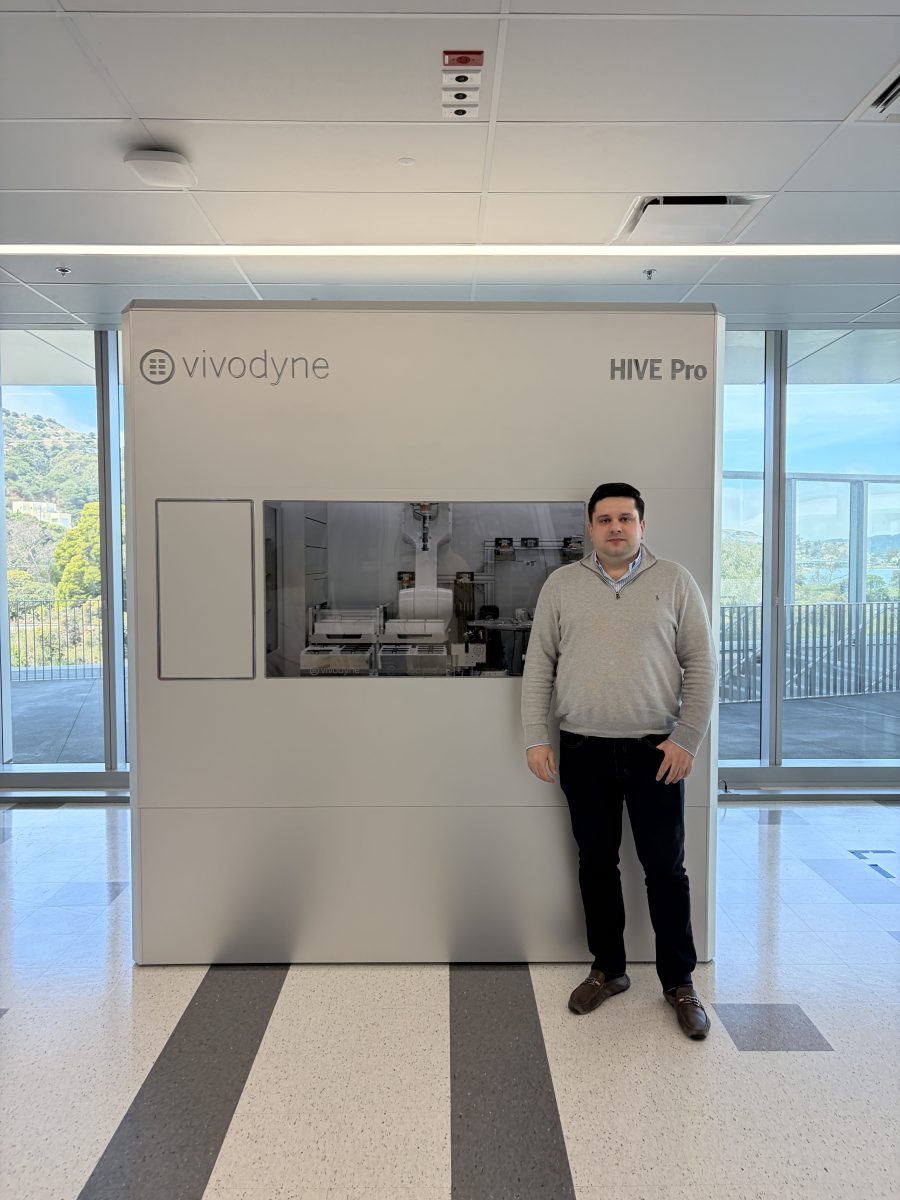
Vivodyne, a biotech startup spun out of the University of Pennsylvania, argues that AI drug discovery is held back by insufficient human-relevant biological data. Its approach uses modular robotic laboratories called HIVE to grow human tissues, apply treatments and monitor the results automatically. The company believes this can produce more useful evidence than relying mainly on animal studies, isolated cells or static biological snapshots. Source: TechCrunch
You may not operate a biotechnology laboratory, but the principle applies directly to your business. Whether you run a café in Johor Bahru, a logistics company in Shah Alam, a dental clinic in Penang or a trading business in Kuching, AI becomes more dependable when it learns from accurate operational records and real outcomes—not disconnected files or assumptions.
What Happened
Vivodyne says its HIVE systems can grow 20 types of human tissue, then autonomously dose and observe them. The goal is to create causal biological data: evidence showing not merely what condition exists, but what action caused a particular change. The company says its liver tissue has achieved 94% predictive accuracy against human toxicity trials, its airway tissue matched real human tissue behaviour 96% of the time, and its bone marrow achieved 100% concordance across tests involving 20 chemotherapy drugs. These figures are claims reported by TechCrunch and should be treated as company-reported results rather than independently established industry standards. Source: TechCrunch
The startup opened what it calls the world’s largest “human data center” near San Francisco and says it is already achieving twice the throughput of all animal trials being conducted in the United States. Vivodyne has raised just under US$80 million across two rounds led by Khosla Ventures, according to the report, and is working with several major pharmaceutical companies. Source: TechCrunch
The central argument is simple: an AI model trained on static snapshots may recognise that one cell state follows another, but it may not understand that a treatment, inflammation or other intervention caused the change. Vivodyne believes its automated experiments can generate the “what happened after this action?” information needed to train more capable biological models.
“The limiting factor is not always a smarter model. Sometimes it is better evidence about what caused the result.”
Why This Matters for Malaysian SMEs
For your company, this is a warning against buying AI based only on impressive demonstrations. A chatbot may produce polished text, but that does not mean it understands your sales cycle, fulfilment delays, customer preferences or staff workload. If your business data is incomplete, duplicated or recorded in different formats, an AI system can produce confident but unsuitable recommendations.
Consider a Malaysian wholesaler serving retailers across Selangor and Negeri Sembilan. A basic AI tool may identify that certain products sell less during particular months. A better system can connect the result to actual causes: late supplier deliveries, changes in minimum-order quantities, public holidays, stockouts, territory coverage or a competitor’s promotion. The second system is more useful because it links an outcome to the operational event behind it.
The same principle applies to service businesses. A cleaning company could track customer cancellations, worker arrival times, job duration, weather, building type and complaint categories. Instead of merely predicting which customers might leave, the company could discover whether cancellations are driven by late arrivals, inconsistent quality, unclear quotations or scheduling problems. You can then address the cause rather than sending a generic promotion.
Healthcare-related SMEs, including clinics, pharmacies and wellness providers, should be especially careful. AI may help organise appointment information, draft reminders or identify administrative patterns, but sensitive personal data requires strong governance. Malaysia’s Personal Data Protection Act 2010 applies to personal data processing in commercial transactions, and organisations should review their responsibilities before connecting patient or customer information to external AI services. Source: Personal Data Protection Commissioner Malaysia
Practical lessons you can apply
| Lesson from the biotech story | SME application |
|---|---|
| Collect real-world outcomes | Record whether a quotation became an order, not only that it was sent. |
| Track interventions | Log what changed when delivery time, product bundles or staffing levels were adjusted. |
| Connect systems | Link sales, inventory, service and customer records so AI can see the full process. |
| Test before trusting | Compare AI recommendations with actual results and human review. |
How to Build Better Data Before Using AI
Start with one business process instead of trying to automate everything. Choose an area where you already feel operational pain, such as missed follow-ups, stock discrepancies, slow quotation approval or repeated customer questions. Define the outcome clearly. “Improve sales” is too broad; “increase the percentage of quotations followed up within two working days” is measurable.
Next, capture the events surrounding that outcome. If a quotation is rejected, record the reason where possible: timing, product fit, delivery schedule, documentation, approval delay or another factor. If a customer renews, record which service was delivered, by whom, how quickly and whether a complaint was resolved. These details allow you to investigate causes rather than rely on surface-level correlations.
Keep your records consistent. Use standard customer names, product codes, status labels and dates. Avoid allowing one employee to mark an order as “pending” while another uses “waiting” for the same situation. Clean data makes reporting easier even before AI enters the picture.
Finally, introduce human checks. AI should not approve sensitive decisions automatically when the underlying data is limited. Set clear rules for what the system may recommend, what requires manager approval and what must remain a human decision.
The Bigger Picture
The biotech example points to a wider shift in technology. The next competitive advantage may not come from simply having access to the newest AI model. Many businesses can use similar general-purpose tools. The advantage will come from having reliable, well-structured, business-specific information and a disciplined way to learn from results.
This also explains why bold claims about AI transforming entire industries should be examined carefully. Even AlphaFold, widely recognised for advancing the understanding of protein structures, has not yet produced a new drug by itself, while Isomorphic Labs has been preparing for its first human trials. The TechCrunch report also notes that approximately 90% of drugs effective enough in animal testing to enter clinical trials do not receive regulatory approval for humans. Source: TechCrunch
For Malaysian SMEs, the sensible response is neither to dismiss AI nor to treat it as magic. Use it where the process is documented, the data is relevant and the result can be checked. Build a habit of recording actions and outcomes now. When better tools become available, your business will be in a stronger position to use them responsibly and effectively.
Your Next Step
Choose one recurring business decision this week. Write down what information is currently used, what outcome you want to improve and which events may be influencing that outcome. Then create a simple, consistent record for the next 30 days. That small discipline can reveal more than a flashy AI demonstration—and it gives you the foundation for automation that genuinely fits your business.
Ready to Streamline Your Operations?
Technology moves fast. Your operations should keep up. AutoRunBiz builds AI systems that run your daily workflows — from WhatsApp order capture to accounting. Book a free 15-min ops audit →