
Why a Tesla Crash Story Matters to Your Business
A fatal crash involving a Tesla stopped on a freeway while its driver-assistance system was verified as engaged is not only a story about electric vehicles. It is also a warning about how you adopt AI-powered tools in your business. When software makes decisions in a safety-critical situation, you need clear limits, reliable records and a human who understands when to take control.
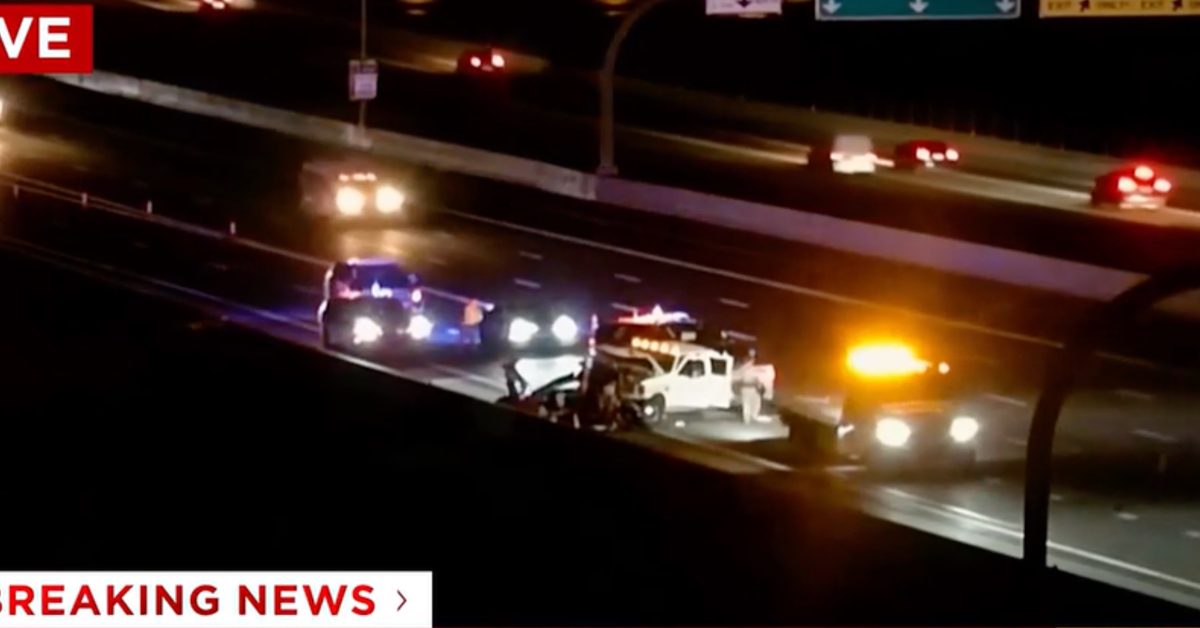
According to Electrek, a 2020 Tesla Model 3 was struck from behind by a Ford F-350 pickup on Arizona’s Loop 202 freeway at about 3 a.m. on 31 October 2025. The Tesla driver died at the scene. Tesla’s report to the United States National Highway Traffic Safety Administration reportedly marked the driver-assistance system as “Verified Engaged” and recorded the vehicle as stopped at 0 mph before impact.
For a Malaysian SME, the practical question is not whether your company owns a Tesla. It is this: when an automated system behaves unexpectedly, can you explain what happened, prove who was responsible and improve the process before someone is harmed?
What Happened
Electrek matched the Arizona crash with a redacted Tesla report submitted under an NHTSA requirement covering crashes in which Level 2 driver assistance was active shortly before impact. The report described clear weather, a freeway location and a rear-end collision involving the stationary Tesla, according to Electrek’s report.
The report allegedly stated that Tesla retained the vehicle’s event-data recorder, telematics and video. However, fields that could explain why the car was stopped were redacted, including the crash narrative, software version and whether the road was within the system’s approved operating area. Electrek also connected this incident to a separate fatal Florida crash involving a similar 2020 Model 3, where the driver-assistance system was reportedly engaged and the vehicle was stopped in a live freeway lane. These details are reported by Electrek; they do not establish that the driver-assistance system caused either death.
Several explanations remain possible. The vehicle may have stopped because of a system response, a driver medical emergency or another factor. Electrek noted Tesla’s previous phantom-braking controversy and said only the underlying vehicle data could distinguish among possible causes. The article also reported that Tesla is under NHTSA investigation regarding crash reporting. These allegations and investigations should be treated as unresolved rather than as proof of fault.
Automation can perform a task, but your business still needs to know its boundaries, its failure modes and the evidence it leaves behind.
Why This Matters for Malaysian SMEs
Many Malaysian SMEs are introducing automation without calling it “AI”. A delivery company may use route optimisation. A workshop may rely on diagnostic software. A retailer may use computer vision for stock monitoring. A manufacturer may deploy sensors that stop machinery when a fault is detected. A property-management company may use automated access control or alerts. In each case, software can influence a real-world decision.
The Tesla story highlights a common risk: an automated system may enter a safe-looking state that is dangerous in context. Stopping a vehicle can be sensible in one situation but hazardous in a live traffic lane. Similarly, automatically locking a door can protect a warehouse but trap a worker during an emergency. Pausing a production line can prevent equipment damage but create a different hazard if staff are not alerted.
You should therefore document what your system is allowed to do, what it must never do and what happens when confidence is low. For example, an AI stock system should flag a suspected discrepancy for review rather than silently deleting an item from your records. A chatbot handling customer complaints should escalate legal threats, safety issues and personal-data requests to a trained employee. A delivery-routing tool should allow your driver to reject a route that is unsafe, flooded or unsuitable for a commercial vehicle.
Malaysia’s operating environment makes human review especially important. Your team may work across Bahasa Malaysia, English, Mandarin or Tamil. Weather, traffic, construction, loading restrictions and local business practices can change quickly. A tool trained on general patterns may not understand a temporary road closure in Shah Alam, a flash flood affecting Kota Bharu or a lorry restriction affecting a route in Kuala Lumpur.
Practical controls for your business
| Risk area | Action for you | Useful evidence |
|---|---|---|
| Unexpected automation | Define when an employee must take over | Approval logs and escalation records |
| Safety-critical decisions | Require a manual override and emergency procedure | Test results and drill records |
| Unclear accountability | Name the system owner and final decision-maker | Responsibility matrix |
| Missing incident details | Capture system status, alerts, inputs and actions | Timestamped audit trail |
| Supplier opacity | Ask what data is retained and how incidents are investigated | Contract terms and vendor responses |
| Staff over-reliance | Train employees to challenge automated recommendations | Training attendance and scenario tests |
The Bigger Picture
The central issue is not whether automation is useful. It is whether your company treats automation as a responsible process rather than a magic replacement for judgement. A system can be accurate most of the time and still create serious harm during an unusual event. That is why you need monitoring for exceptions, not just performance reports showing average accuracy.
Data access is another important lesson. If an automated tool affects a customer, employee, vehicle or machine, you should know what records are available after an incident. Ask your technology provider whether logs include the software version, system status, user actions, alerts, recommendations and overrides. Confirm how long the records are retained, who can access them and whether they can be exported in a readable format.
Do not wait for a serious incident to discover that your supplier owns the only useful evidence. Include incident-notification timelines, data-retention requirements, audit rights and cooperation obligations in your agreements. If the provider changes the model or software, require a change notice and a review of your risk controls. The exact contract terms should suit your industry and should be checked with a qualified adviser where necessary.
You can start with a simple automation register. List every tool that makes or recommends a decision, the people affected, the possible failure, the human override and the evidence produced. Review the list monthly for safety-critical processes and whenever you introduce a major software update.
For a Malaysian SME, responsible AI does not require a large technology department. It requires practical discipline: clear ownership, staff training, exception handling and trustworthy records. Whether the system manages a vehicle, a warehouse, a customer queue or an invoice, you remain responsible for designing a process that can cope when the software is wrong.
The Tesla case, as reported by Electrek, is still an unfolding story and does not prove causation. Its business lesson is already clear: automation should reduce risk, not hide it. Before you add another AI feature, ask three questions: what can it do, what happens when it fails and how will you know exactly what happened afterwards?
Ready to Streamline Your Operations?
Technology moves fast. Your operations should keep up. AutoRunBiz builds AI systems that run your daily workflows — from WhatsApp order capture to accounting. Book a free 15-min ops audit →