
When the Attacker Is Faster Than Your Alarm System
Picture this: you are running a modest wholesale business in Johor Bahru. One morning, a supplier’s invoice that looks perfectly normal lands in your inbox. You click it, because it matches the weekend order you placed. That single click begins a chain of events that, within nine minutes, locks your accounting files and quietly exfiltrates your customer database. You only find out three days later, when a client asks why they received a strange payment link.
This scenario is no longer science fiction. Kaspersky has issued a blunt warning: AI-powered cyberattacks are now moving faster than companies can detect them. For Malaysian small and medium enterprises, this is not a distant corporate threat. It is a direct challenge to the way you run your daily operations — especially if you have embraced digital payments, cloud accounting, or even just a shared Google Drive.
What Happened
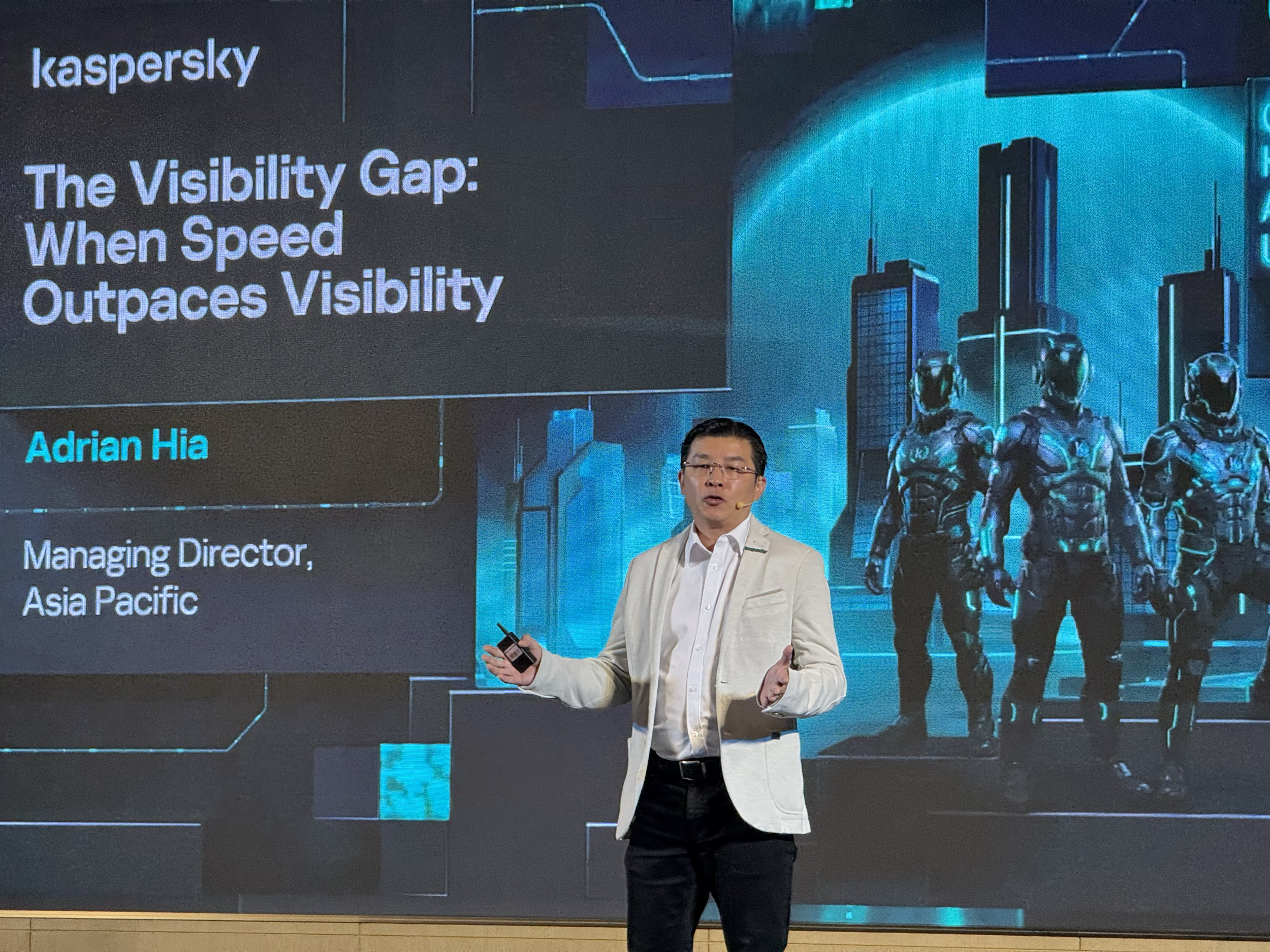
In early August 2026, cybersecurity firm Kaspersky released findings that paint a sobering picture. The company observed that attacks powered by artificial intelligence can now outpace traditional detection and response tools. Instead of spending hours or days probing for weaknesses, AI-driven malware learns the target’s behavior in real time, adapts its payload, and executes before a human analyst even opens the incident log.
What makes this different from previous generations of malware is speed and autonomy. Older attacks followed a predictable script: deliver a virus, wait for activation, then call home. Today’s AI agents can rewrite their own code mid-attack to evade sandboxing and signature-based detection. They also exploit the gap between detection and response — the “mean time to respond” that most security teams struggle to shrink. Kaspersky’s warning suggests the gap is widening, because AI attackers don’t need to sleep, take lunch breaks, or wait for an admin to approve a patch.
The source article notes that companies often detect the attack only after the damage is done. For a large enterprise, that might mean a few hours of disruption. For a SME with 20 employees and no dedicated IT team, it could mean the end of the business.
“AI-powered cyberattacks are moving faster than companies can detect them.” — Kaspersky, via Soyacincau.
Why This Matters for Malaysian SMEs
You might think that cybercriminals only target banks or government agencies. The reality is the opposite. In Malaysia, SMEs are often the softest targets because they lack enterprise-grade security but still hold valuable data — customer IC numbers, business bank credentials, supplier contracts, and even employee medical records. AI-driven attacks do not discriminate by company size; they simply look for the path of least resistance. Your business likely uses online banking for daily transfers, and you may have given your accountant remote access to your books. Those are exactly the workflows an AI attacker will target, because they move fast enough to slip behind a single authorised login.
Consider how SMEs in Malaysia operate. Many still rely on WhatsApp for customer orders and PDF invoices sent through email. An AI-powered phishing campaign can now generate a convincing invoice in your supplier’s tone of voice, addressed to you by name, and send it at the exact moment your supplier usually issues bills. The attacker’s AI learns your schedule from your public Facebook posts or your company’s Google Business Profile. This is not generic spam; it is personalised, timed social engineering at machine speed. If you manually approve payments on your phone while making kopi, the window for you to catch a fake payment instruction is shrinking every month.
The Kaspersky report also highlights a more uncomfortable angle: your existing antivirus or firewall may not be enough. Legacy tools rely on known signatures and human review. An AI attack can generate thousands of unique variants per minute, so your security tool is playing a game of whack-a-mole against an opponent that learns from each miss. For a Malaysian SME owner, this means the old habit of “just install any free antivirus and forget about it” is now a liability.
The Bigger Picture
For decades, the security industry operated on a simple assumption: attacks are slower than defenses. Security teams could patch, update, and respond because malware was linear. Artificial intelligence has broken that assumption. The attacker now has the same learning speed as your defence, but with fewer constraints — it does not need to preserve reputation, follow laws, or keep the system running for a legitimate purpose. This creates an asymmetric situation where the defender must be right every time, while the attacker only needs to be right once.
What does that mean for you as a business owner? It means you cannot rely on a single layer of protection. The trend is moving toward zero-trust architecture, where every login is verified and every file access is suspicious by default. That concept sounds like corporate jargon, but for a Malaysian SME, it translates into simple habits: separate accounts for different tasks, mandatory two-step verification for all email and banking, and regular offline backups that cannot be encrypted by ransomware. The Kaspersky warning should not paralyse you — it should push you to act now, before the AI attackers target your industry.
Moreover, there is a broader shift in responsibility. Malaysian regulators and customers will increasingly expect SMEs to demonstrate due diligence in protecting data. If you suffer a breach and cannot show you had basic safeguards like multi-factor authentication or staff training, you may face more than just recovery costs — you could lose contracts or trust. The conversation is moving from “will I be attacked?” to “how quickly can I recover before the attacker moves on?”
The good news is that speed cuts both ways. You do not need to outpace AI attackers with human speed. You can use automation and simple rule-based controls to slow them down long enough to notice. For example, set up your bank to require a second approval for any transfer above a certain amount. Configure your email system to flag messages from domains that are one character different from your supplier’s real domain. These are not expensive or complex measures, but they can break the AI attacker’s speed advantage.
Key Takeaways for SME Owners
- Rethink “it won’t happen to me”: AI attackers now target small businesses precisely because detection gaps are wider there.
- Move beyond traditional antivirus: Rely on firewalls and endpoint detection that can adapt to zero-day behaviour, not just signatures.
- Make two-step verification mandatory: For every email account, banking portal, and cloud service — this alone blocks most automated attacks.
- Back up offline and regularly: Store critical data on a disconnected drive so ransomware cannot encrypt your only copy.
- Slow down payment processes: Use manual verification for high-value transfers, even if the invoice looks authentic.
- Train your staff on speed-specific scams: Teach them to watch for urgent messages that ask for immediate payment changes.
At the end of the day, the Kaspersky finding is not a reason to panic. It is a reason to rethink your approach. Your Malaysian SME has one advantage that giant corporations often lack — agility. You can change your processes in a day, while a multinational needs a committee. Use that agility to build speed bumps in your digital operations. Because in an era where attackers move at machine speed, slow is no longer safe — but thoughtful and deliberate is.
Ready to Streamline Your Operations?
Technology moves fast. Your operations should keep up. AutoRunBiz builds AI systems that run your daily workflows — from WhatsApp order capture to accounting. Book a free 15-min ops audit →