
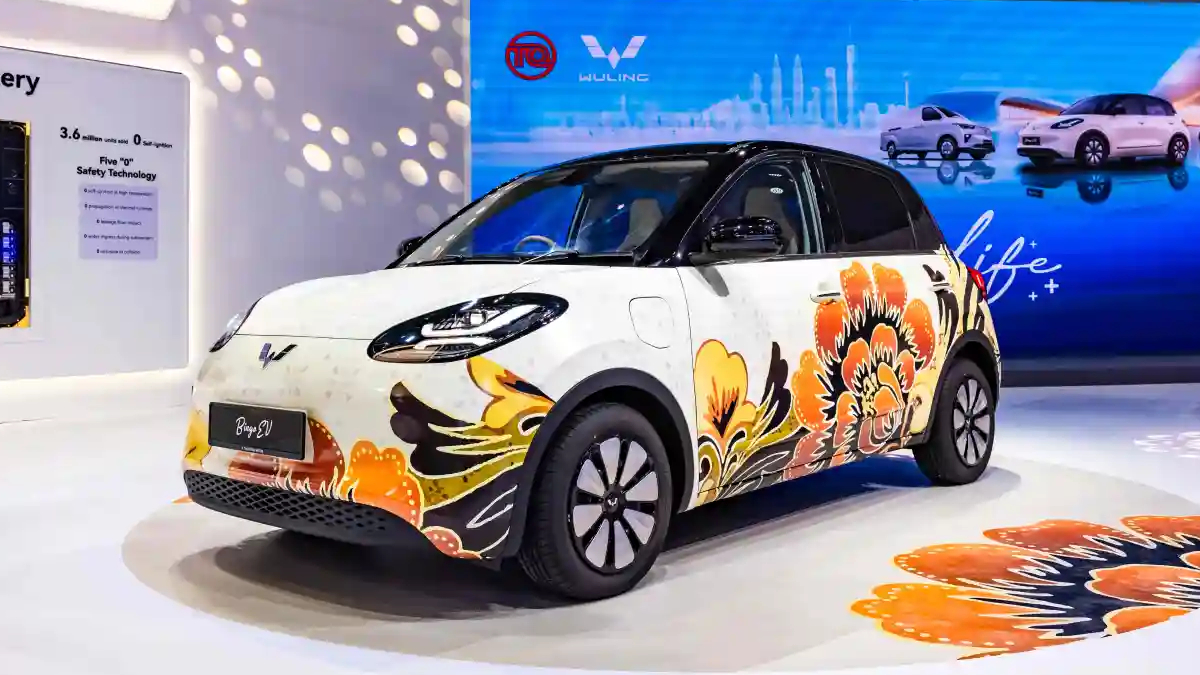
Could an Electric Car Make Your SME More Efficient?
If you run a Malaysian SME, transport is probably part of your daily routine. You may send staff to customer sites, move documents between branches, visit suppliers, deliver small orders, or keep a compact company vehicle available for urgent errands. A vehicle that spends much of the day travelling short urban routes can become a practical business tool—or a constant scheduling headache.
The arrival of the TQ Wuling Bingo EV in Malaysia, reported as being available from RM56,800 in conjunction with Malaysia Day, puts a small electric vehicle on the radar for businesses that need local mobility. The important question is not whether every SME should buy an electric car. It is whether this type of vehicle fits the work your team already does.
TL;DR: The Wuling Bingo EV may suit SMEs with predictable, short-distance routes and access to convenient charging. Before considering it, review your daily mileage, parking arrangements, charging access, passenger needs, and delivery requirements.
The reported promotional price and launch details come from SoyaCincau’s coverage. Treat the listed price as campaign-specific and confirm the latest terms, specifications, warranty, availability, and after-sales support directly with the authorised distributor before making a business decision.
What This Means
An electric vehicle, or EV, uses a battery and electric motor instead of a petrol or diesel engine. For an SME, that changes how you plan vehicle operations. You are no longer thinking only about fuel stops and engine maintenance. You also need to consider when the vehicle can charge, where it will be parked, who will drive it, and whether its usable range matches your workday.
The Wuling Bingo EV is positioned as a compact passenger vehicle rather than a large commercial van. That distinction matters. It could be useful for staff transport, sales visits, site inspections, administrative errands, and light items that fit inside the vehicle. It may be less suitable for bulky stock, heavy equipment, or routes that frequently extend beyond your normal operating area.
For your business, the vehicle should be assessed as part of a workflow. A small EV can work well when routes are repetitive and predictable. It becomes more difficult when employees regularly travel long distances, carry changing loads, or need to make spontaneous trips without reliable charging access.
The right question is not “Is an EV modern?” It is “Can this vehicle complete your normal workday without interrupting your operations?”
How This Applies to Malaysian SMEs
1. Local service businesses can match routes to charging. If you operate an air-conditioning service, beauty business, tuition centre, accounting practice, clinic, property agency, or repair company, your staff may travel between nearby customer locations. A compact EV could be considered for appointments within the same town or district, especially when the vehicle returns to the office between trips. You can create a simple route log showing departure time, destination, passenger count, and estimated distance. After two or four weeks, you will have a clearer picture of whether a small EV fits real operations rather than assumptions.
2. Sales and administrative teams may benefit from predictable use. Many SMEs do not need every company vehicle to carry products. A sales executive may need to visit shop lots, offices, showrooms, or construction sites while carrying samples, a laptop, and documents. An administrator may need to visit banks, government offices, courier branches, or suppliers. If those journeys are mostly within urban areas and the vehicle can charge overnight at the business premises, the Bingo EV’s compact format may be worth evaluating. You should still check boot space and passenger comfort against your actual work equipment.
3. Micro-delivery operations need a careful fit check. Cafés, florists, bakeries, online sellers, and small retailers often make short deliveries. A small EV may handle lightweight parcels or prepared orders, but it is not automatically a replacement for a van. You need to measure the largest items you carry, not only the average parcel. Consider insulated boxes, folded cartons, fragile goods, groceries, and the number of stops per trip. If drivers frequently need to carry bulky items or return to the premises several times daily, vehicle capacity and charging downtime may affect the workflow.
4. Businesses outside major urban areas should assess support before committing. Your decision should include more than the purchase location. Check where authorised servicing is available, how warranty claims are handled, whether replacement parts can be obtained through the distributor, and what roadside assistance covers. This is particularly important if your business operates in smaller towns or across several states. A vehicle that suits your route on paper may create delays if support is difficult to access.
A Simple SME Fit Test
Use the following table to organise your first review. The figures below are planning thresholds, not claims about the vehicle’s official capability. Verify the Bingo EV’s confirmed specifications with the distributor before using any number for procurement.
| Business question | What to record | Why it matters |
|---|---|---|
| Daily route | Start point, destinations, return point, and total kilometres | Shows whether your normal workday is predictable |
| Charging access | Office, home, public, or no regular charging location | Determines whether charging can happen without disrupting work |
| Vehicle load | Passengers, boxes, tools, samples, and equipment | Confirms whether a compact car suits your operating needs |
| Peak usage | Busiest day, longest route, and number of daily trips | Prevents planning around an unusually quiet day |
| Support coverage | Nearest authorised service location and assistance process | Helps you prepare for maintenance or an unexpected issue |
Keep this review practical. Ask one employee to record actual journeys for at least five working days. Include traffic-heavy routes, last-minute errands, customer visits, and days when the vehicle carries its normal load. A vehicle that appears suitable on a quiet Tuesday may feel very different during a busy Friday.
Practical Takeaways Before You Decide
- Map your real routes: Record destinations, distances, waiting time, and whether the vehicle returns to base during the day.
- Check charging first: Identify where the vehicle can charge safely and conveniently during working hours or overnight.
- Measure your load: Use actual boxes, tools, samples, or equipment instead of guessing from vehicle photographs.
- Separate local and long-distance work: An EV may suit city errands while another vehicle remains necessary for inter-state or rural travel.
- Confirm official specifications: Ask about battery capacity, stated driving range, charging time, seating, boot capacity, safety equipment, and warranty.
- Review after-sales coverage: Find out how servicing, roadside assistance, parts, and warranty claims work in your operating area.
- Create a driver routine: Set rules for charging, recording vehicle condition, reporting warning lights, and returning the vehicle with sufficient charge.
- Test the workflow: Request a suitable demonstration or test drive that reflects your normal passenger and equipment requirements.
- Do not treat the campaign price as permanent: Confirm the current offer, eligibility, registration requirements, and availability using the official sales channel.
Where Automation Can Help
Before adding any vehicle to your business, use simple automation to improve visibility. A shared form can capture trip purpose, driver, destination, distance, charge level, and issues noticed. The responses can flow into a dashboard showing which journeys are local, which are unusually long, and when the vehicle is most heavily used.
You can also create reminders for scheduled servicing, insurance renewal, road tax administration, driver inspections, and charging checks. If your team handles deliveries, an automated dispatch board can group nearby jobs and reduce unnecessary backtracking. These small process improvements help you decide whether the vehicle is genuinely supporting operations.
For a growing SME, the records are useful even if you decide not to proceed with the Wuling Bingo EV. You may discover that your biggest problem is poor route planning, unclear vehicle booking, or employees making duplicate trips. Fixing that process can improve fleet use regardless of the vehicle type.
The Bigger Picture
The introduction of more accessible compact EVs gives Malaysian SMEs another option for short-distance business travel. It also encourages owners to think more carefully about fleet utilisation. Instead of assigning a vehicle based on habit, you can match each vehicle to a defined job: local appointments, staff movement, light deliveries, or longer-distance travel.
Over time, businesses may operate mixed fleets. A compact EV could handle routine urban tasks, while a larger vehicle remains available for heavier loads and longer routes. This approach avoids forcing one vehicle to do every job and gives you a clearer way to measure operational fit.
The Wuling Bingo EV is therefore worth viewing as a workflow decision, not simply a vehicle launch. If your routes are short, your charging arrangement is dependable, and your load requirements are modest, it may deserve a closer look. If your work depends on long journeys, heavy cargo, or immediate flexibility, you should compare other options before making a commitment.
Start with your journey records, charging reality, and business requirements. Once those are clear, you can judge whether this compact EV supports your team—or whether your SME needs a different transport solution.
Ready to Streamline Your Operations?
Your business should run itself. AutoRunBiz deploys AI agents to automate your daily operations — WhatsApp orders, invoicing, customer follow-ups, and accounting. Book a free 15-min ops audit to see where automation fits your business →