
A new way to think about long-lasting business systems
Running a small business often feels like keeping an aircraft in the air. You need to manage sales, customer service, staff, stock, delivery, and compliance without allowing one weak point to bring everything down. When your team depends on manual follow-ups and scattered spreadsheets, you may spend more time supplying energy to the business than improving it.
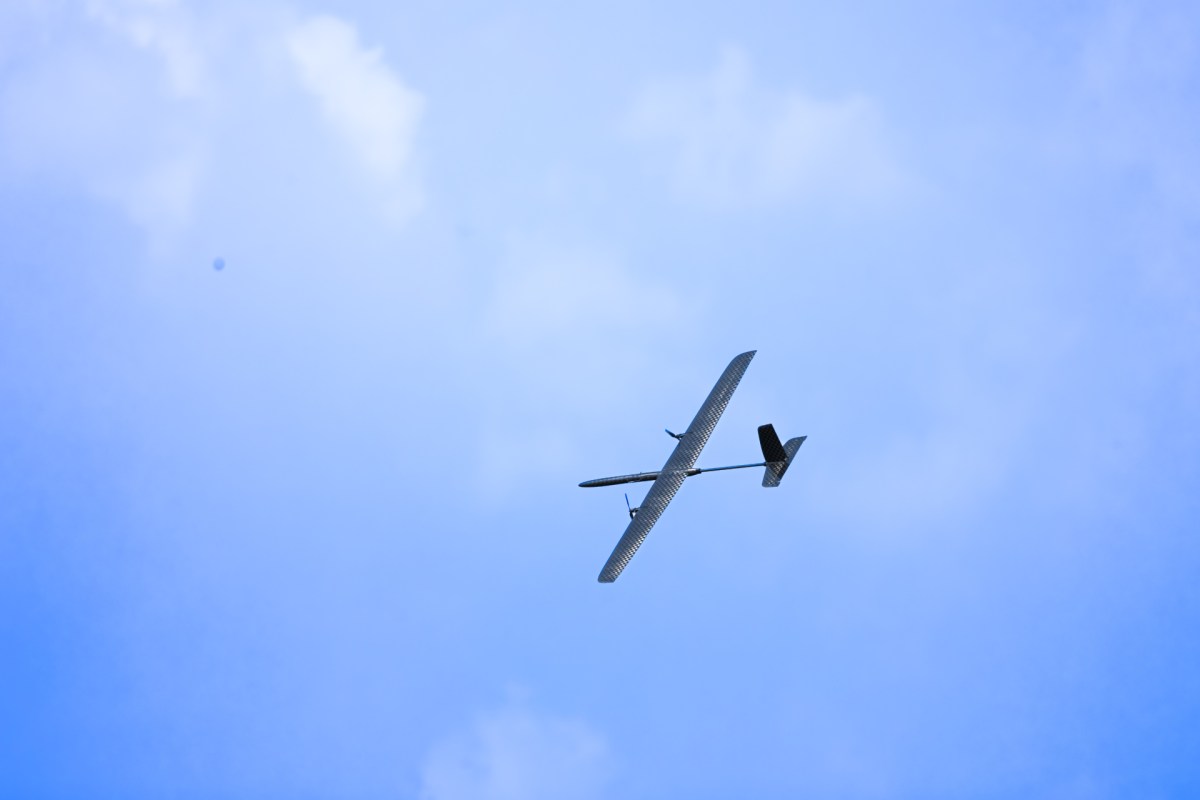
An Indian startup called Alteon is attempting to keep a small autonomous aircraft airborne for more than a year by harvesting energy from ocean winds. The aircraft is not yet proven for that length of time, but its approach offers a useful lesson for you: strong systems do not only consume resources. They can capture useful energy from their environment and keep work moving with less constant intervention.
TL;DR: Alteon is developing autonomous aircraft that use changing wind speeds to stay aloft, with an initial focus on maritime surveillance. For your SME, the practical lesson is to design processes that collect information once, trigger the next action automatically, and reduce repeated manual effort.
The company raised $2.5 million in pre-seed funding, according to TechCrunch. Its aircraft has completed autonomous test flights over the Bay of Bengal, including seven O-shaped cycles at more than 62 miles per hour and within one metre of the water’s surface, as reported by TechCrunch.
What This Means
Conventional aircraft carry the fuel or battery power needed for a flight. Alteon is exploring “dynamic soaring”, where an aircraft moves between layers of air travelling at different speeds. By repeatedly crossing this wind shear, the aircraft may gain energy without relying entirely on stored fuel or battery power.
The concept is inspired by albatrosses, which use wind conditions to travel long distances with limited flapping. Alteon’s proposed aircraft would fly close to the ocean, climb into faster-moving air, turn, and repeat the cycle. The company also plans to use propellers as turbines to convert some harvested energy into electricity for onboard batteries, according to TechCrunch.
There is an important distinction between an impressive idea and a proven operating system. Alteon has not yet demonstrated energy-neutral dynamic soaring, meaning continuous flight with propulsion switched off while the aircraft gathers enough energy from wind to remain airborne. Engineers cited in the article warned that turbulence, waves, spray, rain, changing light, and local wind conditions make long-duration operation difficult.
The useful business lesson is not “automate everything”. It is “design your system so that each completed action helps power the next one”.
For example, a completed online enquiry can automatically create a customer record, notify the correct salesperson, schedule a follow-up, and produce a task if no reply arrives. Your team still makes decisions, but the process no longer depends on someone remembering every step.
How This Applies to Malaysian SMEs
1. Turn enquiries into a continuous workflow. If you operate a renovation company, tuition centre, insurance agency, wholesaler, or professional service firm, enquiries may arrive through WhatsApp, Facebook, Instagram, email, phone calls, and walk-ins. When these enquiries are recorded separately, follow-ups can be missed. A simple automated workflow can capture the customer’s name, contact details, service interest, location, and preferred timing in one place. It can then assign the enquiry to a staff member and remind that person when action is due.
This matters because your business should not lose momentum whenever you are busy, travelling, or handling an urgent customer issue. The system acts like a repeatable flight path: every new enquiry enters the same process, each stage has a clear next step, and exceptions are visible instead of hidden in personal chat histories.
2. Use operational data as a source of energy. Many Malaysian SMEs already collect valuable information but do not turn it into action. A restaurant may have ordering patterns by day and time. A distributor may know which customers reorder certain products. A repair business may see repeated delays for one type of job. A childcare centre may notice attendance and payment follow-up patterns. If this information stays in separate files, it remains a record rather than a management tool.
You can connect routine records to useful triggers. A low-stock item can create a purchasing task. A customer who has not reordered within the usual period can enter a follow-up list. A service job marked complete can automatically request feedback and prepare the next maintenance reminder. The point is not to collect more data for its own sake. The point is to let each transaction improve the next decision.
3. Build for real Malaysian operating conditions. Alteon’s engineers recognise that performance in a controlled test is different from performance over a changing ocean. Your business also operates in conditions that change daily: public holidays, heavy rain, traffic, staff leave, supplier delays, multilingual communication, and customers who prefer different channels. A process that works only when one experienced employee is present is not a reliable process.
Start with the situations that interrupt your team most often. If customers repeatedly ask for order status, create a standard status message or portal view. If staff frequently request approval through personal messaging apps, create a clear approval workflow. If delivery details are often incomplete, make the required fields obvious before an order is confirmed. These small improvements help your operation continue when conditions are less than ideal.
4. Treat automation as assisted decision-making. An autonomous aircraft still needs sensors, control software, testing, and safety limits. Your automated business process also needs clear boundaries. A system can route an enquiry, flag an overdue task, prepare a quotation draft, or notify you about an unusual transaction. It should not approve every exception without review.
For instance, you may allow automatic approval for standard repeat orders but require a manager to review unusual quantities, special terms, or new suppliers. This gives your team speed for routine work while keeping human judgement for situations that carry greater risk.
A simple comparison
| Alteon’s aircraft challenge | SME process equivalent | Practical action |
|---|---|---|
| Harvest energy from changing wind layers | Use information created during daily work | Turn completed jobs into reminders, reports, or follow-ups |
| Fly close to a moving ocean surface | Operate reliably despite changing conditions | Design fallback steps for staff absence, delays, and incomplete data |
| Prove energy-neutral flight | Prove that automation reduces repeated effort | Measure missed follow-ups, response time, and task completion |
| Test autonomous flight repeatedly | Improve a workflow through real usage | Run a small pilot, review failures, then refine the process |
The aircraft described by TechCrunch has a wingspan of about three metres, and Alteon reported a team of 20 people operating from a 10,000-square-foot facility, with four to five aircraft built weekly and more than 200 test flights completed in the previous 30 days. These figures are specific to Alteon and are sourced from TechCrunch. For you, the relevant principle is the testing discipline: build a manageable version, observe what happens, and improve it using evidence.
Practical Takeaways
- Map one repetitive workflow. Choose enquiries, quotations, appointments, order fulfilment, or payment follow-up.
- Identify the next action. For every stage, decide what should happen next and who owns it.
- Capture information once. Avoid asking staff to re-enter the same customer or order details in multiple places.
- Create exception rules. Standard cases can move automatically; unusual cases should be sent for review.
- Set measurable checkpoints. Track response time, overdue tasks, conversion stages, fulfilment delays, or repeat enquiries.
- Test with a small team. Start with one branch, one service, or one workflow before expanding.
- Keep human oversight. Automation should make important work visible, not hide decisions from you.
- Review monthly. Remove unnecessary steps and update rules when your operations change.
The Bigger Picture
Alteon’s aircraft illustrates a broader direction in technology: systems are becoming more capable of sensing their environment, adapting to changes, and continuing work with less direct control. That does not mean a machine can replace every employee or manager. It means routine coordination can be handled more consistently, allowing people to focus on judgement, relationships, quality, and growth.
For Malaysian SMEs, this is especially relevant as businesses serve customers across multiple channels and locations. A process that depends on memory becomes harder to manage as your customer list, product range, and staff responsibilities expand. A process that records activity, applies clear rules, and alerts the right person can support expansion without creating equal growth in administrative pressure.
The most sensible starting point is not an ambitious technology project. It is one business problem you can describe clearly: too many missed leads, slow quotation turnaround, unclear order status, repeated data entry, or overdue follow-ups. Solve that problem, measure the result, and then connect the next workflow.
Dynamic soaring has not yet proven that an aircraft can stay airborne for a year in real-world conditions. That uncertainty is part of the story. Reliable performance comes from testing against turbulence, failure, and changing conditions. Your business systems deserve the same approach: start with a useful process, test it in daily operations, and build reliability step by step.
Ready to Streamline Your Operations?
Your business should run itself. AutoRunBiz deploys AI agents to automate your daily operations — WhatsApp orders, invoicing, customer follow-ups, and accounting. Book a free 15-min ops audit to see where automation fits your business →