
Why a Tesla Crash Should Matter to Your Malaysian Business
A fatal Tesla crash in Florida has renewed an important question for every business adopting artificial intelligence: when an automated system makes a critical decision, who can explain what happened?
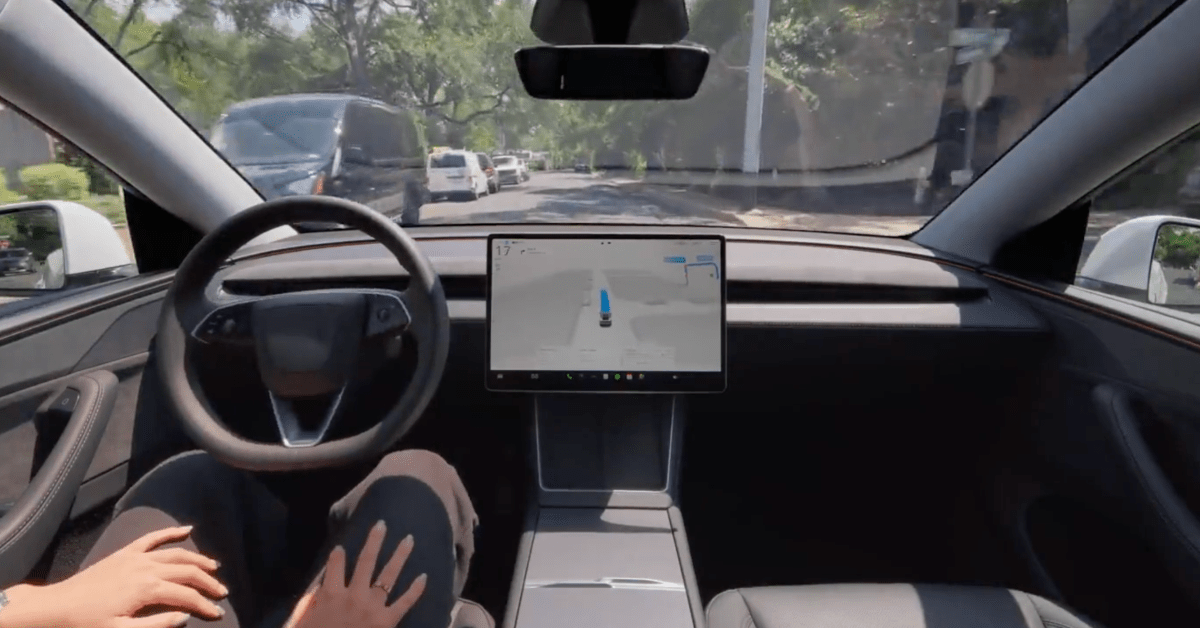
According to Electrek, a 43-year-old Tesla Model 3 driver died after the vehicle stopped in a live lane on Interstate 4 and was hit by a semi-trailer. Florida Highway Patrol reportedly could not determine why the car had stopped. Tesla data filed with the US National Highway Traffic Safety Administration indicated that a driver-assistance system was “Verified Engaged” while the car was stationary at 0 mph.
The incident does not prove that Tesla’s system caused the death. However, it highlights a business issue that is becoming impossible to ignore: your company may use AI to approve invoices, screen applicants, answer customers, monitor vehicles or make operational decisions, but can you later show exactly what the system did, why it did it and who approved the outcome?
What Happened
The crash occurred at approximately 9:25 p.m. on 6 October 2025 on Interstate 4 near Lake Mary Boulevard in Seminole County, Florida, based on the Florida Highway Patrol account cited by Electrek. A 2020 Tesla Model 3 was reportedly stopped in the centre eastbound lane. A semi-trailer attempted to avoid it, clipped the Tesla, struck a guardrail and overturned before the Tesla was pushed towards another lorry. The Tesla driver died, while both truck drivers were reportedly unhurt.
The public crash report did not explain why the Tesla had stopped. Electrek matched the incident with Tesla’s filing under the NHTSA Standing General Order, which requires manufacturers to report certain crashes involving Level 2 driver-assistance systems within 30 seconds of impact. The filing reportedly showed that the system was engaged, the vehicle was stopped and the speed was recorded as 0 mph.
Important details were redacted, including the software version, crash narrative and whether the road was within the system’s approved operating area. Electrek also noted that Tesla has faced longstanding scrutiny over “phantom braking”, where a driver-assistance system brakes sharply because it detects a possible obstacle that may not actually exist. A separate explanation could be a medical emergency involving the driver, with the system keeping the vehicle stationary. Only the vehicle’s detailed telemetry and event data could help distinguish between these possibilities.
When an automated system is involved in a serious incident, the key question is not simply whether AI was switched on. The key question is whether the business can reconstruct the decision from reliable records.
Why This Matters for Malaysian SMEs
For Malaysian small and medium-sized enterprises, this story is not mainly about Tesla or American highways. It is about accountability as automation enters ordinary business workflows. A retail company may use AI to flag suspicious transactions. A logistics operator may use route software to dispatch drivers. A restaurant may rely on demand forecasts to prepare food. A professional services firm may use an AI assistant to draft client advice or summarise documents.
If something goes wrong, saying “the system decided” is unlikely to satisfy a customer, employee, regulator or business partner. You need evidence showing the information available at the time, the recommendation produced by the system, the person who accepted it and any action taken afterwards.
Consider a Malaysian distributor using automated inventory alerts. The system incorrectly predicts demand and delays a purchase order, causing a customer’s production line to wait for parts. Without an activity log, your team may argue about whether the forecast, a staff override or a supplier update caused the delay. With a proper record, you can identify the exact recommendation, its data source and the approval trail.
The same applies to customer service. If an AI chatbot gives an incorrect answer about product warranty terms, your company should be able to retrieve the conversation, identify the knowledge source and show when a human took over. This is especially important when serving customers through WhatsApp, websites, social media and marketplaces, where conversations can otherwise become difficult to track.
| Business area | Potential AI decision | Record you should retain |
|---|---|---|
| Sales | Lead prioritisation | Input data, score, staff action and outcome |
| Finance | Invoice anomaly flag | Invoice version, rule triggered and approval history |
| Operations | Delivery route or stock alert | System recommendation, timestamp and override reason |
| Human resources | Candidate screening support | Job criteria, review notes and final human decision |
| Customer service | Automated reply | Conversation, source used and escalation record |
What You Should Do Before Expanding AI Use
First, create an inventory of automated tools used in your business. Include software subscriptions, accounting platforms, CRM systems, recruitment tools, chatbot services and spreadsheet add-ons. Many owners know about the main platform but overlook small AI features quietly activated inside familiar software.
Next, classify decisions by risk. A system suggesting social media captions is not comparable to one rejecting a supplier, changing a customer’s credit terms or filtering job applicants. The higher the impact, the stronger your review, approval and audit requirements should be.
Require an identifiable human owner for every important workflow. That person does not need to manually repeat every automated step, but they should understand when to intervene, what warning signs to look for and how to stop the process. Automation should reduce repetitive work, not remove responsibility.
Finally, check whether your software keeps useful records. Ask practical questions: Can you export the activity history? Are changes timestamped? Can you identify the model or rule version? Are human overrides recorded? How long are logs retained? If the vendor cannot answer clearly, treat the system as unsuitable for high-impact decisions until stronger controls are available.
The Bigger Picture
The Tesla case reflects a wider tension in modern technology. Companies want to protect proprietary software, but customers and investigators need enough information to understand failures. For SMEs, the same balance appears when using third-party automation platforms. You may not own the algorithm, but you remain responsible for how the output affects your operations and customers.
Malaysia’s businesses are increasingly digitising through e-invoicing, cloud accounting, online payments, delivery platforms and AI-enabled productivity tools. The more connected your workflow becomes, the more valuable a clear audit trail will be. Good records support customer recovery, internal learning, insurance discussions, supplier disputes and compliance reviews.
The practical lesson is simple: do not wait for a serious incident before designing accountability. Start with a small set of controls—approved tools, named owners, logged decisions, regular reviews and a clear escalation process. These measures make automation safer without preventing your team from benefiting from faster work.
At AutoRunBiz, we believe automation should leave your business with more clarity, not less. Before you add another AI feature, ask one question: if this decision causes a problem next month, can you prove what happened?
Ready to Streamline Your Operations?
Technology moves fast. Your operations should keep up. AutoRunBiz builds AI systems that run your daily workflows — from WhatsApp order capture to accounting. Book a free 15-min ops audit →