
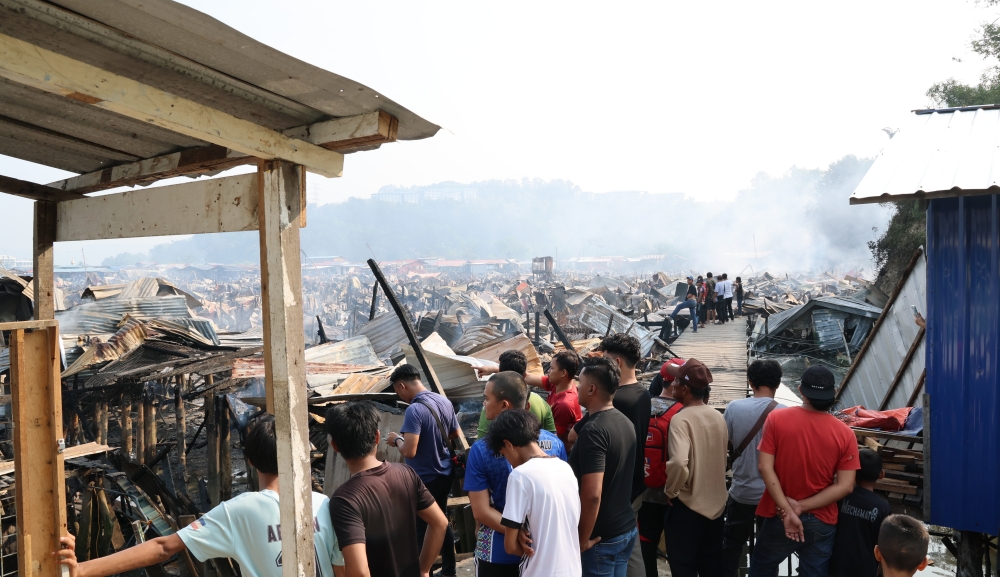
When a Fire Disrupts More Than a Building
A fire does not only damage walls, equipment, stock, or documents. For a small business, it can stop sales, delay deliveries, separate your team from their workplace, and leave you answering urgent questions without the information you need.
The recent fire in Kampung Lok Buta, Numbak, Kota Kinabalu, destroyed more than 200 homes. The Sabah government announced RM3,000 in assistance for each affected Malaysian head of household, made up of RM1,000 contributions from the state government, federal government, and Yayasan Kebajikan Sabah. The article also reported RM1,000 assistance for affected non-Malaysian heads of household and support for basic necessities and reconstruction planning. Source: Malay Mail
For you as an SME owner, the practical lesson is not to depend on emergency aid alone. Your business needs its own clear response plan, reliable records, and a way to continue communicating when your usual premises are unavailable.
TL;DR
A fire recovery plan should cover people, customer communication, documents, stock, premises, and daily operations.
Start with a simple emergency contact list, cloud-based records, an alternative work location, and a checklist that tells your team what to do during the first day.
What This Means
The Sabah government’s response shows how recovery can involve several parties: state agencies, federal support, charitable organisations, local authorities, and the affected families themselves. The reported assistance was directed to heads of household, while rebuilding was to be coordinated with relevant agencies. Source: Malay Mail
For a business, this is a reminder that an incident usually creates several separate tasks. Someone must account for staff. Someone must contact customers. Someone must protect records. Someone must check stock and equipment. Someone must speak with the landlord, insurer, suppliers, authorities, and possibly relief organisations.
If all this knowledge sits in your head, recovery becomes slower. If information is scattered across paper files, personal phones, and separate spreadsheets, your team may not know which version is correct. Business automation can help by placing essential information into one organised system, with permissions and backups that support your emergency process.
Your first business continuity tool is not software; it is a clear answer to the question: “What must happen in the next 60 minutes?”
How This Applies to Malaysian SMEs
1. Retailers and stock-based businesses need an accessible inventory record. If your shop, storeroom, workshop, or warehouse is affected, you may lose access to physical stock and paper invoices at the same time. A current digital inventory record can show what was received, sold, reserved, damaged, or awaiting delivery. You can also keep supplier contacts and purchase documents in the same system. This helps you communicate accurately instead of estimating while under pressure.
2. Service businesses need a way to keep appointments and customer work moving. A salon, repair shop, tuition centre, agency, clinic-related service provider, or contractor may not depend heavily on physical stock, but it still depends on schedules and customer records. If the premises become inaccessible, your team should be able to identify upcoming appointments, active jobs, outstanding approvals, and promised delivery dates. A shared digital workspace gives authorised staff access to the information needed to move work to another location or reschedule customers.
3. Food operators and manufacturers need clear safety and traceability steps. A fire, smoke exposure, power interruption, or water damage can affect ingredients, packaging, machinery, and finished products. Your team needs a documented process for isolating affected items, recording batch details, contacting suppliers, and informing customers where necessary. A simple form on a phone or tablet can capture photos, item codes, quantities, and staff notes so that decisions are based on records rather than memory.
4. Businesses with mixed local and foreign workforces need inclusive emergency communication. The reported assistance included separate support for non-Malaysian heads of household on humanitarian grounds. Source: Malay Mail In your own business, emergency instructions should be easy for every worker to understand. Use short sentences, clear roles, translated key instructions where useful, and a contact process that does not depend on one supervisor being available.
5. Businesses in rented premises need landlord and agency information ready. After an incident, you may need to contact the landlord, building management, local council, utility providers, suppliers, customers, and relevant authorities. Keep these contacts in one controlled list. Include premises details, tenancy documents, equipment records, and emergency service contacts. Store copies securely away from the premises so a damaged office does not remove your only evidence.
A Simple Recovery Data Structure
You do not need a complicated platform to begin. The following structure gives you a practical starting point:
| Business area | Information to keep | First action after an incident |
|---|---|---|
| People | Staff names, emergency contacts, roles | Confirm safety and attendance |
| Customers | Orders, appointments, contact details | Send a clear service update |
| Stock | Item codes, quantities, supplier records | Separate and record affected items |
| Premises | Landlord, building manager, access details | Confirm access and safety restrictions |
| Documents | Invoices, licences, contracts, asset records | Retrieve secure digital copies |
Practical Takeaways
- Create a one-page emergency response checklist and keep both digital and printed copies.
- Assign one person to staff welfare, one to customer communication, and one to operations.
- Keep customer, supplier, staff, stock, and asset records in an organised digital system.
- Set up regular backups and test whether your team can retrieve important files.
- Record equipment serial numbers, stock details, and premises information before an incident occurs.
- Prepare a short customer message explaining whether you are closed, operating elsewhere, or delaying service.
- Identify an alternative work location, communication channel, and delivery arrangement.
- Document who can approve urgent decisions when you are unavailable.
- Review your fire prevention procedures with your team and keep exits unobstructed.
- After any incident, record what happened and update the plan based on the lessons learned.
How to Start Without Disrupting Your Business
Begin with the information you already use every day. List your active customers, open jobs, suppliers, staff contacts, premises details, and essential documents. Remove duplicate files and agree on one naming method. For example, every quotation, purchase order, and delivery record should follow a consistent format so your team can find it quickly.
Next, build a basic workflow for incidents. A staff member should be able to report an issue, attach photographs, select the affected location, and notify the right person. The owner or manager should receive a summary instead of searching through chat messages. This is where a business automation system can reduce manual chasing and provide a reliable activity trail.
Finally, test the process. Ask your team to imagine that the premises cannot be used for the next working day. Can they identify pending orders? Can they contact customers? Can they find supplier details? Can they work from another location? If the answer is no, you have found the next improvement to make.
The Bigger Picture
The Kota Kinabalu fire also involved the tragic loss of three children, according to the report. Source: Malay Mail That human cost puts business continuity into the right perspective: emergency planning is ultimately about protecting people first, then helping essential activities resume safely.
For Malaysian SMEs, continuity will increasingly depend on how quickly a business can access accurate information and coordinate people. A small company may not have a dedicated risk department, but it can still establish clear responsibilities, secure records, and practical fallback procedures.
Do not wait for a major incident to discover that your only customer list is on a laptop inside the office, or that only one employee knows how to issue invoices. Build a modest, well-maintained system that your team can use on an ordinary day and rely on during a difficult one. That preparation can make your recovery more orderly, your communication more credible, and your business better able to serve customers when circumstances change.
Ready to Streamline Your Operations?
Your business should run itself. AutoRunBiz deploys AI agents to automate your daily operations — WhatsApp orders, invoicing, customer follow-ups, and accounting. Book a free 15-min ops audit to see where automation fits your business →