
When Customers Cannot Tell What Is Real
You may already use AI to create social media images, write captions, produce short videos, or present a polished brand personality online. The problem begins when a customer cannot tell whether the person representing your business is real, digitally created, or heavily altered.
That uncertainty can affect trust quickly. A potential customer may discover that an apparently real influencer, spokesperson, or product demonstrator was generated by AI and then question everything else your business says. For a small company, where relationships and reputation often depend on personal credibility, that risk deserves attention.
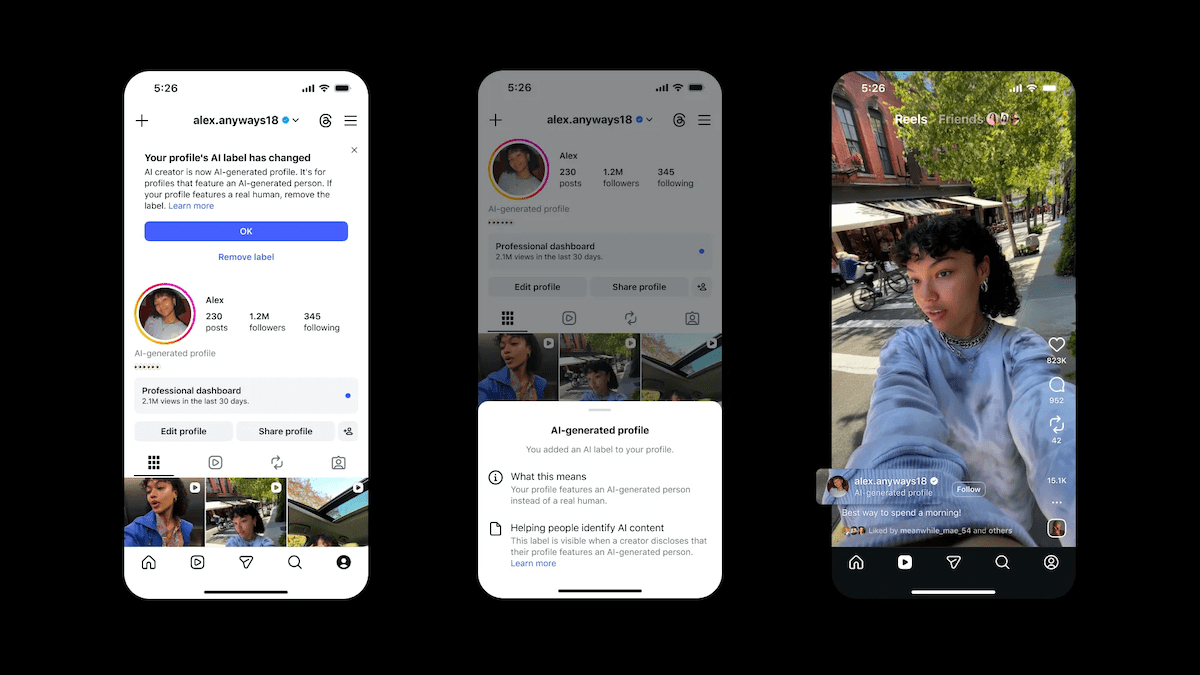
TL;DR: Instagram is renaming its “AI creator” label to “AI-generated profile” and may reduce the reach of accounts that do not disclose AI-generated people. The lesson for your business is simple: clearly explain when a person, testimonial, presenter, or profile is substantially created by AI.
Using AI for editing, captions, graphics, or creative improvements is not automatically the same as creating a fictional person. The important issue is whether your audience could reasonably believe the AI-generated person is a real individual.
What This Means
Instagram’s updated approach distinguishes between AI-assisted content and an AI-generated profile. An AI-generated profile features a person who was generated or substantially created using AI. Instagram says the new wording is intended to make that disclosure easier for users to understand.
Creators who properly apply the label should not be penalised simply because they use an AI-generated person. However, accounts that feature an AI-generated person without appropriate disclosure may experience reduced reach. Instagram also says the label is not intended for every small use of AI, such as polishing a caption, editing an image, designing a graphic, or making other creative adjustments.
This reflects a broader expectation: people want to know when a profile appears human but is actually fictional. That expectation matters even if your business is not an influencer brand. A virtual salesperson, AI-made founder, fictional customer, or synthetic health expert can all create confusion if presented as real.
The practical rule: If a reasonable customer might believe the person is real, disclose that the person is AI-generated.
The concern is not theoretical. A Wired investigation reported that more than two dozen apparently AI-generated male influencer accounts promoted the dating app Goose, with some reportedly contacting potential users through direct messages. The New York Times also reported finding hundreds of AI-generated doctors, healers, and wellness personalities promoting supplements or making health claims. These examples show why platforms are paying closer attention to disclosure and misleading identity.
How This Applies to Malaysian SMEs
1. Social media marketing must protect trust. Imagine you operate a skincare, fitness, food, fashion, or home-living business. You create an AI-generated woman to demonstrate your product on Instagram Reels and present her as if she were a real customer. Even if the product itself is genuine, viewers may feel deceived once they discover that the person does not exist. A simple label such as “AI-generated presenter” or “Virtual brand ambassador” makes the relationship clearer.
This is especially important when your audience is local and community-driven. Malaysian customers often discover small businesses through Instagram, TikTok, WhatsApp, Facebook groups, and personal recommendations. If one misleading post is shared widely, the issue may become a conversation about your business rather than your product. Clear disclosure gives customers the information they need before they engage.
2. Testimonials need extra care. An AI-generated person should never be presented as a genuine customer who used your service. If you run a renovation company, tuition centre, clinic, agency, restaurant, or professional service firm, fictional testimonials can create serious credibility problems. You can use AI to turn a real customer’s approved story into a better-designed visual, but you should not invent the customer or imply personal experience that did not happen.
A safer format is to separate the roles clearly. Use real customer testimonials with permission, and use an AI-generated presenter only to explain the service. If you use a fictional scenario, label it as a demonstration. For example: “Illustrative AI-generated character explaining how our booking process works.” That wording prevents a viewer from confusing an example with evidence.
3. Health-related businesses should be particularly cautious. Malaysian pharmacies, supplement sellers, wellness centres, gyms, beauty providers, and traditional health businesses should not use an AI-generated doctor, therapist, nutritionist, or patient to make claims. The article’s examples of AI-generated health personalities show how easily synthetic identities can make promotional content appear more authoritative than it is.
If a qualified Malaysian professional is presenting information, identify the person accurately and ensure the claims are reviewed. If an AI avatar is reading an approved script, say so. An AI presenter can explain opening hours, appointment steps, product ingredients, or general educational information, but it should not be made to appear like a real medical expert giving personal advice.
Simple examples for your marketing team
| Content type | Likely disclosure approach | Safer wording |
|---|---|---|
| AI-polished caption | Usually no AI-generated profile label | Keep your normal content review process |
| AI-edited product photograph | Explain material changes when relevant | “Digitally enhanced product image” |
| AI-generated presenter | Disclose clearly | “AI-generated presenter” |
| Fictional customer story | Never present it as a real testimonial | “Illustrative example” |
| Real employee with AI voice or face changes | Obtain consent and disclose the alteration | “AI-assisted video featuring our team member” |
The table is a practical internal guide, not a substitute for checking each platform’s current rules. Platform policies can change, so you should review the latest requirements before publishing campaigns.
Practical Takeaways
- Audit your existing profiles: Check whether any AI-generated person could be mistaken for a real employee, customer, expert, or influencer.
- Use plain labels: Prefer “AI-generated person,” “virtual presenter,” or “fictional character” over vague wording such as “digital creator.”
- Separate editing from identity: AI-assisted colour correction or caption writing is different from inventing a person.
- Protect testimonials: Use written permission for real customer stories and never create fictional reviews that look genuine.
- Review health claims: Do not let an AI-generated doctor or wellness personality provide authority your business cannot verify.
- Document approvals: Keep a simple record of who approved the script, image, disclosure, and claims.
- Check direct messages: Make sure automated or AI-assisted replies do not pretend to come from a real individual.
- Train your team: Give staff one clear rule: if content could confuse people about identity, disclose it before publishing.
A Simple Disclosure Workflow
Before posting, ask three questions. First, is the person real? Second, could a viewer reasonably think the person is real? Third, does the content make a testimonial, professional, health, or product claim?
If the answer to the second question is yes, add a visible disclosure. If the third answer is yes, require an extra review. Do not hide the disclosure in a long caption where most viewers will not see it. Place it on the image, video, profile description, or opening frame when appropriate.
You should also keep a consistent naming system across your channels. If the same virtual presenter appears on Instagram, Facebook, TikTok, and your website, use similar wording everywhere. Consistency reduces customer confusion and helps your team publish faster without making a new decision each time.
The Bigger Picture
Instagram’s policy signals a long-term shift in how online identity will be managed. AI tools are becoming easier to use, but platforms and audiences are becoming less tolerant of content that disguises synthetic people as real ones. More platforms may introduce clearer labels, distribution limits, or account restrictions as they respond to complaints about deception and misuse of likenesses.
For Malaysian SMEs, transparency is not merely a platform-compliance task. It is a practical way to build a dependable brand. Customers may accept a virtual presenter, fictional mascot, or AI-generated model when you explain the format honestly. They are less likely to accept discovering later that a supposed customer, expert, or founder was invented.
You do not need to avoid AI. You need to use it with clear boundaries. Let AI help your team produce content, organise communication, and present information efficiently. At the same time, make sure customers can distinguish between a real person, an AI-assisted real person, and a completely generated character.
Your best policy is easy to remember: use AI openly, never fabricate evidence, and make identity clear before trust is requested.
Ready to Streamline Your Operations?
Your business should run itself. AutoRunBiz deploys AI agents to automate your daily operations — WhatsApp orders, invoicing, customer follow-ups, and accounting. Book a free 15-min ops audit to see where automation fits your business →