
Business Travel Planning Is Still Taking Too Much Time
If you run a Malaysian SME, arranging a business trip can become an unexpected administrative task. You may need to compare flights, check hotel locations, review cancellation terms, coordinate dates, and make sure the booking fits your company’s travel policy. When several employees travel for the same event, a small booking task can quickly become a long chain of messages and approvals.
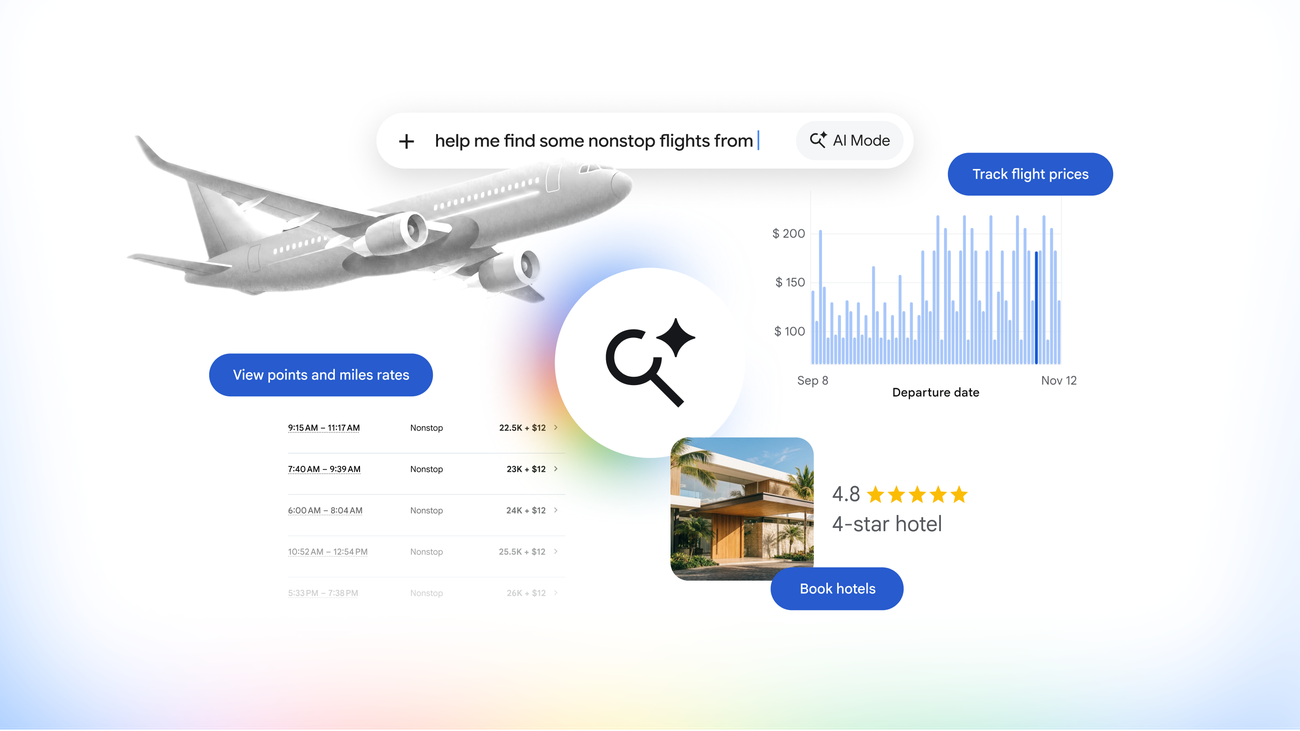
Google’s latest travel updates for AI Mode in Search point towards a simpler way to handle this work. The tools are designed to help users track flight prices, check points or miles requirements, compare hotels, and complete selected hotel bookings through a conversational search experience. The availability and partner coverage may differ by country, so you should verify what works for your location before relying on it for a trip.
TL;DR: AI-powered travel search can reduce the time you spend comparing flights and hotels. For Malaysian SMEs, the practical value is clearer trip research, better tracking, and a more organised booking process—not fully automatic travel decisions.
You still need to check the final fare, passport or visa requirements, baggage rules, cancellation terms, and internal approval before confirming anything. AI can help organise options, but responsibility for the booking remains with you and your business.
What This Means
AI Mode is a conversational search experience. Instead of entering separate searches for flights, hotels, rewards programmes, and travel dates, you describe your request in ordinary language. The system can then present relevant options and help you continue the research in one conversation.
According to Google, its flight information comes from more than 300 partner airlines and travel sites. Google also says flight price tracking in AI Mode is available in more than 180 countries and territories. These figures describe Google’s stated coverage, not a guarantee that every Malaysian route, airline, or booking platform will appear.
1. Flight price tracking
You can describe your destination and preferred dates, review available flights, and ask the system to track prices. If you confirm the alert, Google says you can receive an email when prices change for the destination and dates you specified. This is useful when your travel dates are fixed but you are not ready to book immediately.
2. Points and miles comparisons
AI Mode can also show the points or miles needed for selected flights and hotels. Google says the initial support includes Alaska Airlines, Hawaiian Airlines, American Airlines, Choice Hotels International, Hilton, and Wyndham Hotels & Resorts, with additional partners announced for future support. For a Malaysian business, this may be more useful when your company or employees already use international rewards programmes. Do not assume that Malaysian airline, hotel, or bank reward programmes are supported.
3. Hotel discovery and booking
Google says users can view hotel options with guest reviews and comparison details, then continue to an integrated partner to complete a booking. The announced hotel booking rollout began in the United States in English, with partners including Booking.com, Expedia, Hilton, Hotels.com, IHG Hotels & Resorts, Marriott International, Priceline, Trip.com, and Wyndham Hotels & Resorts. Availability in Malaysia may change, so check the actual booking flow before adopting it.
Key insight: AI travel search is most valuable when it reduces repetitive comparison work while leaving the final decision, verification, and approval with a responsible person.
How This Applies to Malaysian SMEs
For client meetings in Kuala Lumpur, Penang, Johor Bahru, or Kota Kinabalu, you can use conversational search to create a first shortlist instead of opening many tabs. For example, you might ask for morning flights from Kuala Lumpur to Penang, a hotel near the meeting venue, flexible cancellation, and arrival before a particular time. This gives you a starting point that can be shared with a manager or client-facing employee for confirmation.
For trade fairs and overseas events, price tracking can help you monitor travel options before committing. Malaysian SMEs attending exhibitions in Singapore, Bangkok, Jakarta, or other regional destinations often need to balance travel dates with event schedules. Ask the system to compare the preferred dates with nearby alternatives, then check whether the difference affects airport transfers, staff availability, or event attendance. An alert is useful only if someone in your team is assigned to review it and act when the conditions are suitable.
For companies with several travelling employees, AI search can make research more consistent. Create a simple internal request format containing traveller name, destination, dates, preferred departure window, baggage needs, hotel location, and approval status. The person arranging travel can use that information to produce comparable options. This is easier to audit than relying on scattered WhatsApp messages such as “find something convenient.”
For businesses using travel rewards, points and miles information may help you compare redemption options with normal booking options. However, points availability, taxes, seat inventory, blackout dates, and change rules can differ from one programme to another. Treat the displayed rate as a research result. Before confirming, sign in to the airline or hotel programme and verify the final redemption details.
For field service and project teams, hotel comparison can be tied to practical requirements rather than appearance alone. Ask for accommodation near the customer site, late check-in, workspace, reliable internet, parking, or flexible cancellation. Your team should still read the hotel’s terms and confirm whether the selected room meets the employee’s needs.
A Simple Travel Workflow for Your Business
| Stage | What to do | Who should confirm |
|---|---|---|
| Trip request | Record destination, dates, purpose, traveller, and preferred schedule. | Employee and reporting manager |
| Research | Use AI search to shortlist flights, hotels, and possible alternatives. | Travel coordinator |
| Verification | Check airline, hotel, baggage, cancellation, transfer, and loyalty details. | Traveller and coordinator |
| Approval | Compare the selected option with your internal travel policy. | Business owner or manager |
| Booking | Complete the booking through the airline, hotel, or recognised booking partner. | Authorised booker |
| Record keeping | Save confirmation, invoice, traveller details, and cancellation conditions. | Admin or finance team |
Practical Takeaways
- Write a clear travel brief: Include dates, timing, location, baggage, hotel requirements, and approval limits.
- Use alerts for uncertain timing: Assign one person to monitor price changes and decide whether an option is suitable.
- Check Malaysian availability: Features, language support, partners, and booking coverage can differ from the United States rollout described by Google.
- Verify every final detail: Check names, dates, airport terminals, baggage, room type, cancellation terms, and payment conditions before confirming.
- Keep one booking record: Store the itinerary, confirmation number, receipt, and traveller contact details in a shared business folder or operations system.
- Set a human approval step: AI should prepare options, while an authorised employee confirms the actual booking.
- Protect sensitive information: Avoid entering unnecessary identity, payment, passport, or confidential client information into a search conversation.
The Bigger Picture
The long-term significance is not simply that search can answer travel questions. It is that routine administrative work is moving from separate forms and websites into guided conversations. That shift may influence how SMEs handle travel requests, supplier research, event planning, and other tasks that involve comparing many options.
For a Malaysian business with a small admin team, this can encourage a better division of work. Staff can spend less time collecting basic options and more time checking suitability, following policy, and supporting travellers. The business owner still needs clear rules: who may book, what information must be recorded, how changes are handled, and who approves unusual requests.
AI travel tools will also make verification more important. Search results can be incomplete, partner information can change, and an attractive option may not include baggage, transfers, taxes, or the cancellation flexibility you need. Your process should therefore treat AI as an assistant for research, not as the final authority.
Start with one low-risk business trip. Create a standard travel brief, use AI Mode to prepare a shortlist, verify the result directly with the relevant provider, and record what worked. If the process saves administrative effort without creating confusion, you can gradually apply it to more frequent travel requests.
For SME owners, the practical goal is straightforward: make travel planning easier to organise, easier to review, and less dependent on one person remembering every detail. Used with sensible controls, AI-powered search can become another useful part of your business automation toolkit.
Ready to Streamline Your Operations?
Your business should run itself. AutoRunBiz deploys AI agents to automate your daily operations — WhatsApp orders, invoicing, customer follow-ups, and accounting. Book a free 15-min ops audit to see where automation fits your business →