
Why Tesla’s Solar Roof Story Matters to Your Business
A famous technology product has disappeared from Tesla’s public website, and the reason offers a useful warning for every Malaysian SME owner: an attractive innovation can still fail when design, manufacturing, installation, performance and customer expectations do not work together.
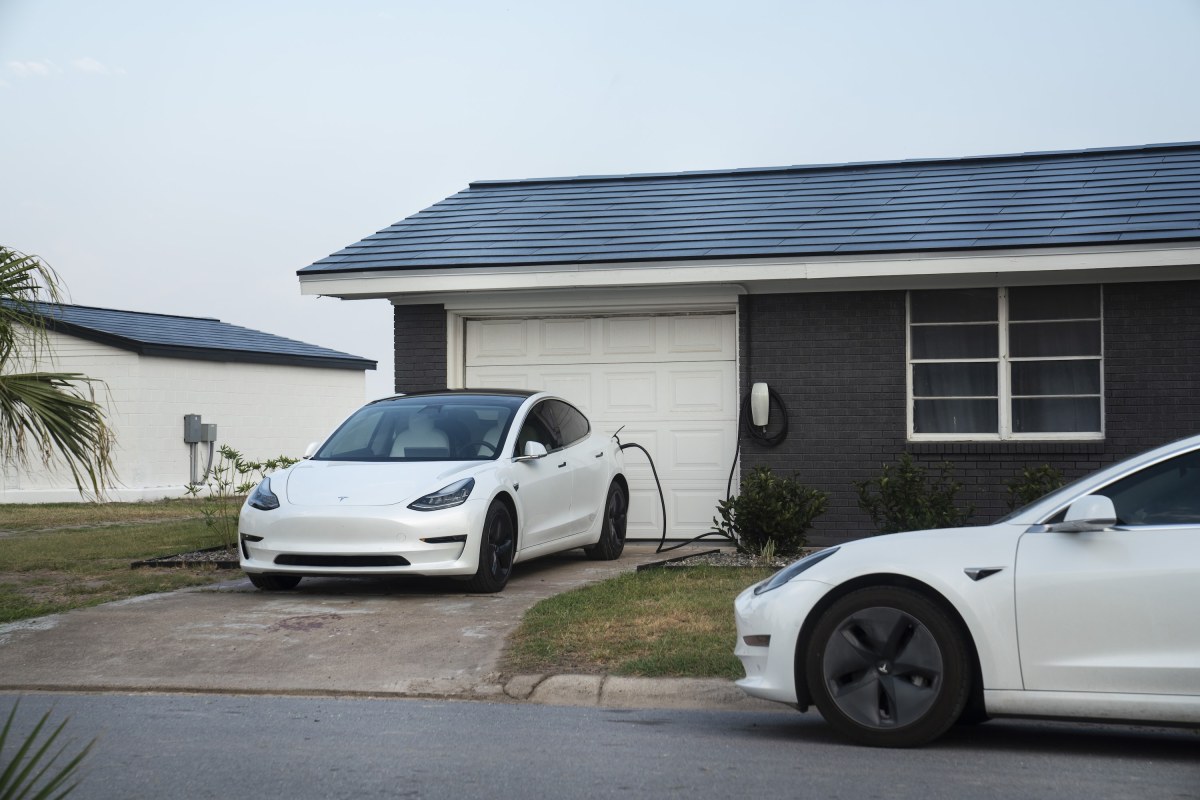
TechCrunch reported that Tesla’s Solar Roof has been removed from the company’s website, with its product and support pages redirecting to Tesla’s general solar landing page. The product was introduced nearly a decade ago as a roof-integrated solar power system designed to look like premium roofing materials rather than conventional solar panels. (TechCrunch)
For you, the lesson is not limited to solar energy. It applies to introducing an AI chatbot, upgrading your point-of-sale system, automating invoices, launching a new delivery service or building a custom customer portal. A product may look impressive in a demonstration, but your business needs dependable operations, predictable performance and support after installation.
What Happened
Tesla’s Solar Roof combined photovoltaic cells with roof tiles, creating a mini power plant integrated into the roof itself. The concept appealed to customers who wanted renewable energy without the appearance of standard solar panels. However, Tesla’s public-facing references to the product have now been removed, and two solar installers told TechCrunch that they were still offering the system in some circumstances, possibly using existing inventory. (TechCrunch)
The product also fell far short of Tesla’s original installation ambition. The company aimed for 1,000 installations per week, but TechCrunch reported that installation activity reached only about 20 to 40 per week in 2022. The product was positioned as a premium alternative to conventional solar panels, and some customers reportedly received installation quotations of up to $200,000. (TechCrunch)
Manufacturing complexity was another issue. Conventional solar panels benefit from standardised production at very large volumes, while Solar Roof tiles required unique designs and manufacturing equipment. When sales did not reach the expected scale, the fixed effort involved in producing the specialised system became harder to justify. (TechCrunch)
Technical performance created further uncertainty. TechCrunch cited reports of non-solar parts warping, roof underlayment melting and the system producing less electricity than expected. The article explained that solar panel voltage generally declines by about 0.5% for every 1°C increase in temperature, while standard panels can use an air gap to improve cooling. (TechCrunch)
Why This Matters for Malaysian SMEs
Malaysia’s climate makes real-world testing especially important. A system used on a shophouse, workshop, café or warehouse must cope with strong sunlight, heavy rain, humidity and long operating hours. The Solar Roof story shows why you should not approve a technology project based only on appearance, a sales presentation or a successful demonstration in a controlled environment.
Imagine you are considering an AI system that reads supplier invoices and sends the data into your accounting platform. During a demo, it may correctly process a clean PDF. Your actual documents may include scanned receipts, handwritten delivery orders, mixed languages, missing tax details and different supplier formats. If the system cannot handle these conditions, your staff may spend more time checking errors than they previously spent entering information.
The same applies to customer-service automation. A chatbot may answer common questions quickly, but Malaysian customers may switch between Bahasa Malaysia, English, Mandarin or informal abbreviations. If the system gives an incorrect answer about delivery times, product availability or warranty terms, your team still has to repair the relationship. In a small company, one poor automated interaction can consume hours of management attention.
Innovation is only valuable when it performs reliably in the environment where your business actually operates.
Before adopting a new system, ask for evidence from businesses similar to yours. A technology that works for a large enterprise with a dedicated IT department may not suit a 10-person retailer, contractor or professional-services firm. You need to understand the installation process, staff training, data migration, troubleshooting arrangements and the fallback process when the system is unavailable.
| Lesson from the Solar Roof case | What you should check before adopting technology |
|---|---|
| Specialised products can be difficult to scale | Can the system support more users, branches and transactions without major redesign? |
| Performance may decline in real conditions | Has it been tested with your documents, languages, devices and working environment? |
| Installation can become the bottleneck | Who configures it, trains your team and resolves problems after launch? |
| Marketing claims may not match daily results | Which measurable outcomes will you monitor during the first 30 to 90 days? |
| A discontinued product creates uncertainty | Can you export your data and switch providers if the product is withdrawn? |
How to Apply the Lesson to Your Next Project
Start with the business problem, not the technology. Instead of saying, “We need AI,” define the operational issue: quotations take too long, customer enquiries are missed after office hours, stock records are inconsistent or staff spend every Monday preparing reports. A clear problem gives you a practical test for success.
Then run a limited pilot. For example, automate one invoice workflow, one product category or one customer enquiry channel. Keep a manual backup during the pilot and record the results. Track response accuracy, processing time, exceptions, staff corrections and customer complaints. These measurements are more useful than broad promises about transformation.
You should also examine the product’s exit conditions. Ask whether you can download your records in a usable format, whether the system connects to other tools and whether another provider can take over the workflow. Avoid building your entire operation around a platform that stores information in a closed format or depends on one specialist who may no longer support it.
The Bigger Picture
TechCrunch noted that Tesla’s decision does not necessarily mean integrated solar roofs are finished. Other companies, including GAF and Merlin Solar, remain interested in the market, particularly for customers who care strongly about appearance. (TechCrunch)
The broader message is that one company’s withdrawal does not automatically disprove an entire category. It does show that difficult products need a strong combination of engineering, supply-chain discipline, installation capability and customer support. The same is true for business automation. A useful system is not defined by whether it uses AI. It is defined by whether your team can rely on it every day.
As a Malaysian SME owner, you do not need to reject new technology. You need to adopt it with discipline. Test it in your actual operating conditions, involve the employees who will use it, set measurable targets and preserve a practical fallback. When a product is stylish but fragile, standardised and dependable alternatives may serve you better.
The best technology decision is not always the most futuristic one. It is the one that solves a real problem, survives daily use and continues supporting your business after the excitement of the launch has passed.
Ready to Streamline Your Operations?
Technology moves fast. Your operations should keep up. AutoRunBiz builds AI systems that run your daily workflows — from WhatsApp order capture to accounting. Book a free 15-min ops audit →