
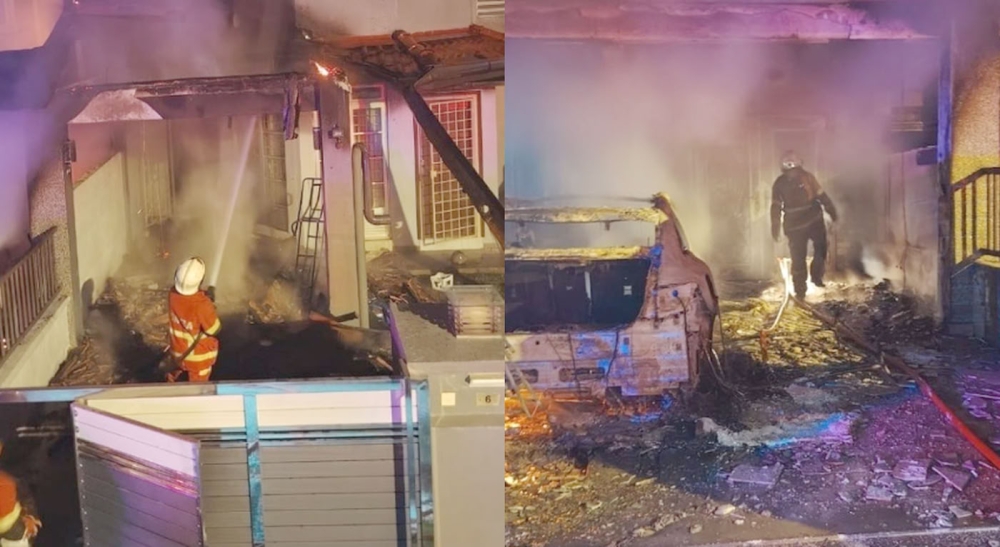
Why EV Charging Risk Matters to Your Business
If you run a workshop, office, showroom, warehouse, retail outlet or property-related business, electric vehicle charging may already be part of your operations. Your employees may charge company vehicles at the premises. Customers may ask to use a charger. You may even be considering installing one to support a fleet or attract visitors.
The practical question is not simply whether an EV is safe. It is whether your business has clearly documented the charger, electrical work, maintenance checks, insurance notification and emergency response. When an incident happens, missing records can make an already stressful situation harder to manage.
A recent EV fire in Alam Damai, Cheras prompted the General Insurance Association of Malaysia (PIAM) to clarify how home and motor policies generally treat EV-related fire damage. The same lesson applies to SMEs: do not assume that your existing arrangements automatically cover new equipment or new risks.
TL;DR
Fire cover is generally not rejected merely because an EV was involved, but policy terms, exclusions, safety compliance and adequate sums insured still matter.
If you install an EV charger at your business premises, notify your insurer, retain professional installation records and review building, equipment, motor and public liability coverage.
What This Means
PIAM’s explanation is straightforward: a fire is generally assessed as fire damage, regardless of whether the ignition source was an EV, a charger, a short circuit or another cause. Standard Houseowner and Fire insurance policies generally cover specified fire perils, subject to the policy’s conditions, exclusions and the absence of fraud or deliberate acts. Source: Malay Mail
For an SME, this does not mean every loss is automatically covered. A commercial policy may separate the building, contents, machinery, stock, business interruption and liability sections. The charging unit may be treated differently from the vehicle. A fixed charger may be considered part of the building’s fixtures and fittings, while a portable cable may fall under a motor policy or an add-on, depending on the insurer and wording. Source: Malay Mail
Installation quality is also important. PIAM advises EV owners to inform their insurer when installing a permanent charger and to ensure that electrical work complies with applicable requirements. Insurers may review official investigation reports, including reports from the Jabatan Bomba dan Penyelamat Malaysia, when assessing the cause and circumstances of a fire. Illegal or uncertified electrical modifications may create complications during a claim. Source: Malay Mail
The useful business lesson is simple: new equipment should trigger a documentation and insurance review, not just an installation appointment.
How This Applies to Malaysian SMEs
1. Offices and retail premises need a clear charging policy. If your staff charge vehicles at the office, decide who may use the charger, during which hours, and under what conditions. Your written policy can cover approved vehicles, parking arrangements, damaged cables, reporting faults and what employees should do if the charger smells hot, shows an error or trips the electrical supply. This is especially useful for shops, clinics, professional offices and restaurants where customers or visitors may be near the charging area.
2. Workshops and automotive businesses face additional operational exposure. A workshop may handle EVs, charging cables, batteries and diagnostic equipment in the same area. Separate parking and work zones can help reduce confusion during an emergency. You should record when a vehicle arrives, its reported fault, the work performed and the condition of its charging equipment. If a customer’s vehicle is damaged while under your care, the relevant motor, property and liability questions may not be answered by one policy alone.
3. Warehouses and fleet operators should treat chargers as business assets. A delivery company, security firm, property operator or service business may install chargers for company vehicles. Keep an asset register showing the charger’s make, model, serial number, installation date, location and responsible person. Store the installer’s documents, electrical test results, maintenance records and warranty information in one place. If you move the charger, add a new circuit or increase its capacity, update the records and notify the relevant parties.
4. Property managers and landlords need to clarify responsibility. In a condominium, commercial building or shared industrial site, the charger may connect to common infrastructure. Confirm who approves the installation, who pays for inspections, who controls access and who responds to a fault. If a fire could affect neighbouring units, public liability becomes an important discussion. The source article notes that a standard Houseowner policy typically provides RM50,000 in public liability cover, with optional extensions available; commercial and strata arrangements may differ, so check your own policy rather than relying on that figure. Source: Malay Mail
A simple record system can prevent avoidable confusion
You do not need complicated software to begin. Create one digital folder for each charger and link it to your premises or vehicle register. When a technician completes an inspection, upload the report immediately. When you notify your insurer, save the email or confirmation with the policy documents. This gives you a searchable timeline instead of relying on a staff member’s memory.
| Item to record | What to capture | When to update |
|---|---|---|
| Charger asset | Brand, model, serial number and location | At installation or replacement |
| Electrical work | Installer details, test results and circuit information | After installation or modification |
| Insurance notification | Date, contact person and insurer’s response | Before or immediately after installation |
| Maintenance | Inspection date, findings and corrective action | According to the maintenance schedule |
| Incident log | Fault, shutdown, damage, photos and witness details | Every time an abnormal event occurs |
Practical Takeaways
- List every EV charger, charging cable and related electrical upgrade at your premises.
- Ask your insurer in writing how the building, charger, vehicle, contents and business interruption sections apply.
- Use a qualified professional for installation and keep all certificates, invoices, test results and approvals.
- Check whether the insured value reflects rebuilding costs, fixtures, wiring upgrades and other modern equipment.
- Review public liability limits if a fire or other incident could affect neighbours, tenants, customers or visitors.
- Set a rule that staff must stop using a charger when it overheats, trips repeatedly, smells unusual or shows visible damage.
- Keep access clear around the charger and make sure staff know the location of isolation switches and fire equipment.
- Record incidents with photographs, times, vehicle details and immediate actions, without guessing at the cause.
- Review the arrangement whenever you add a charger, change premises, acquire an EV or alter electrical capacity.
Make the Process Easier with Automation
For a small business, the risk is often not a lack of effort. It is inconsistent follow-up. One person receives the installer’s report, another handles insurance, and a third person notices that the next inspection is overdue. Important information becomes scattered across email, messaging applications and paper files.
A simple workflow can assign ownership and reminders. For example, when a new charger is registered, your system can create tasks for insurer notification, document upload, staff briefing and inspection scheduling. If an inspection is overdue, the responsible manager can receive an alert. If an incident is reported, the form can request the location, time, vehicle, photographs and immediate safety action before the issue is escalated.
This is useful because your team can follow the same process every time, even when the person who normally manages facilities is absent. Automation does not replace professional advice or insurer decisions. It helps you prove that you took reasonable steps to manage the equipment.
The Bigger Picture
EV adoption will create more charging points at homes, offices, workshops, retail sites and shared buildings. For SMEs, the long-term issue is not only the vehicle itself. It is the growing network of chargers, cables, electrical circuits, parking rules, customer access and third-party responsibility surrounding the vehicle.
Businesses that keep accurate asset and maintenance records will be better prepared for renewals, inspections, incident reviews and operational changes. They will also be able to answer practical questions quickly: which charger was involved, who installed it, when was it last checked, what policy was notified and what did staff do first?
You do not have to wait for an incident to review your controls. Start with one charger, one checklist and one responsible person. Then extend the process to every vehicle and premises. For exact coverage, exclusions and required documents, speak directly with your insurer, broker and qualified electrical professional.
Ready to Streamline Your Operations?
Your business should run itself. AutoRunBiz deploys AI agents to automate your daily operations — WhatsApp orders, invoicing, customer follow-ups, and accounting. Book a free 15-min ops audit to see where automation fits your business →