
AI Only Helps When Your Business Data Reflects Reality
You may be hearing bold promises about artificial intelligence: faster decisions, smarter forecasts, automated customer service and better operations. But there is a practical question many business owners should ask first: does your data describe what is actually happening in your business?
If your sales records are incomplete, customer information is scattered across WhatsApp, and stock updates depend on manual spreadsheets, adding an AI tool may not solve the underlying problem. It may simply produce confident-looking answers from weak information.
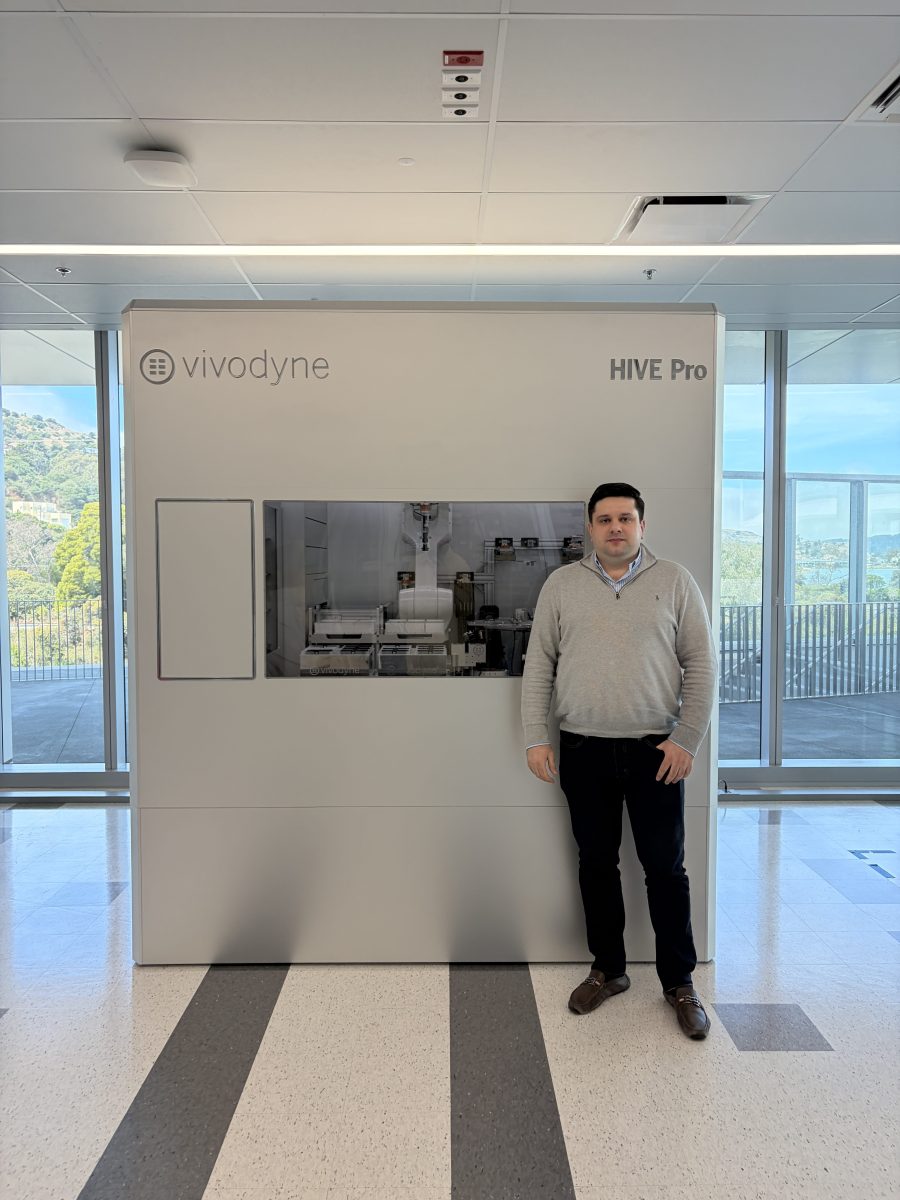
This is the lesson behind a biotech startup called Vivodyne. The company argues that AI drug discovery is limited not only by computing power or algorithms, but by the quality of the biological data available to train those systems. Its robotic laboratory, called HIVE, grows human tissues and tests how they respond to different treatments, creating data about cause and effect rather than only static observations. Source: TechCrunch
The same principle applies to your SME. Before you expect AI to recommend the next best action, you need reliable records showing what happened, what action was taken and what result followed.
TL;DR
AI is only as useful as the data and processes behind it. Vivodyne’s approach highlights the importance of collecting evidence about cause and effect, not just storing isolated records.
For your business, start by organising operational data, defining clear outcomes and testing AI on one repeatable workflow before expanding.
What This Means
Much of the current AI discussion focuses on models: how large they are, how quickly they respond and how many tasks they can perform. However, a model cannot reliably understand a business if it is trained on disconnected, outdated or ambiguous information.
In the medical field, a record may show that a cell is healthy or inflamed, but that snapshot does not necessarily explain how it reached that condition. The more valuable information may be the sequence: a treatment was applied, a biological change followed, and the result was measured. Vivodyne says its system is designed to observe these relationships by exposing living human tissue to different stimuli and tracking the outcomes. Source: TechCrunch
In business terms, this is the difference between knowing that sales dropped and knowing why sales dropped. A basic report may tell you that a product sold less this month. Better operational data may show that the item was unavailable for four days, a promotion changed customer behaviour, delivery delays caused cancellations or a particular sales channel attracted lower-quality enquiries.
AI should not be asked to guess your business reality when your systems can be designed to record it.
How This Applies to Malaysian SMEs
Consider a Malaysian wholesaler or distributor serving retailers across Selangor, Johor, Penang and Sabah. If orders arrive through phone calls, WhatsApp messages and email, your team may struggle to maintain one accurate view of demand. An AI assistant could summarise orders, but it cannot reliably forecast stock requirements if quantities, delivery dates and cancellations are recorded differently by each staff member. A central order form and consistent product codes give the AI cleaner information to work with.
For a restaurant, café or food manufacturer, the useful data is not only daily sales. You also need records about menu items, preparation times, ingredient usage, customer complaints, delivery delays and wastage. If a dish sells well but creates frequent delays during lunch, an AI system should be able to see both the demand and the operational effect. That requires linking sales records to kitchen and fulfilment information instead of keeping each activity in a separate notebook or application.
Service businesses face a similar issue. A renovation contractor, accounting practice, clinic or repair company may have customer enquiries stored in WhatsApp, appointments in a calendar and job notes in paper files. You may know how many enquiries came in, but not which response time, service package or follow-up method led to a confirmed booking. By recording these steps consistently, you create the cause-and-effect history needed for useful recommendations.
Malaysian SMEs also need to consider language and local operating conditions. Customer messages may mix Bahasa Malaysia, English, Mandarin or Tamil. Addresses may include informal landmarks, and delivery or service schedules can be affected by local traffic, public holidays and regional coverage. An AI tool trained on generic examples may miss these details unless your own business records capture them clearly.
A Simple Data-and-AI Readiness Framework
You do not need a laboratory or a large technical department to apply this lesson. Start with one workflow where the outcome can be measured. The table below gives practical examples.
| Business area | Record consistently | Useful outcome to measure |
|---|---|---|
| Sales enquiries | Source, response time, product interest and follow-up status | Enquiry-to-order conversion |
| Inventory | Opening stock, purchases, sales, damaged items and stock adjustments | Stockout frequency and forecast accuracy |
| Customer service | Issue type, first response, resolution and repeat contact | Resolution time and repeat complaints |
| Delivery | Promised date, dispatch time, arrival time and delivery exception | On-time delivery rate |
| Staff tasks | Assigned person, deadline, completion status and delay reason | Completion rate and bottleneck identification |
The numbers you select should come from your own operation. Avoid creating reports simply because a software package offers them. Choose measures connected to a business decision you already make each week.
Practical Takeaways
- Choose one workflow: Start with sales follow-up, stock management, customer support or appointment scheduling.
- Create one source of truth: Keep key records in a shared system rather than across personal spreadsheets and chat histories.
- Standardise basic fields: Use consistent customer names, product codes, statuses and dates.
- Record outcomes: Do not only record what staff did; record whether the customer replied, the order was confirmed or the issue was resolved.
- Track exceptions: Delays, cancellations, returns and stock adjustments often contain the most useful operational information.
- Review data quality weekly: Assign one person to check missing fields, duplicate records and inconsistent entries.
- Test AI on low-risk tasks first: Use it to summarise enquiries, identify overdue follow-ups or draft internal reports before giving it control over sensitive decisions.
- Keep human approval: Staff should review customer-facing messages, supplier decisions and operational recommendations.
- Protect personal information: Limit access to customer and employee data, and check how any software stores and processes it.
What Better Data Looks Like in Practice
Suppose you want an AI assistant to identify missed sales opportunities. A weak setup gives it a list of unanswered WhatsApp messages. A stronger setup includes the enquiry date, customer type, requested item, response time, quoted amount, follow-up attempts and final outcome.
With the stronger records, the system may identify that enquiries received after office hours are often answered the next morning, that certain products generate repeated questions, or that leads from one channel need a different follow-up message. The AI is not magically discovering the truth. It is finding patterns in a process your team has recorded properly.
This distinction matters because AI output can sound persuasive even when the underlying evidence is incomplete. Your team should ask: What records support this recommendation? What information is missing? Has this suggestion worked before?
The Bigger Picture
The long-term value of AI for SMEs will depend less on adopting every new application and more on building a business that can learn from its own activity. Companies with clean, connected records will be better positioned to automate routine work, compare performance and identify operational risks.
The biotech example also shows why cause-and-effect data matters. Vivodyne says existing biological models often rely on static snapshots, while its automated experiments are intended to show how tissue changes after a specific stimulus. The company reports predictive accuracy figures for several tissue models, including 94% for liver toxicity testing, 96% for airway tissue behaviour and 100% concordance in tests involving 20 chemotherapy drugs; these are company-reported results and should be interpreted accordingly. Source: TechCrunch
Your business does not need to copy the scientific method exactly. But you can adopt the habit of connecting actions to outcomes. When you change your follow-up process, record what happened. When you adjust reorder levels, monitor stock availability. When you introduce a new customer service script, check whether resolution improves.
Start small, measure honestly and improve the record-keeping before adding more automation. That approach gives you a clearer view of what AI can genuinely help with—and where your team still needs to make the decision.
Ready to Streamline Your Operations?
Your business should run itself. AutoRunBiz deploys AI agents to automate your daily operations — WhatsApp orders, invoicing, customer follow-ups, and accounting. Book a free 15-min ops audit to see where automation fits your business →