
Why a Tesla Hardware Dispute Should Matter to Your SME
A Tesla owner in Poland has reportedly upgraded a vehicle from its older self-driving computer to newer hardware through a largely DIY process. The project is unfinished, and it does not prove that every Tesla can be upgraded safely or legally. However, it raises a business question that applies far beyond electric vehicles: when technology changes faster than customer expectations, who is responsible for making yesterday’s promise work today?
For a Malaysian SME, this is not an abstract technology debate. You may already rely on a point-of-sale system, accounting platform, customer relationship management tool, delivery application, security camera network or automated chatbot. If that system becomes outdated, your customers still expect the service you promised. Hardware limitations, incompatible software and unclear upgrade policies can quickly become operational problems.
The Tesla story offers a useful reminder: before you adopt an AI or automation product, look beyond its current features. Ask how the system will be upgraded, what happens when the provider releases a better model and whether your business data, licences and workflows can move to the next version.
What Happened?
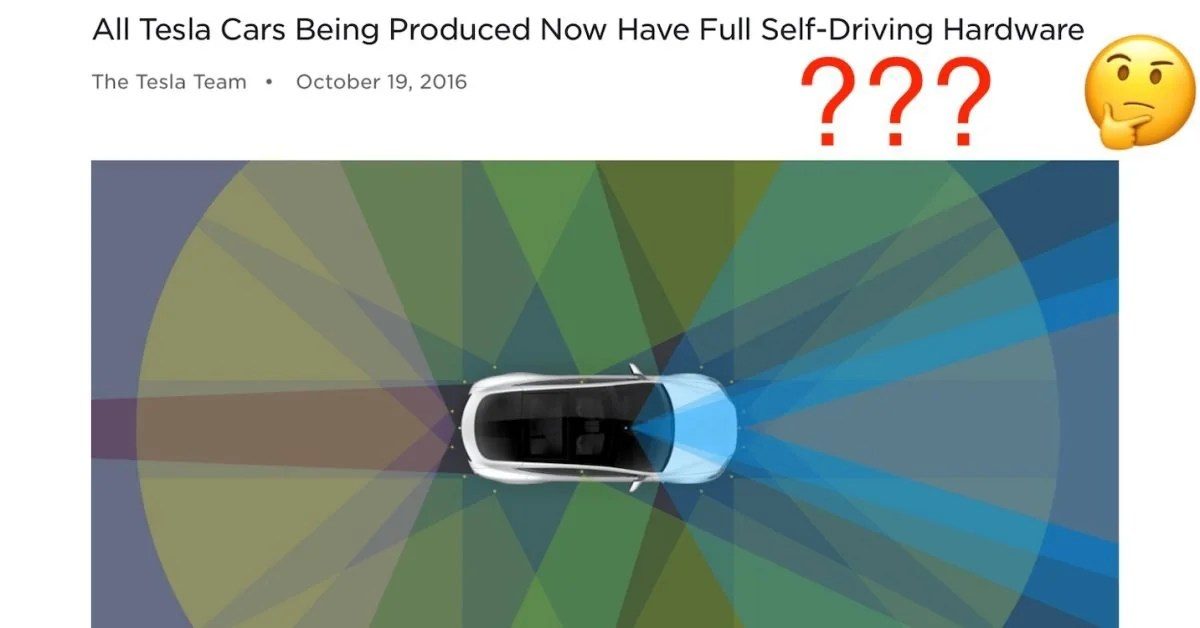
According to Electrek, Tesla has sold vehicles over several generations of self-driving hardware. The report says Tesla announced in 2016 that all newly produced cars had the hardware needed for full self-driving, but later hardware generations were introduced as the demands of the software became clearer.
The article explains that Tesla moved from HW1 to HW2 and HW3 before introducing HW4, also referred to as AI4. Owners who had purchased the company’s full self-driving package were offered some earlier hardware upgrades, but moving from HW3 to HW4 is more complicated because the cameras also need to be upgraded. Tesla has reportedly discussed “microfactories” in major cities for these retrofits, although the article says there has been no clear follow-up on that plan.
A Polish Tesla owner, Michal Gapiński, then attempted his own HW3-to-HW4 retrofit. He described the work as manageable, involving light electronic control-unit modification and physical mounting work. The project was still incomplete when the report was published, and no independent confirmation showed that every feature was functioning. Nevertheless, the experiment prompted the question of whether a manufacturer could create a repeatable upgrade process at scale.
The dispute is also linked to customer expectations, subscription changes and legal action. The article reports that Tesla has faced small claims cases and class-action lawsuits in several territories relating to the delivery of promised self-driving capability. These legal matters remain separate from the DIY experiment, but together they show how technical roadmaps can become customer-trust issues.
Why This Matters for Malaysian SMEs
Your business may not be building autonomous vehicles, but you face the same technology lifecycle problem. An AI chatbot may work well when your enquiry volume is low, then struggle when customers ask questions in Bahasa Malaysia, English, Mandarin or Tamil. An accounting platform may support your current processes but fail to connect cleanly with e-Invoice requirements, payment records or inventory data. A delivery dashboard may work for one outlet but become unreliable when you expand to several locations.
The central lesson is to separate a product’s current capability from its future promise. If a vendor says an AI assistant will soon handle sales qualification, appointment booking and customer support, ask what it can do now. Request a demonstration using your real business scenarios: a Malaysian address, a mixed-language enquiry, a refund request, an out-of-stock item and a customer asking for a quotation. Do not make an important operational decision based only on a roadmap or marketing statement.
You should also check whether your technology can be upgraded without rebuilding your entire operation. A camera system that supports open standards may be easier to replace than a closed system. A CRM that allows data export may protect you if you change providers. An automation platform with application programming interface access can connect to new tools more easily than one that only works within a single vendor’s ecosystem.
| Technology question | What you should check |
|---|---|
| Upgrade path | Can the provider update the system remotely, or will equipment need to be replaced? |
| Data portability | Can you export customer, sales, inventory and workflow data in a usable format? |
| Feature claims | Which capabilities are available now, and which are only planned? |
| Integration | Can the tool connect with your accounting, payment, delivery and communication systems? |
| Support responsibility | Who handles faults, upgrades and compatibility issues after deployment? |
A Practical Upgrade Policy for Your Business
Start by listing the systems your business cannot operate without. For a café, this may include the point-of-sale terminal, kitchen display, stock records and delivery integrations. For a service company, it may include the booking calendar, quotation workflow, invoicing system and customer communication history. Record the hardware, software version, vendor, renewal terms and person responsible for support.
Next, classify each system according to business risk. A temporary issue with a marketing dashboard is inconvenient. A failure in payment collection or appointment scheduling can directly interrupt operations. High-risk systems need documented backups, clear recovery procedures and a tested manual process.
When selecting an AI tool, run a small pilot before connecting it to every customer channel. Give it a limited knowledge base and establish an escalation rule. If the system is uncertain, it should send the enquiry to a human instead of inventing an answer. This is especially important for product availability, delivery commitments, personal-data requests and regulated information.
Do not ask only, “Can this technology do the job?” Ask, “What happens when the technology changes, fails or reaches its limit?”
Keep a record of the promises made during sales discussions. Save the proposal, product documentation and implementation scope. Define measurable acceptance criteria, such as response accuracy, successful integration events, report availability and recovery time. This gives you a practical basis for reviewing whether the system is delivering what your business needs.
The Bigger Picture
The Tesla case reflects a wider shift in technology. Software is increasingly dependent on specialised hardware, cloud services, data pipelines and continuously changing AI models. A business may buy a system today but receive a different experience later because the model, operating system, security requirements or connected services have changed.
This creates a new form of vendor risk. In the past, replacing a computer or printer was relatively straightforward. Today, a business system may contain customer history, automation rules, staff permissions and integrations with several other platforms. An upgrade that appears simple from the outside can affect the entire workflow.
At the same time, community experiments and DIY projects can reveal possibilities that formal product teams have not delivered. That does not mean you should copy an unverified modification into your business. It means you should encourage careful testing, document alternatives and avoid assuming that only the original supplier can solve every problem.
For Malaysian SMEs, the strongest strategy is practical rather than flashy. Choose tools that support open connections, exportable data, clear documentation and responsive local support. Review technology promises during every quarterly planning session. Train staff on fallback procedures. Most importantly, make sure automation improves a process you already understand instead of hiding a broken process behind a new interface.
Tesla’s hardware debate is ultimately about trust between a technology provider and its customers. Your SME can avoid a similar problem by making upgradeability part of every technology decision. The right question is not whether a product looks advanced today. It is whether your business can continue serving customers when the next version arrives.
Ready to Streamline Your Operations?
Technology moves fast. Your operations should keep up. AutoRunBiz builds AI systems that run your daily workflows — from WhatsApp order capture to accounting. Book a free 15-min ops audit →