
Why OpenAI’s teen safety move matters to your business
OpenAI has launched a ChatGPT experience designed specifically for teenagers, adding safety controls and learning features after years in which young people were already using general-purpose AI tools. For Malaysian SME owners, this is more than a product update. It is a reminder that AI adoption is moving faster than most workplace policies, training programmes and family safeguards.
If your business employs part-timers, interns, apprentices or young workers, they may already be using AI to draft messages, answer questions, create content or complete assignments. Your responsibility is not to ban every tool. It is to create clear boundaries around privacy, accuracy, learning and responsible use. The new teen-focused product shows where the AI industry is heading: more age-aware experiences, stronger controls and greater pressure on organisations to explain how AI should be used.
What Happened
OpenAI announced ChatGPT for Teens with additional safety measures intended to reduce exposure to harmful or developmentally inappropriate content. The announcement followed lawsuits and public concerns about chatbot safety, including claims involving teen mental health. TechCrunch reported on the launch and the concerns surrounding it.
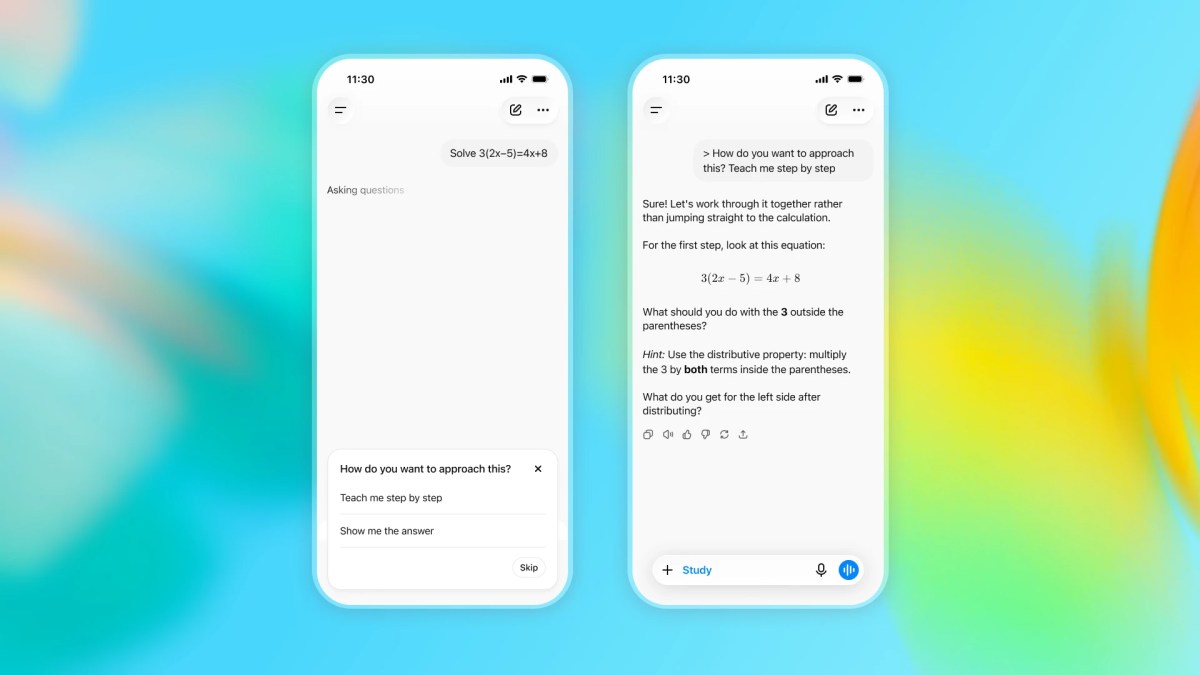
The new experience includes Study Mode, which is designed to guide teenagers through questions and step-by-step explanations instead of simply producing a final answer. It also includes homework reminders that may appear when the system believes a user is attempting to obtain an answer without understanding the subject. Other features reportedly include quizzes, learning visualisations and settings that allow parents or guardians to decide when Study Mode should be enabled by default. These details were reported by TechCrunch.
OpenAI says age-appropriate protections will be enabled by default in the teen experience. Parents will also be able to use family tools, safety notifications and Quiet Hours. The company says its approach is informed by developmental science and expert guidance through its Under-18 Principles in the Model Spec. OpenAI also announced a partnership with CodeAI to help teenagers understand how AI works and how to question and direct it, while its teacher-focused offering provides institution-managed access for schools, according to TechCrunch.
At the same time, the launch raises an important question: how effectively can these protections prevent users from bypassing them? Teenagers are often skilled at working around digital restrictions, so real-world testing will matter. The timing is also significant because ChatGPT first launched in late 2022 and had reached 900 million weekly users before safeguards specifically designed for teenagers were introduced, according to TechCrunch.
Why This Matters for Malaysian SMEs
Many Malaysian SMEs interact with teenagers and young adults without thinking of themselves as technology educators. A tuition centre may use AI to create revision questions. A retail business may hire school leavers during weekends. A small marketing agency may supervise interns who use AI to draft captions. A family business may allow younger staff to access shared devices or business accounts. In each case, the business can become part of a young user’s AI environment.
You need practical rules that match the actual work. For example, a young staff member may use an AI tool to translate a customer reply into Bahasa Malaysia, Mandarin or English. That can be useful, but the employee still needs to check tone, names, product details and cultural context. A café may ask AI to create social media ideas, but someone should verify claims about ingredients, halal status or promotions before publishing. A small online seller may use AI to summarise customer feedback, but personal information should not be pasted into a public chatbot.
The teen launch also highlights a broader management issue: AI should support learning, not replace it. If you employ interns, do not judge their ability solely from AI-assisted work. Ask them to explain the reasoning, show drafts and identify what they changed. This approach is useful even when the employee is not a teenager because it tests understanding and reduces the risk of blindly accepting incorrect output.
For a small business, responsible AI use starts with a simple question: can the employee explain what the tool produced, why it is suitable and what information was shared with it?
There is also a direct customer-safety angle. If your business serves families, schools or young customers, you should know whether your chatbot, booking assistant or automated messaging system can produce unsuitable responses. A human escalation route is essential. A customer should be able to reach a staff member when the system misunderstands a sensitive question, especially where health, education, finance or personal welfare is involved.
What you should do next
| Business area | Practical action |
|---|---|
| Interns and young workers | Provide a short AI-use briefing covering verification, privacy and acceptable tasks. |
| Customer data | Do not paste identity numbers, private conversations, passwords or confidential documents into unapproved tools. |
| Content creation | Require human review for advertisements, product claims, translations and public replies. |
| Training | Ask staff to explain AI-assisted work and retain important drafts or approval records. |
| Customer-facing automation | Include a clear handover to a human employee for sensitive or uncertain requests. |
| Family-oriented services | Review whether your digital channels are suitable for younger users and whether supervision is needed. |
The Bigger Picture
The introduction of a separate teen experience suggests that AI products will increasingly be designed around age, context and risk rather than treating every user in the same way. This may eventually influence workplace tools, education platforms, recruitment systems and customer-service software. SMEs should expect more questions about who is allowed to use AI, what the system can access and how decisions are reviewed.
It also demonstrates why software settings alone are not enough. A safety feature can reduce risk, but it cannot replace good supervision, digital literacy or clear accountability. OpenAI’s teen safeguards may evolve as users test their limits, and the effectiveness of those safeguards will need continued evaluation. The same principle applies to your business automation projects: launch with controls, monitor real usage and improve the workflow when people find unexpected ways around it.
For Malaysian businesses, the most useful response is not to wait for a perfect AI policy. Start with a one-page internal guide. State which tools are approved, what information must never be uploaded, which tasks require human approval and how staff should report a harmful or inaccurate response. Keep the language simple enough for an intern and specific enough for a manager.
As AI becomes normal in school, work and daily life, your competitive advantage will not come from using the tool blindly. It will come from building reliable processes around it. Whether you run a workshop, agency, tuition centre, retailer or professional practice, safe adoption helps you protect customers, teach younger workers good habits and make automation genuinely useful.
Ready to Streamline Your Operations?
Technology moves fast. Your operations should keep up. AutoRunBiz builds AI systems that run your daily workflows — from WhatsApp order capture to accounting. Book a free 15-min ops audit →