
Why Your Business Information Needs More Context
You may already have plenty of information inside your business: customer records, sales updates, product lists, staff instructions, project documents and shared folders. Yet information alone does not always help your team make better decisions.
The problem is often context. A staff member sees a product in a shared list but does not know why it was selected. A salesperson reads a customer note but cannot tell whether it is a current request or an old preference. A new employee opens a procedure document but does not understand which parts are most important.
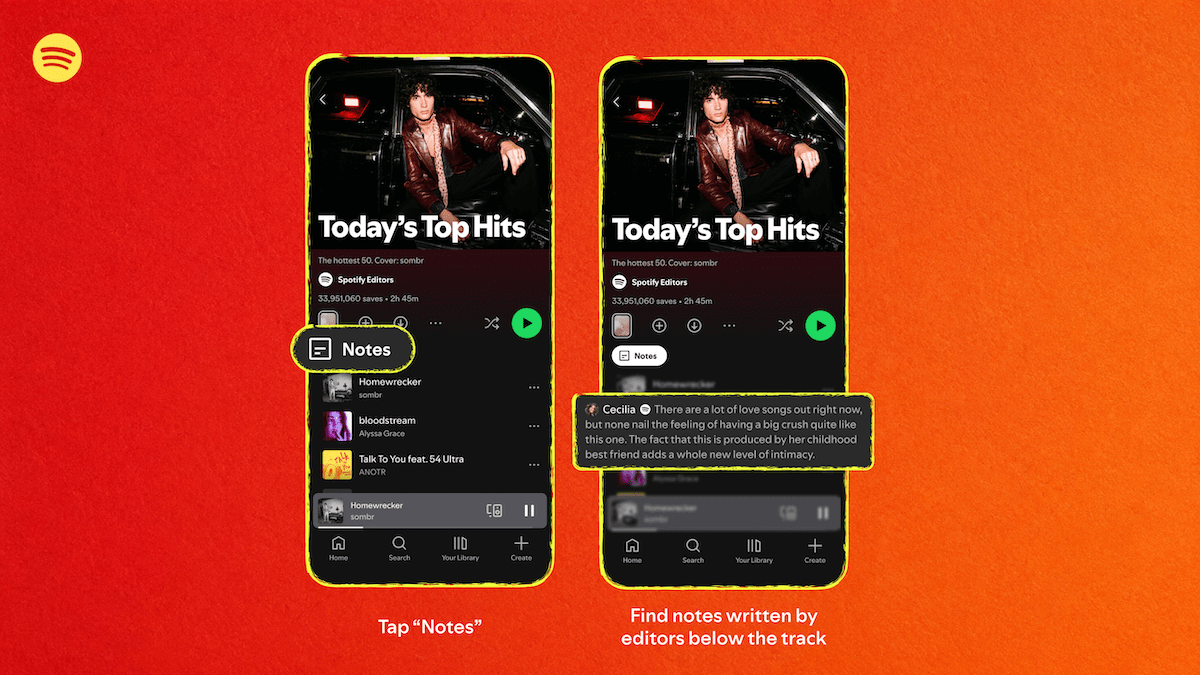
Spotify’s new Playlist Notes feature shows how a simple explanation can make shared content more useful. Users can add notes explaining why a song, podcast episode or audiobook appears in a playlist. Spotify editors can also explain why they selected particular tracks for editorial playlists. The principle is straightforward: when people understand the reason behind a recommendation or decision, they can use it with greater confidence.
TL;DR
Small businesses can apply the same idea by adding short explanations to shared business information, not just storing names, files or status labels.
Use notes to record the reason, intended action, owner and next review date so your team spends less time asking for clarification.
What This Means
Spotify announced Playlist Notes on 17 August 2026, building on its User Notes feature for individual tracks. Users can add context to songs, podcast episodes and audiobooks in playlists they own or collaborate on. Anyone who can view the playlist can see the note. Source: TechCrunch
Spotify is also adding notes to selected editorial playlists, allowing its editors to explain their choices. Editor Profiles show an editor’s top tracks, albums and playlists. According to the report, user-created notes are rolling out on iOS and Android in more than 100 markets, while editor notes and profiles are initially available in selected countries for users aged 16 and above. Source: TechCrunch
This is not mainly about music. It is about making shared content more human and understandable. A list tells you what is included. A note can tell you why it is included, who it is for and what you should do next.
A list helps people find information; context helps them use it correctly.
For an SME, this could mean adding a short explanation to a sales lead, a purchase request, a customer complaint, a social media draft, a stock item or a task assigned to a staff member. The note does not need to be long. In many cases, one or two clear sentences are enough.
How This Applies to Malaysian SMEs
1. Sales teams can explain customer intent. Imagine you run a renovation company in Johor Bahru. Your sales pipeline shows a lead called “Mr Lim – kitchen project.” That label is not enough for another staff member to act confidently. A useful note could say: “Interested in a dry kitchen renovation for a condominium unit; prefers minimal design; follow up after the management approval.” This gives the next person a starting point without requiring a separate phone call to the original salesperson.
The same approach works for wholesalers, agencies, tuition centres and service businesses. When you record a lead, add the reason the customer contacted you, the specific need discussed, the decision-maker involved and the next action. This reduces vague follow-ups such as “check with customer” and helps your team provide a more consistent experience.
2. Retail and food businesses can record why products or promotions were selected. If you operate a café in Penang, your shared promotion calendar may list a weekend set, a festive campaign or a new menu item. Add a note explaining the intended customer group, the sales objective and any preparation requirement. For example: “Promote this set to office workers during weekday lunch; prepare ingredients before 10.30am; highlight takeaway availability.”
This makes the campaign easier for front-counter staff, kitchen staff and social media staff to understand. It also preserves your reasoning after the campaign ends. When you plan the next promotion, you can compare the original intention with the result instead of relying on memory.
3. Service businesses can make handovers clearer. In an air-conditioning maintenance company, a job record might show a customer address, equipment type and appointment date. A context note could add: “Customer reported unusual noise after heavy rain; check outdoor unit and confirm whether the issue affects one room or the whole office.” That detail helps the technician prepare and helps the customer service team answer questions accurately.
For Malaysian SMEs with small teams, this is particularly useful because one person may handle sales, scheduling and customer communication. When a job moves between people, the business should not lose the story behind it. A structured note keeps the important background attached to the work.
4. Managers can explain priorities instead of only assigning tasks. A task labelled “update stock list” may be completed slowly because the employee does not know why it matters. A better note could say: “Update fast-moving items before Friday’s supplier order so we do not miss weekend demand.” The task now has a purpose and a deadline connected to business activity.
This can also help remote and multilingual teams. Clear written context reduces dependence on informal conversations, especially when staff work different shifts or are not always comfortable asking questions. Keep the wording simple, specific and respectful.
A Simple Context Format for Your Business
You do not need to copy Spotify’s exact feature. You can introduce the same habit in your existing CRM, project management tool, shared spreadsheet or business automation system. Use a short format that staff can repeat consistently.
| Field | Question to answer | Example |
|---|---|---|
| Reason | Why is this item here? | Customer requested a faster delivery option |
| Audience | Who is this for? | Existing customers in Klang Valley |
| Action | What should happen next? | Call to confirm delivery slot |
| Owner | Who is responsible? | Farah from customer service |
| Review | When should it be checked? | Before the next weekly meeting |
The important point is not to create more paperwork. The point is to prevent repeated questions and avoid decisions being separated from their original reasoning.
Practical Takeaways
- Add a short “why” note to important sales leads, tasks, campaigns and customer cases.
- Record the next action, not just the current status.
- Name the intended customer group when creating a promotion or content item.
- Include useful customer preferences, but avoid storing unnecessary sensitive information.
- Use one standard note format across your team.
- Ask staff to update context when a decision changes.
- Review notes during weekly operations meetings and remove outdated instructions.
- Connect notes to the relevant record so staff do not need to search through separate chats.
The Bigger Picture
The long-term lesson from Playlist Notes is that digital tools are moving beyond simple storage and display. People want to understand the thinking behind recommendations, selections and decisions. Spotify’s reported scale—more than 300 million subscribers and 777 million monthly active users in its second-quarter update—shows why personal and editorial context can matter across a large platform. Source: TechCrunch
For your business, the same principle becomes more valuable as your team grows. With one or two employees, you can explain everything verbally. With ten or twenty employees, that approach becomes unreliable. People are absent, new staff join, responsibilities move and customer expectations continue. Written context helps your operating knowledge stay inside the business.
It also supports better automation. An automated reminder can tell a salesperson to follow up, but a useful note can explain what to discuss. A workflow can assign a task, but context can show the expected outcome. Automation handles the movement of information; good notes preserve the judgement behind it.
Start with one area where your team repeatedly asks the same questions. Add a simple context field, use it for two weeks and observe whether handovers improve. You do not need long reports. You need timely explanations attached to the information your staff already use.
Ready to Streamline Your Operations?
Your business should run itself. AutoRunBiz deploys AI agents to automate your daily operations — WhatsApp orders, invoicing, customer follow-ups, and accounting. Book a free 15-min ops audit to see where automation fits your business →