
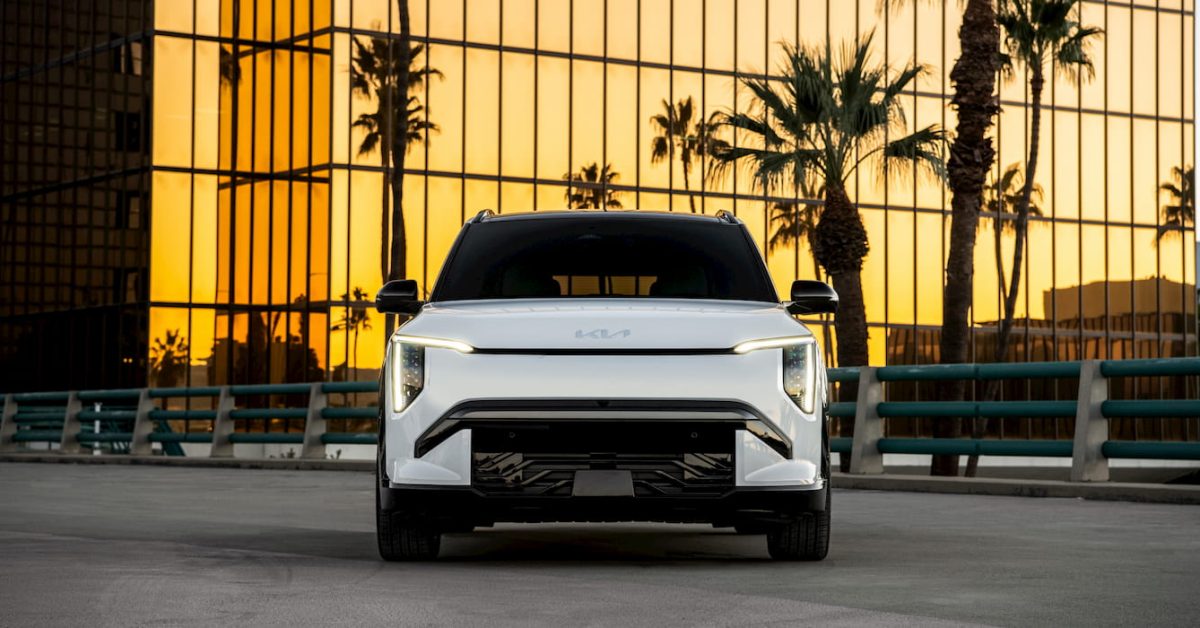
The Kia EV3 Just Reset the Electric Car Conversation
Your delivery van just crossed 180,000 km. The question of what replaces it has started creeping into your conversations — and whether the next vehicle should be electric. You’ve seen EVs parked outside shops in Petaling Jaya and Penang, but the price tags in Malaysia still feel out of reach for a business that counts every ringgit.
Then consider this: Kia announced the EV3 in the United States at USD 29,890 — its most affordable EV ever, according to Electrek. In Canada, it’s the lowest-priced electric vehicle on the entire market per the same report. That’s a signal for Malaysian business owners. Not because you’re shopping in North America, but because global car pricing always echoes into our market eventually.
TL;DR: Global EV prices have crossed the mainstream affordability threshold. The Kia EV3 launching below USD 30,000 in the US shows that electric vehicles are becoming normal business equipment, not premium toys. Malaysian SMEs can expect similar models to reach our showrooms within a few years — and can start preparing now by tracking fleet usage, understanding charging needs, and identifying which vehicles should go electric first.
What This Means
Let’s strip the headline down. Kia has launched the EV3, a compact electric SUV, in North America. The base model starts at USD 29,890 in the US and CA$36,995 in Canada, as Electrek reports. It’s available with a 58.3 kWh battery giving an EPA-estimated 221 miles (356 km) of range, or a larger 81.4 kWh battery delivering up to 321 miles (517 km) per the same article.
None of that, on its own, changes your business. But step back. The EV3 is cheaper than the Chevy Bolt EV and the Nissan LEAF, both around USD 30,000 — and it offers longer range and is the only one of the three with all-wheel drive according to Electrek. In other words, the newest EV on the block is also the cheapest and the most capable. That’s what a maturing market looks like.
The EV3 also comes standard with vehicle-to-load (V2L), meaning the car can power external devices, plus one-pedal driving and smart cruise control per Kia’s announcement as covered by Electrek. It has a native NACS port, so it plugs into Tesla Superchargers without an adapter as Electrek notes. These aren’t luxury extras. They’re standard equipment on Kia’s most affordable car in America.
The EV3 matters less than what it signals: the electric vehicle has stopped being a premium product and is becoming a commodity — and commodity technology always finds its way to cost-sensitive markets.
How This Applies to Malaysian SMEs
Car pricing doesn’t stay inside one country’s borders. When mainstream automakers price an EV aggressively in developed markets, Southeast Asia usually follows two to four years behind. Think about how BYD entered Malaysia and forced established brands to respond with sharper pricing. The same pressure will build as Korean and Japanese manufacturers push their compact EVs into export markets. The business owners who plan for that today will have the data and systems ready when affordable EVs actually land here.
Take the V2L feature alone. Malaysian SMEs run all sorts of mobile operations — catering trucks, event booths, mobile repair teams, photography crews. V2L turns a vehicle into a mobile power source. That means no generators, no extension cords stretched across event car parks, no negotiation with venue management for a power point. The vehicle your business already needs can replace equipment you currently purchase, maintain, and fuel.
Then there’s the data angle — the part most people overlook. The EV3’s cabin is built around nearly 30 inches of digital screens, with wireless Apple CarPlay and Android Auto and Kia’s connected-car cockpit as detailed by Electrek. For a business, a connected car is not just a nicer driving experience. It’s a fleet instrument. Every vehicle your team uses becomes a source of information: where it has been, how it was driven, when it needs servicing. For SMEs running deliveries, sales visits, or field service, this is visibility that was previously reserved for large companies with dedicated fleet managers.
The charging standard shift is another quiet signal. The EV3 uses a native NACS port, letting it charge at Tesla Superchargers directly according to Electrek. North America is consolidating around one charging standard. Malaysia currently uses CCS2, and that won’t change soon — but the lesson is that the charging ecosystem is still settling. For Malaysian SMEs, that means one thing: don’t commit to proprietary charging hardware at your business premises yet. Let the standards stabilise, then invest once.
So what should you do right now? Start documenting how your vehicles are actually used. If you run a delivery fleet, log the routes, the daily distances, the idle time. This is the data you’ll need when you evaluate an EV for your business — and it will tell you which vehicle to electrify first. The smart play is to start with the vehicle that runs short, predictable urban routes, not the one doing 300 km of highway every day.
What the EV3’s Features Mean for Your Business
The table below maps the EV3’s standard features — as listed in Electrek’s coverage — to practical business uses.
| EV3 Feature | What It Does | Business Relevance |
|---|---|---|
| Vehicle-to-load (V2L) | Powers external devices from the car’s battery | Mobile catering, events, and on-site work without a generator |
| Connected car cockpit | Nearly 30 inches of screens with wireless phone integration | Real-time fleet data, navigation, and vehicle health reports |
| Native NACS port | Charges at Tesla Superchargers without an adapter | Simpler charging access; signals global standard consolidation |
| Smart cruise control | Adaptive speed and following distance | Safer highway travel for delivery and sales teams |
| Two battery options | 58.3 kWh (221 miles) or 81.4 kWh (321 miles) | Match range to your actual routes, not marketing numbers |
Practical Takeaways
- Watch the Malaysian EV market over the next 12 to 24 months for compact EV launches from mainstream brands like Kia, Hyundai, and Nissan.
- Start logging your fleet’s daily routes and distances today — this is the data you’ll need when you evaluate your first EV.
- Identify which vehicles run short, predictable urban routes. Those are your first EV candidates.
- Hold off on installing proprietary charging hardware at your premises until Malaysian standards settle.
- If you run outdoor or mobile operations, plan for how V2L could replace your generator needs.
- When comparing EVs, prioritise models with standard smart features and connectivity over long-range specs you’ll never use.
The Bigger Picture
The EV3 is part of something larger: the computerisation of the vehicle. Every major automaker is now shipping cars that are, at their core, software platforms on wheels. They collect data, talk to scheduling systems, and report themselves for maintenance. A USD 29,890 car already includes the foundations of that — and that floor will keep rising.
The Malaysian SMEs that benefit won’t be the ones that buy the flashiest vehicles. They’ll be the ones that have already built the habits of tracking their operations, understanding their data, and automating their workflows — so that when affordable EVs arrive in Malaysian showrooms, they can integrate them without restructuring everything.
Ready to Streamline Your Operations?
Your business should run itself. AutoRunBiz deploys AI agents to automate your daily operations — WhatsApp orders, invoicing, customer follow-ups, and accounting. Book a free 15-min ops audit to see where automation fits your business →