
The $4B Question Nobody in Malaysia Is Asking
You’re running a business. You don’t have time to track American energy policy — you have payroll to meet, suppliers to chase, and customers to keep happy. But here’s the thing: energy is one of the few costs you can’t negotiate away. And this week, the US government quietly made the global energy picture more expensive and more chaotic.
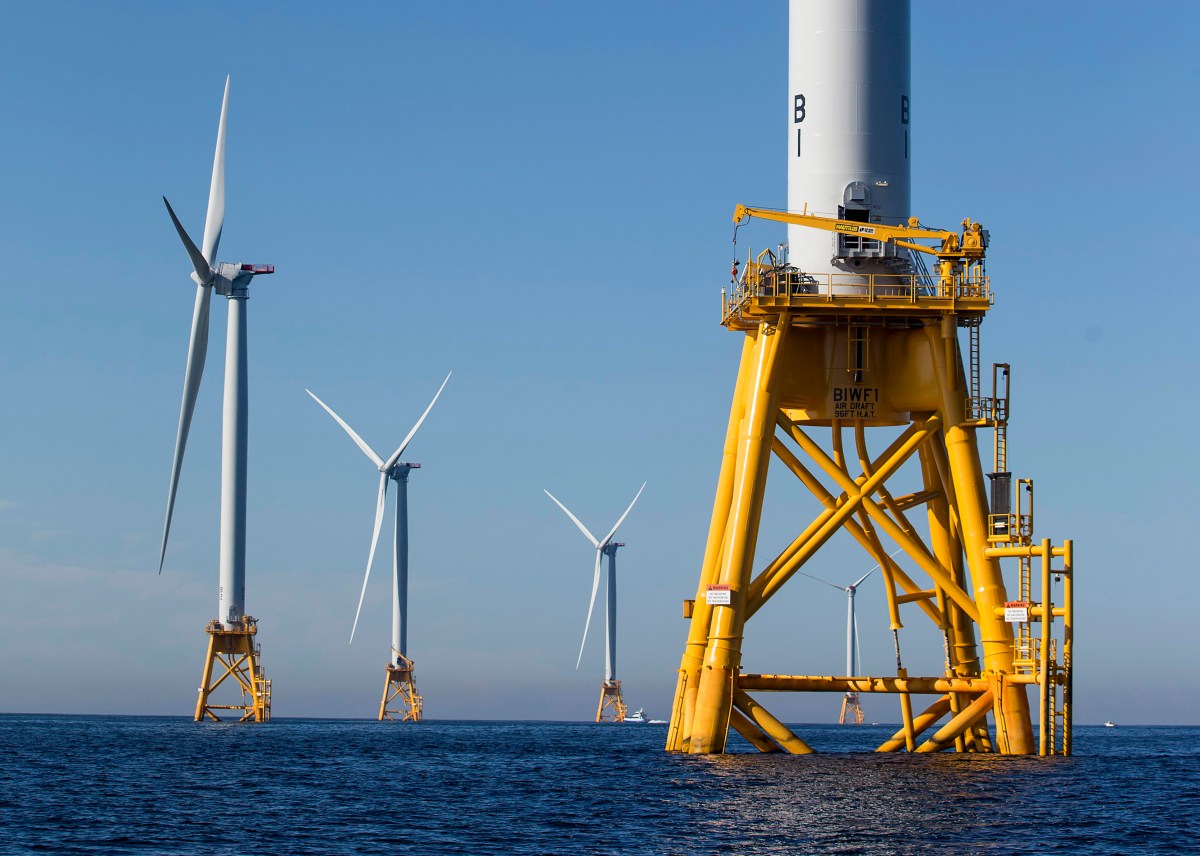
The Trump administration paid a German utility, RWE, $1.2 billion to cancel offshore wind leases off the coasts of California, Louisiana, and New York according to TechCrunch. That’s not an isolated deal — it’s part of a pattern where the US has now spent $3.93 billion convincing developers to abandon 12 offshore wind projects source. The clean power those farms would have produced is being replaced, at least partially, by some of the dirtiest and most expensive natural gas generation that exists: peaking power plants.
Why should a shop owner in Johor or a consulting firm in KL care? Because energy is a global market. When the world’s largest economy pays billions to make its own electricity system pricier, you feel the pressure in your next tariff adjustment, in your supplier’s fuel surcharges, and in the price of every imported component you buy.
TL;DR: The US is paying billions to cancel clean energy while Malaysian SMEs are trying to keep operating costs stable. You can’t control what happens in Washington, but you can reduce how much energy your business wastes — and automation is the fastest way to do it.
What This Means: Clean Power Cancelled, Dirty Power Preferred
Let’s break down what actually happened. RWE had secured leases to build offshore wind farms off three US states. The New York project alone would have generated more than 3 gigawatts — enough to power hundreds of thousands of homes per the reporting. Instead of building those, RWE will take the $1.2 billion payout and put $900 million into a stake in a Louisiana liquefied natural gas export terminal. The remaining $300 million goes to buying natural gas turbines for 15 peaking power plants source.
Peaking plants are the emergency generators of the energy world. They sit idle most of the year, then fire up on the hottest afternoons when air conditioners strain the grid. They are among the most expensive and most polluting natural gas plants to operate — and there’s now a backlog for turbines stretching into the early 2030s source. So the US is not just cancelling clean energy; it’s deliberately steering investment toward the costliest, dirtiest backup power available. That pattern pushes global natural gas demand, which affects prices everywhere gas is traded — including the fuel that generates a significant share of Malaysia’s electricity.
When a superpower spends billions to make its own electricity system more expensive, the shockwaves travel straight to your monthly utility bill.
How This Applies to Malaysian SMEs
Here’s where it gets practical for you. Malaysia’s electricity sector relies heavily on natural gas and coal for generation per the IEA. The US move toward more gas peakers and LNG exports keeps global gas markets tighter than they’d be under a clean-energy build-out. Malaysian SMEs don’t import this commodity directly — you pay for it indirectly through Tenaga’s tariff mechanism and through every supplier’s fuel costs. A tighter global gas market makes holding your electricity bill steady harder.
Second, Malaysia is on a different path — and that’s worth paying attention to. The government’s National Energy Transition Roadmap sets a target for renewables to reach roughly 40% of installed capacity by 2035, with focused programmes on solar and net energy metering via Reuters. If you’ve been hesitating on rooftop solar, don’t model your decision on US politics. The US keeps flipping between administrations and policies; Malaysia’s direction toward renewables has been steadier, and the economics of net energy metering for commercial premises — administered by SEDA — are worth calculating from your own consumption data source. Ironically, policy instability in the US makes domestic clean energy more attractive, not less.
Third, treat energy as a process problem. This is where automation stops being abstract and becomes practical. A typical SME loses a meaningful portion of its electricity consumption to waste: air conditioners running in empty rooms, compressors on overnight, fridges opened constantly, computers left on standby. You don’t need a multi-million-ringgit smart factory to fix this. You need simple automation — motion-sensing lights, smart thermostats that follow your business hours, auto-shutdown schedules for equipment, and energy monitoring that tells you which machine is eating the most power. These are modest, simple steps that reduce waste directly, and they insulate you from every future price shock, no matter which government makes the next energy decision.
Consider a simple example. A small food manufacturer runs its cold room on a fixed schedule. A timer that aligns the defrost cycle to off-peak hours, or a sensor that alerts you when the door is left ajar, reduces waste without affecting product quality. Or a retail shop in Penang: programmed lighting, air-conditioning that ramps down before closing, and a dashboard that shows daily consumption. None of this is exotic. It’s available to businesses your size, today.
| Lease or item | Worth noting |
|---|---|
| Total US payments to cancel offshore wind leases | $3.93 billion |
| Leases cancelled | 12 |
| RWE payout | $1.2 billion |
| RWE stake in Louisiana LNG terminal | $900 million |
| RWE gas turbines for peaking plants | $300 million, 15 plants |
| New York project capacity (cancelled) | More than 3 gigawatts |
| RWE’s new offshore wind capacity in the UK | 6.9 gigawatts |
Notice the last row. RWE isn’t abandoning offshore wind — it’s buying 6.9 gigawatts of capacity in a UK auction source. Capital doesn’t leave the sector; it just goes where policy is predictable. The lesson for Malaysian SMEs: stability and predictability in energy policy matter more than any single policy’s “direction.”
Practical Takeaways
- Keep your energy decisions tied to Malaysian data — your own bills, SEDA schemes, TNB tariff schedules — not US political headlines.
- Do a one-day energy walkthrough. Note everything that runs after you close: lights, pumps, servers, compressors. That list is your waste inventory.
- Automate what you find. Start with the cheapest wins: timer switches, motion sensors, thermostat schedules. You can do this without changing your operations.
- If your business runs heavy equipment, look at energy monitoring tools — most modern automation platforms can flag abnormal consumption in real time.
- Revisit rooftop solar with current numbers from SEDA’s net energy metering scheme source. The calculation in Malaysia hasn’t shifted because of US politics — it’s only become more relevant.
The Bigger Picture
The $3.93 billion this US administration spent isn’t just about wind farms. It’s the price of policy instability. Companies like RWE will keep building wind farms — just in places like the UK, where the rules don’t change every election cycle. The same logic applies to you: the more your business depends on decisions made by distant politicians, the more exposed you are.
Malaysia’s own energy transition will have bumps. Tariff adjustments, fuel price movements, grid constraints — none of it is perfectly smooth. But the direction — more renewables, more efficiency, more distributed generation — is more stable here than almost anywhere else in the region. SMEs that align themselves with that direction, by generating their own clean power, reducing waste, and automating consumption, will be in a stronger position than those who wait for certainty that never arrives.
You can’t control energy prices, but you can control energy waste. Every kilowatt you don’t need is a kilowatt no policy reversal can take from you.
So read the headline, shake your head, and get back to work. But let this be the nudge to look at your own electricity consumption with fresh eyes. The businesses that thrive over the next decade won’t be the ones that correctly predicted American politics. They’ll be the ones that built lean, automated operations capable of absorbing whatever the world throws at them.
Ready to Streamline Your Operations?
Your business should run itself. AutoRunBiz deploys AI agents to automate your daily operations — WhatsApp orders, invoicing, customer follow-ups, and accounting. Book a free 15-min ops audit to see where automation fits your business →