
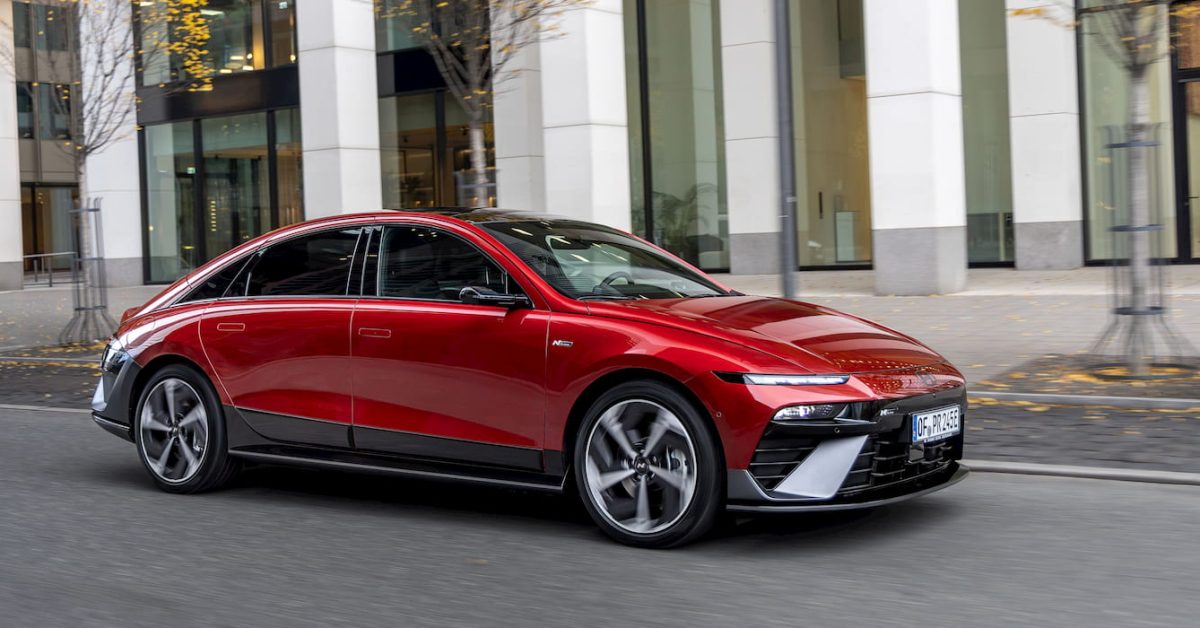
The EV That Finally Makes Range a Non-Issue for Your Business
You’re running a small business in Malaysia. Maybe you have a handful of delivery vans, a few sales reps driving across state lines, or just one company car that everyone fights over. Every time you think about going electric, the same questions come up: Will the car make it through the day? Where do we charge? How long will we be stuck waiting?
These are fair concerns. Range anxiety is real, especially if you’re using your vehicle for work, not just commuting to a nearby office. But here’s a piece of news that should catch your attention: Hyundai just launched an updated IONIQ 6 in Turkey that claims a 422-mile range — that’s roughly 680 kilometres by the WLTP standard. And it can charge from 10% to 80% in about 18 minutes on a fast charger. This isn’t just another car launch. It’s a signal that the practicality gap between electric and petrol vehicles is closing fast.
TL;DR
The new Hyundai IONIQ 6 offers up to 680 km of range, charges in about 18 minutes, and has a drag coefficient of just 0.21. For Malaysian SME owners, this means the “range excuse” for not electrifying your fleet is losing its power. Even if this specific model isn’t sold here yet, the technology will arrive — and you should be preparing for it now.
What This Means
Let’s break down the updates in plain language. The IONIQ 6 was already known for its aerodynamic, streamlined design. The updated version makes it even more efficient. Hyundai says they’ve refined the front and rear ends, added slim daytime running lights, and replaced the rear spoiler with an extended “ducktail” to improve airflow. The result is a drag coefficient of 0.21 — which is among the best in the industry. Lower drag means less energy wasted fighting the wind, which directly translates to longer range.
Underneath the skin, you get two battery options: a 63 kWh pack with a WLTP range of 521 km, and an 84 kWh pack that stretches to 680 km. The car also keeps its 800-volt electrical architecture, allowing super-fast charging at up to 350 kW. In practical terms, a quick lunch stop can take you from nearly empty to mostly full. There are also new interior features like a “bridge-type” center console, physical buttons (you know, the ones people actually like), and a dual 12.3-inch curved display with wireless Apple CarPlay and Android Auto. For business users, the Smart Regenerative System 3.0 is interesting — it adjusts regenerative braking based on navigation data, so the car learns your route and squeezes out more efficiency automatically.
If a car can charge to 80% in 18 minutes and cover 680 km on a single charge, the electric transition for commercial fleets goes from “a compromise” to “a genuine upgrade.”
How This Applies to Malaysian SMEs
Take a moment to look at your own delivery routes or field service schedules. How far do your vehicles travel in a typical day? The IONIQ 6’s 680 km range, even in real-world conditions with air conditioning and city traffic, likely covers most intercity routes within Peninsular Malaysia. Think about a run from Kuala Lumpur to Penang — roughly 360 km one way. A vehicle with this kind of range could do the round trip on a single charge, no detours to a charger needed. Or consider a daily loop around the Klang Valley covering multiple client sites, drop-offs, and pick-ups. For many SMEs, the daily mileage rarely exceeds 250-300 km. So an EV with 400+ km of effective range means you can run your entire workday without plugging in until you return to base.
Now let’s talk about the 18-minute charging time. Fast charging matters to business because time is not just money — it’s your promise to customers. If your team stops at a DC fast charger for 20 minutes, they can have a coffee, respond to messages, and use the restroom. That’s not a disruption; that’s a realistic break. For SMEs that operate delivery fleets, this is the difference between “we can’t afford downtime” and “we didn’t even notice the change.” The 800-volt architecture, the same tech found in premium EVs, is becoming more common in mainstream vehicles. Malaysia’s network of ultra-fast chargers is still growing, but the vehicles that can take advantage of them are arriving now.
Another angle: vehicle-to-load (V2L). The IONIQ 6 includes V2L, which means the car can act as a mobile power source. For a small business owner who does on-site work — think electrical services, mobile catering, photography, or even pop-up retail — having a 84 kWh battery on wheels can power essential tools, lighting, or brewing equipment. Imagine a food truck that doesn’t need a generator, or a mobile workshop that can run power tools in the field. This isn’t just about driving; it’s about the vehicle becoming part of your operational infrastructure.
Of course, the updated IONIQ 6 is launching in Europe and Turkey, not Malaysia. But history shows that what starts in Europe reaches Southeast Asia within a few years. Hyundai’s local operations already sell EVs like the Kona Electric and Ioniq 5 in Malaysia. The mass production of the more compact IONIQ 3 at Hyundai’s plant in Turkey is another signal — smaller, more affordable EVs are coming to global markets. As a Malaysian business owner, you should watch for announcements from your local distributors. When a car with this kind of range and charging speed lands locally, it could be a perfect fit for your fleet.
Practical Takeaways
- Map your real-world mileage. Before you dismiss EVs, track the daily distance of each vehicle for a week. You might be surprised to find that even a 400 km range covers 90% of your routes.
- Understand WLTP vs. real-world range. The 680 km figure is a standardized test. In Malaysian heat and traffic, expect maybe 80-85% of that. Still, that’s likely enough for most SME operations.
- Plan your charging points. If you install a mid-speed AC charger at your business premises, vehicles can top up overnight or during the day. Then the 18-minute fast charging is only needed for long trips.
- Watch for V2L opportunities. If you run a mobile or outdoor business, an EV that can power your tools becomes extra valuable. Check whether models you’re considering have this feature.
- Stay alert for local EV launches. Bookmark local Hyundai or other automaker sites, and don’t hesitate to contact them about upcoming models. The technology is moving faster than you expect.
The Bigger Picture
The updated IONIQ 6 is one example of a broader shift: electric vehicles are being designed for longer journeys and faster charging, not just city runs. The line between commercial and passenger vehicles is blurring, with features like V2L and navigation-based braking systems. For Malaysian SMEs, this opens possibilities that did not exist even a year or two ago. Fleet electrification can be a genuine option for reducing the complexity of fuel management, maintenance, and downtime — without forcing you to change your operational patterns.
But this isn’t just about the next vehicle you buy. It’s about how your business adapts. As charging infrastructure expands along the North-South Expressway and into urban centers, the practicality of EVs will only increase. The companies that start planning now — training drivers, installing chargers, adjusting route planning — will have a smoother transition. Those who wait may find themselves in a competitive disadvantage as more customers and partners expect greener, cleaner operations.
Let’s be realistic. This specific car may not be on Malaysian roads tomorrow. But the technology is already here, and every global launch brings it a step closer. As a busy SME owner, you don’t need to be an early adopter. But you should be an early planner. The next time you hear about a 680-km EV, don’t just think “wow” — think about what it means for your delivery schedule, your team, and your next business move.
| Specification | Value | Why It Matters for SMEs |
|---|---|---|
| Max WLTP range | 680 km (84 kWh battery) | Covers most intercity business routes in Peninsular Malaysia without a midday charge |
| DC fast charging speed | 350 kW, 10–80% in ~18 minutes | Meaningful stops for drivers, not hours waiting for a charge |
| Drag coefficient | 0.21 | Better aerodynamic efficiency = more range per kWh = fewer charging stops |
| Battery options | 63 kWh or 84 kWh | Lower-capacity battery may be enough for local city fleets; 84 kWh suits heavy mileage |
When a mainstream automaker can deliver a vehicle with this kind of combined range, charging speed, and efficiency, the practical barriers to EV adoption for Malaysian SMEs are becoming noticeably smaller. You don’t need a dedicated fleet of charging staff. You don’t need to overhaul your entire operation. You need to stay informed, do the math on your own mileage, and be ready when the right vehicle arrives in your market.
Ready to Streamline Your Operations?
Your business should run itself. AutoRunBiz deploys AI agents to automate your daily operations — WhatsApp orders, invoicing, customer follow-ups, and accounting. Book a free 15-min ops audit to see where automation fits your business →