
The 422-Mile EV Is Here — What It Means for Your Malaysian SME
You might think a Korean electric car launched in Turkey has nothing to do with running your SME in Malaysia. But look closer: Hyundai just unveiled the updated IONIQ 6 with a 422-mile range, and underneath its sleek body is a lesson in how automation and real-time data can keep your business moving with less downtime, lower waste, and fewer manual decisions. That’s not just a car story. It’s an operational story for every Malaysian business owner juggling fleets, deliveries, equipment, and energy costs.
What Happened
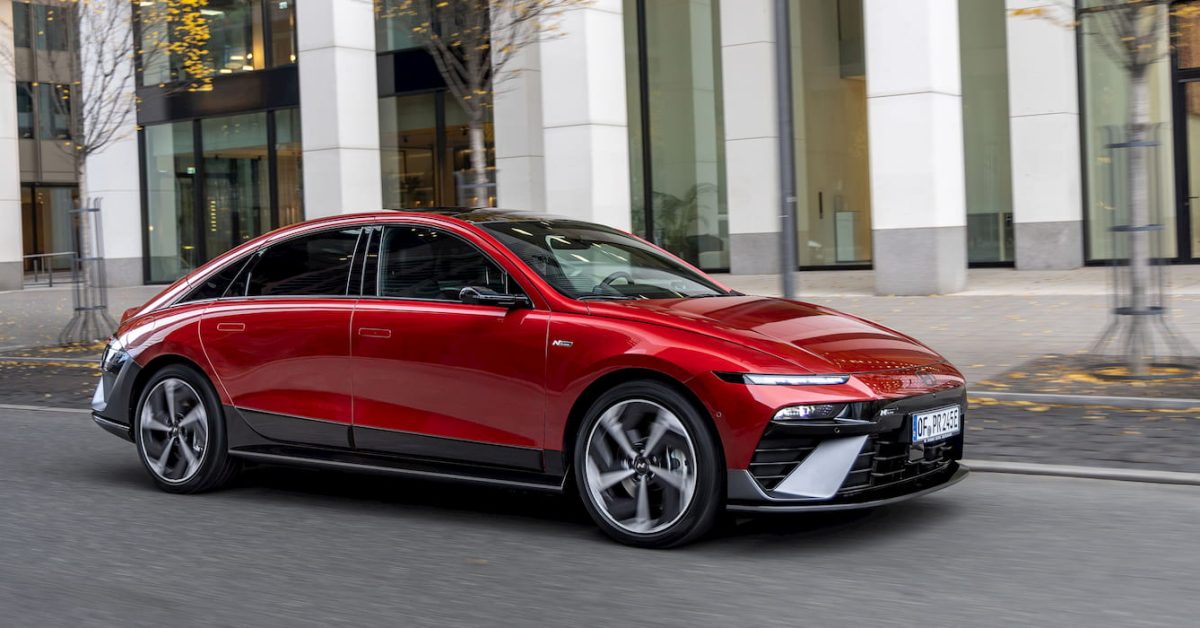
Hyundai officially launched the refreshed IONIQ 6 at a launch event in Turkey, part of its roll-out across Europe. According to Electrek, the car has been designed with “enhanced every line and detail,” including a drag coefficient of just 0.21, redesigned front and rear bumpers, and an extended ducktail replacing the spoiler. Inside, there are dual 12.3-inch curved displays, wireless Apple CarPlay and Android Auto, a digital side mirror, and a bridge-type center console with physical buttons.
More importantly for your business: two battery options deliver WLTP ranges of up to 323 miles (521 km) for the 63 kWh pack and 422 miles (680 km) for the 84 kWh pack. Thanks to the 800-volt architecture, the battery charges from 10% to 80% in about 18 minutes at DC fast-charging speeds of up to 350 kW. The facelift also introduces Smart Regenerative System 3.0, which adjusts regenerative braking based on navigation data, plus Digital Key 2.0, V2L, and Hyundai SmartSense safety features.
“Every line and detail” was re-engineered — and that’s exactly the mindset your SME needs for automating operations.
Why This Matters for Malaysian SMEs
Let’s make this practical: 680 km of range means a Kuala Lumpur-based company can reach Penang (about 350 km) and back on a single charge in ideal conditions. Or run multiple urban delivery loops in the Klang Valley across two or three days without plugging in. If you currently run a service vehicle that idles in traffic or waits for equipment, an EV with this kind of range removes “range anxiety” as an excuse to keep your fleet on liquid fuel. That directly affects how many jobs per day you can schedule and how many drivers you need on standby.
The 18-minute fast charging time is equally valuable. A driver on a long interstate route can stop for a break, and the vehicle goes from 10% to 80% in about the same time it takes to have a teh tarik and a quick lunch. That’s not just convenience — it’s predictable scheduling. Your operations team can treat charging stops like fixed waypoints, exactly how you treat fuel stops today. The difference is that charging reports can be pulled digitally, which means your accounts or logistics manager can automate expense records without manual petty-cash uploads.
The Smart Regenerative System 3.0 is the most SME-relevant innovation here. It uses navigation data to automatically adjust braking recovery when the car detects a curve, an intersection, or a vehicle ahead, rather than waiting for your driver to react. For your business, that’s the same idea as an automated workflow that detects a supply shortage and triggers a reorder before the warehouse actually runs out. You can reduce waste, save time, and let the system handle routine judgments based on historical data — only letting a human override when it really matters.
If you run a mobile business — think food trucks, on-site repair teams, or electrical services — V2L (vehicle-to-load) capability transforms the EV into a portable power station. You can run tools, devices, or signage directly from the car, eliminating the need for a separate generator. That’s a capability your competitors are unlikely to offer, and it’s an easy differentiator when bidding for remote work.
Features Worth Watching, Applied to Your Operations
| Feature | What It Means for Your SME |
|---|---|
| Miles of range (up to 422 miles / 680 km) | Fewer interruptions; longer routes without refueling/recharging. |
| 10–80% charge in about 18 minutes | Short, predictable stops fit into standard driver schedules. |
| Drag coefficient 0.21 | Better energy efficiency, reducing operational running costs per kilometer. |
| Smart Regenerative System 3.0 | Predictive decisions based on map data — a blueprint for automated workflows. |
| Digital Key 2.0 + V2L | Phone-based access control and portable power for on-location work. |
The Bigger Picture
Automation is often thought of as software running in the background — invoices, chatbots, scheduling. But the physical world is moving in the same direction. The IONIQ 6 isn’t just an EV; it’s a connected device that generates data about routes, energy consumption, charging patterns, and driver behavior. When you integrate that data with your existing automation tools — booking systems, CRM, expense management — you get a closed loop. The car tells you when it needs service, the system schedules the workshop appointment, and your driver never has to lift a phone.
For Malaysian SMEs, the window to plan for EV integration is now. While the updated IONIQ 6 isn’t confirmed for Malaysia, Electrek notes that the standard IONIQ 6 has been discontinued for the US market, meaning Hyundai is prioritizing Europe and other markets. That tells you the company is all-in on efficient, software-driven EVs in exactly the compact, space-conscious segment that suits Malaysian cities. As the car becomes more common in our region, the charging infrastructure and after-sales support will grow alongside it. When you’re ready to replace your small fleet, you want your operational systems to be ready too — otherwise you end up with vehicles that are smarter than your management software.
The 422-mile range isn’t the headline. The headline is that a mass-production car now carries enough computing power to make driving decisions on your behalf. Your SME can apply that same logic: let automation handle the predictable parts of your business — dispatch, bookings, reminders, inventory checks — while your people focus on what only humans can do. The IONIQ 6 is just a beautiful, efficient reminder that a future-proof business is one that stops doing repetitive work manually.
Want to see how route optimization and work order automation can prepare your SME for the connected, electric era? AutoRunBiz helps Malaysian businesses build exactly those systems — before the metal arrives.
Ready to Streamline Your Operations?
Technology moves fast. Your operations should keep up. AutoRunBiz builds AI systems that run your daily workflows — from WhatsApp order capture to accounting. Book a free 15-min ops audit →