
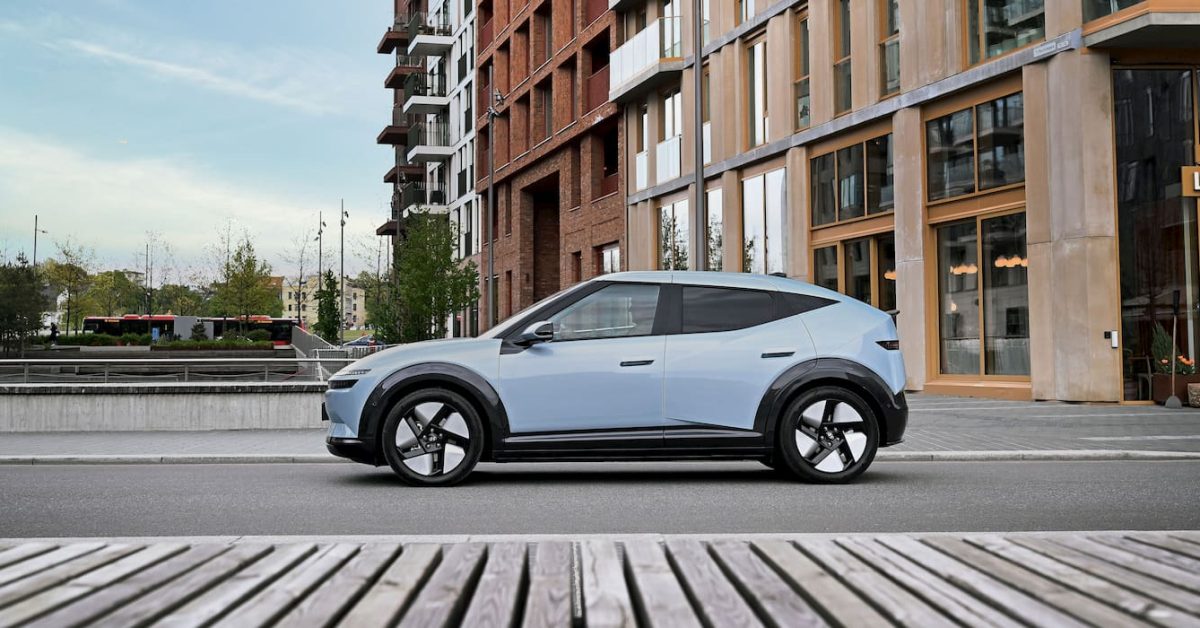
Hyundai’s IONIQ 3 Rollout Is a Discipline Playbook — And Malaysian SMEs Should Read It Carefully
When the chairman of one of the world’s largest automakers flies thousands of kilometres to personally inspect a factory floor ahead of a product launch, that is not a photo opportunity. Hyundai Motor Group Executive Chair Euisun Chung recently visited the company’s plant in Izmit, Turkey, to review preparations for the IONIQ 3’s mass production (source). He walked the line from body production to final assembly, and also toured Hyundai Mobis’ battery system facility. For a Malaysian SME owner, this is not just automotive news. It is a case study in how serious companies bring a product to market — and the parallels with how you should launch a new service, a website, or an automation system are direct and practical.
What Happened
Hyundai is preparing to open orders for the IONIQ 3 through the second half of 2026, with mass production scheduled to begin in mid-August (source). The company plans to sell more than 40,000 units in 2027, which is a deliberately measured target for its first B-segment electric vehicle built specifically for the European market. Pre-production models have been in the works since May, meaning months of trial assembly, testing, and correction before a single customer car rolls off the line (source).
The CEO’s factory visit was not decorative. “We must prioritize quality from the early stages of mass production,” Chung said, adding, “In particular, regarding safety, we must ensure that it is recognized as the best vehicle in Europe” (source). This is where the story becomes relevant to you. The same logic applies whether you are launching a new menu, an e-commerce storefront, or a client onboarding workflow. Quality enforced early is dramatically cheaper than reputation repaired late.
The IONIQ 3 also debuts Hyundai’s next-generation Pleos infotainment system, built on Android Automotive OS. It functions like a smartphone rather than a traditional car screen, with apps and customisable layouts, plus an AI companion called Gleo AI that learns and adapts based on your conversations to deliver a more personalised experience (source). Hyundai reports that the IONIQ 3 has recorded the “highest-ever level of customer interest” for a new Hyundai model ahead of launch (source).
Why This Matters for Malaysian SMEs
You probably do not manufacture cars, but you are absolutely in the business of launching things. New products, new service packages, new team structures, new automation workflows. The pressure to ship fast often convinces SME owners to skip the equivalent of Hyundai’s pre-production phase. The result is a public failure that could have been caught earlier, or an internal mess that costs three times as much to fix after the fact. Hyundai spent months building pre-production models and auditing its production process before mass production. Your version of that could be a beta test with a handful of trusted customers, a staff training cycle, or a soft launch among a single client segment before you expose the full rollout to everyone (source).
The second takeaway is about the AI companion. Hyundai is embedding an AI assistant into the car that studies behaviour and adapts its responses. That is exactly the direction Malaysian SMEs can take with customer service automation, lead follow-ups, and even internal support. The principle is straightforward: let the system collect data from real interactions, then continuously refine how it responds. When a global automotive giant treats AI-personalised service as a standard expectation, it is a strong signal that Malaysian customers will soon expect the same level of responsiveness from local businesses in every industry (source).
Also pay attention to the rollout sequence. Hyundai plans to launch the IONIQ 3 sequentially across Europe, not simultaneously everywhere. It is deliberately staggering its own market coverage to maintain quality and control risk (source). Malaysian SMEs often attempt a full-scale launch of a new system across every department, branch, or client account at once. If something breaks, it breaks everywhere. A phased rollout, by contrast, isolates problems, preserves your reputation, and builds confidence internally before you scale.
The Bigger Picture
Hyundai’s positioning is grounded in data about the European B-segment, where EVs currently hold about 14% of the market but are projected to reach 33% by 2030 and 65% by 2035 (source). The company is not guessing; it is responding to measurable shifts in consumer behaviour years before they peak. For Malaysian SMEs, this is a prompt to study the small signals in your own market. Payment habits, online discovery patterns, and expectations around response times are all shifting. Businesses that read these trends early and adjust their processes accordingly will have a significant advantage over those that only react when the change is already obvious to everyone.
“We must prioritize quality from the early stages of mass production.” — Euisun Chung, Hyundai Motor Group Executive Chair (source)
The IONIQ 3 story reflects a deeper truth about competition. One of the biggest automakers on the planet is treating quality audits, AI personalisation, and customer demand signals as equally serious components of a single launch. Many SMEs treat these as separate concerns, but your customers do not. Your website, your payment process, your staff’s response quality, and your automation tools all feed one impression. If one element is excellent and the others are weak, the customer journey leaks. Hyundai’s approach suggests that your next project deserves the same unified discipline.
Key Points You Can Steal From Hyundai’s Playbook
| Hyundai’s Move | Your Version of It |
|---|---|
| Pre-production models built from May onward | Beta test your product or workflow before the full public launch (source) |
| CEO personally inspects production lines | Leadership should audit quality directly, not only read reports about it (source) |
| Sequential rollout across European markets | Pilot your automation system with one team or client before scaling (source) |
| AI companion that learns from conversations | Deploy AI tools that personalise customer interactions using real data (source) |
| Market projections of EV demand from 14% to 65% | Base your next move on market behaviour data, not assumptions (source) |
As you plan the next phase of your business, ask yourself one honest question: do you operate like a factory that tests before it ships, or a factory that ships and hopes for the best? Hyundai’s answer is clear. The company is investing months of preparation into a single launch because it understands that the cost of quality is always lower than the cost of fixing a damaged reputation. Malaysian SMEs that internalise this habit — testing, auditing, rolling out in phases, and leveraging AI personalisation — will find that their next launch feels less like a gamble and more like a controlled landing.
Ready to Streamline Your Operations?
Technology moves fast. Your operations should keep up. AutoRunBiz builds AI systems that run your daily workflows — from WhatsApp order capture to accounting. Book a free 15-min ops audit →